



About Carl Wenig
Russian · 1830–1908
- academic art
Baltic German Academic painter who spent his career at the Imperial Academy of Arts in St. Petersburg, specialising in religious and historical subjects.
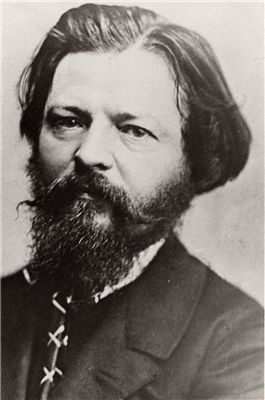
Museums3
Countries1
Largest reported holdingRadishchev Art Museum, Saratov · 2 recorded works
Loading map…
Where to see Carl Wenig
Collection holdings are reported here; current display varies. Check with each museum before visiting.
-
2 recorded works
Radishchev Art Museum
Saratov, Russia
-
1 recorded work
Russian Museum
Saint Petersburg, Russia


-
1 recorded work
Hermitage Museum
Saint Petersburg, Russia

Frequently Asked Questions
Where can I see Carl Wenig's work?
Carl Wenig's paintings are held in several European museums, primarily in Russia and Germany, reflecting the artist's career. Born in Reval (now Tallinn, Estonia), Wenig spent much of his working life in St Petersburg as a professor at the Imperial Academy of Arts. The State Russian[1] Museum in St Petersburg holds some of his most important pieces. These include history paintings and genre scenes, such as "The Sick Woman" (1864[1]) and "The Arrest of Mazeppa" (1881). These works demonstrate Wenig's academic style and interest in historical subjects. Other works by Wenig can be found in German collections. As Wenig was of Baltic German extraction, his art found patronage within German-speaking circles. While specific museum holdings are less well documented than those in Russia, it is worth checking the catalogues of museums in cities such as Berlin or Dresden. These institutions sometimes feature works by artists associated with the Baltic German community. Auction records may also provide information on the locations of privately held Wenig paintings.What should I know about Carl Wenig's prints?
Carl Wenig (1830[1]-1908[1]) was a Baltic German painter who spent his career in Russia. He is known for historical and religious paintings, and for genre scenes. Born in Reval (now Tallinn, Estonia), Wenig studied at the Imperial Academy of Arts in St Petersburg. He later became a professor there. His work often took inspiration from biblical stories and significant historical events. He also produced portraits and scenes of everyday life. Prints of Wenig's paintings reproduce his academic style, characterised by attention to detail, classical compositions, and a focus on narrative. His paintings, and the prints made after them, offer insight into the artistic tastes of 19th-century Russia, where historical and religious subjects were popular among the upper classes. Prints of works such as "Christ Blessing the Children" and scenes from classical antiquity circulated widely. These allowed a broader audience to engage with Wenig's art. His paintings can be found in major Russian[1] art museums, including the Russian Museum in St Petersburg.Why are Carl Wenig's works important today?
Carl Wenig (1830[1]-1908[1]) was a Russian[1] painter of Baltic German descent, associated with the academic style. He created historical and religious works. Wenig gained recognition as a portraitist and history painter, becoming a professor at the Imperial Academy of Arts in Saint Petersburg. Wenig is remembered today because he represents a particular moment in Russian art. His paintings offer insights into the artistic preferences of the Russian Imperial court and upper class during the second half of the 19th century. His work demonstrates the influence of Western European academic traditions on Russian art. As an instructor, he helped train a generation of Russian artists. His paintings are held in major Russian museums, including the Russian Museum in Saint Petersburg.Who did Carl Wenig influence?
Carl Wenig (1830[1]-1908[1]) was a Russian[1] painter of Baltic German descent. He is associated with late Imperial Russian academic art[1]. Wenig taught at the Imperial Academy of Arts in Saint Petersburg. There, he headed the academy's mosaic workshop. Among Wenig's pupils were several significant artists. These include Andrei Ryabushkin (1861[1]-1904[1]), who is known for his historical paintings of 17th-century Russia. Another student was Nikolai Koshelev (1840-1918), who produced religious paintings and frescoes. Wenig's focus on religious and historical subjects, combined with his academic training, shaped the artistic direction of his students. Ryabushkin's and Koshelev's later works reflect Wenig's influence in their attention to detail and narrative. Wenig's position at the Imperial Academy allowed him to pass his artistic values to a new generation. His students then carried those values into the Russian art world.What style or movement did Carl Wenig belong to?
Carl Wenig (1830[1]-1908[1]) was a Russian[1] painter of Baltic German descent. He is associated with late academic art[1] and historical painting. These styles were prevalent in Europe, and particularly in Russia, during the mid-to-late 19th century. Academic art, also called "academism", refers to the style taught in European academies of art. These academies, such as the Imperial Academy of Arts in Saint Petersburg, promoted particular aesthetic ideals. These often involved classical subjects, formal composition, and an emphasis on technical skill. Historical painting, a sub-genre of academic art, depicted scenes from history, mythology, and religious texts. Wenig's work, such as "The Farewell of Hector to Andromache" (1861[1]) and "Christ Blessing the Children" (1870), fits within these categories due to their subjects and formal qualities. Wenig’s style is characterised by its attention to detail, dramatic lighting, and theatrical compositions. He aimed to create believable, impressive depictions of the past. Though academic art later fell out of favour with the rise of modern art movements, it remains an important aspect of 19th-century European painting.What was Carl Wenig known for?
Carl Wenig (1830[1]-1908[1]) was a Baltic German painter who worked primarily in Russia. He is best known for historical and religious paintings executed in an academic style. Wenig studied at the Imperial Academy of Arts in Saint Petersburg, Russia, from 1843[1] to 1853. Later, he received a stipend to study in Italy. While there, he created the painting "Christ Blessing the Children". In 1862, he became a professor at the Academy. His paintings often depicted scenes from the Bible or important moments in European history. Among his well-known works are "The Entombment" (1889) at the Alexander Nevsky Lavra in Saint Petersburg and "Queen Esther" (date unknown). He also contributed to the interior decoration of the Cathedral of Christ the Saviour in Moscow. Wenig's work reflects the conservative artistic values prevalent in Russian[1] academic circles during the 19th century. He trained many students, passing on his approach to painting.What is Carl Wenig known for?
Carl Wenig is known for religious and historical subjects, delivered in the tradition of Russian[1] Academic Historicism. His paintings include large canvases, careful draughtsmanship, and elevated narrative.What was Carl Wenig's art style?
Wenig worked in the tradition of Russian[1] Academic Historicism. This style included large canvases, careful draughtsmanship, and elevated narrative, and he applied it to religious and historical subjects.
Sources
Where to See guide aggregates verified holdings of Carl Wenig's works across the following collections.
- [1] wikipedia Wikipedia: Carl Wenig Used for: biography.
- [2] book Husslein-Arco, Agnes, editor; Koja, Stephan, editor; Law, Rebecca (Translator), translator; McInnes, Robert (Translator), translator; Somers, Nick, translator; Monet, Claude, 1840-1926. Paintings. Selections; Österreichische Galerie Belvedere, h Used for: biography.
- [3] book Masterpieces of western art : a history of art in 900 individual studies from the Gothic to the present day Used for: biography.
- [4] book Post-impressionism : cross-currents in European painting Used for: biography.
- [5] book Kären Wigen, Time in Maps Used for: biography.
Editorial overseen by Solis Prints. Sources verified 2026-10-14. Click a source for details, or hover over [N] in the page above to preview.
Editorial standardsMethodologyCorrectionsAI disclosureAbout the editorial team