



About Ambrogio Lorenzetti
Sienese painter whose Palazzo Pubblico frescoes produced the first true landscape in Western art since antiquity, c. 1337–1340[1].
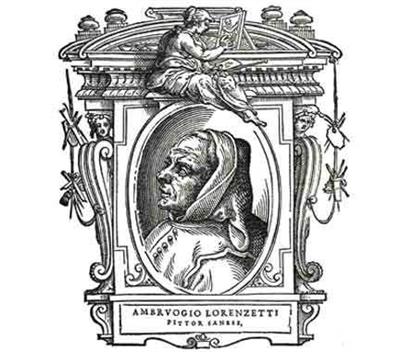
Where to see Ambrogio Lorenzetti
Collection holdings are reported here; current display varies. Check with each museum before visiting.
-
3 recorded works
Uffizi Gallery
Florence, Italy
Also here (6)
-
2 recorded works
Louvre
Paris, France


-
1 recorded work
Isabella Stewart Gardner Museum
Boston, United States
-
1 recorded work
Städel Museum
Frankfurt, Germany
-
1 recorded work
Museum of Fine Arts Boston
Boston, United States
-
1 recorded work
National Gallery
London, United Kingdom
-
1 recorded work
Pinacoteca di Brera
Milan, Italy
-
1 recorded work
Rijksmuseum
Amsterdam, Netherlands
-
1 recorded work
Harvard Art Museums
Cambridge, United States
-
1 recorded work
Metropolitan Museum of Art
New York City, United States


View all 12 museums
-
1 recorded work
Statens Museum for Kunst
Copenhagen, Denmark
-
1 recorded work
Yale University Art Gallery
New Haven, United States


Frequently Asked Questions
Where can I see Ambrogio Lorenzetti's work?
Ambrogio Lorenzetti was active in Siena, Italy, during the early to mid-14th century. To see his work, the Palazzo Pubblico (town hall) in Siena is an important location. Building work on the Palazzo Pubblico began in 1298. Inside the Palazzo Pubblico, in the Sala dei Nove (council chamber), one can view Lorenzetti's fresco cycle, *Allegory of Good Government*. This complex work was painted on the walls to inspire responsible government. Within this cycle are details titled *Life in the City* and *Life in the Country*, both dating from around 1337 to 1340. The *Allegory of Good Government* includes a figure of Good Government dressed as a judge in the black and white colours of Siena. At his feet are Romulus and Remus, figures from Roman mythology symbolising the city's ancient origins. Peace is also represented, as a classically-inspired figure in white robes. Another work by Lorenzetti is *The Charity of St Nicholas of Bari*, painted around 1332.What should I know about Ambrogio Lorenzetti's prints?
Ambrogio Lorenzetti was active as an artist in Siena from 1319 until his death, around 1348[1]. He and his brother Pietro were responsible for many civic and religious commissions in their native Siena. Lorenzetti is known for his frescoes in Siena's Palazzo Pubblico (town hall). Building work on the Palazzo Pubblico began in 1298, and Lorenzetti's city panoramas were painted on its interior walls. His most celebrated work is the fresco depicting the Effects of Good Government in the City and the Country, painted between 1337 and 1340. It is an early attempt to show a real place with its inhabitants, making a secular theme appear precious. The painting depicts Siena with its streets and shops. Parts of the present-day town can still be recognised. Another fresco in the Palazzo Pubblico shows the consequences of bad government in the city, but it is badly damaged. In the council chamber, the personification of Good Government sits on a throne, dressed in the black and white colours of Siena. At his feet are Romulus and Remus, characters from Roman mythology used to symbolise the city’s ancient origins. To the left is Peace, a figure reclining on a suit of armour. The fresco cycle was intended to inspire responsible government.Why are Ambrogio Lorenzetti's works important today?
Ambrogio Lorenzetti was active as an artist in Siena from 1319; he died around 1348[1]. Working alongside his brother Pietro, Ambrogio completed many religious and civic commissions in Siena. He is now known for his naturalistic frescoes. One such work, completed for the interior of the Palazzo Pubblico (town hall) in Siena, is *The Allegory of Good Government*. It was intended to inspire responsible government. Lorenzetti's depiction of Siena is remarkable for its early naturalism. His fresco is an attempt to show a real place with its inhabitants. He captured the city with its streets, shops, and surrounding fields. The city is shown during a time of peace, with commerce and agriculture flourishing. The inhabitants are depicted as contented while engaged in various activities. Some parts of the present-day city are still recognisable from Lorenzetti's painting. His work is an early example of a panoramic composition.What techniques or materials did Ambrogio Lorenzetti use?
Ambrogio Lorenzetti, active in Siena in the early 14th century, employed fresco techniques. Fresco involves painting directly onto wet plaster, a method suited to large-scale murals. He was commissioned to decorate the interior of Siena's Palazzo Pubblico (town hall), where he created allegorical scenes, including *The Allegory of Good Government*. These frescoes aimed to inspire responsible governance. Lorenzetti's approach involved detailed observation and naturalism. His cityscapes, like the panorama in *The Effects of Good Government in the City and the Country*, depict Siena with remarkable accuracy. He captured the city's streets, shops, and surrounding fields. The viewpoint shifts, and the scale of buildings varies relative to the figures, creating a comprehensive, almost panoramic, effect. He included details of daily life, showing commerce, industry, and agriculture flourishing. He also painted figures from Roman mythology, such as Romulus and Remus, to symbolise the city’s ancient origins.Who did Ambrogio Lorenzetti influence?
Ambrogio Lorenzetti, active in Siena from 1319 until his death around 1348[1], was part of a generation of painters who advanced pictorial realism in Italian art. A student of Duccio di Buoninsegna, Ambrogio, along with his brother Pietro, received numerous civic and religious commissions in Siena. In the Palazzo Pubblico (city hall) in Siena, Ambrogio created a series of frescoes including *Allegory of Good Government*, *Bad Government and the Effects of Bad Government in the City*, and *Effects of Good Government in the City and in the Country*. These works gave visual form to Sienese civic concerns. The frescoes served as a reminder of just administration, during a time of turbulent politics in Italian cities. Ambrogio's brother, Pietro Lorenzetti, also made spatial experiments in works such as his 1342 triptych, *The Birth of the Virgin*.Who influenced Ambrogio Lorenzetti?
Ambrogio Lorenzetti (active 1319-circa 1348[1]) was a student of Duccio di Buoninsegna. Duccio's influence is apparent in Ambrogio's early works. Ambrogio, along with his brother Pietro, completed numerous civic and religious commissions in Siena. His style contributed to experiments in pictorial realism during 14th-century Italian painting. His fresco cycle, painted in Siena's Palazzo Pubblico (city hall), includes *Allegory of Good Government*, *Bad Government and the Effects of Bad Government in the City*, and *Effects of Good Government in the City and in the Country*. These frescoes elaborated on advances in illusionistic representation. They also gave visual form to Sienese civic concerns. The frescoes served as reminders of fair administration, commissioned during a time of political turbulence in Italian cities. His cycle in the Palazzo Pubblico is based on the city of Siena. It depicts a world that is ordered, painted with naturalism and observation. The painting shows a time of peace, in which commerce, industry and agriculture are flourishing.What is Ambrogio Lorenzetti's most famous work?
Ambrogio Lorenzetti's most celebrated work is a series of frescoes painted between 1337 and 1340, located in Siena's Palazzo Pubblico (town hall). This cycle is an allegory of good and bad government, designed to encourage civic responsibility. The frescoes occupy the Sala dei Nove (Hall of the Nine). The cycle presents contrasting visions: one of a city and countryside flourishing under good government, and another depicting the ruinous effects of bad government. The "Effects of Good Government" is particularly well known for its detailed depiction of Siena, offering what has been called an early panoramic view of a real place with its inhabitants. The scene shows commerce, industry, and agriculture thriving in a time of peace. Within the allegory of good government, the artist included personifications of virtues and vices. For instance, Peace is represented as a classically inspired figure. The frescoes were known as "Peace and War" before Achille Lanzi retitled them in 1792. Though parts of the frescoes, particularly the depiction of bad government, are damaged, the cycle remains a significant example of early Italian art.What style or movement did Ambrogio Lorenzetti belong to?
Ambrogio Lorenzetti, active in Siena, was part of the Sienese School of painting. Along with his brother Pietro, Ambrogio completed numerous civic and religious commissions in Siena. He was active from 1319 and died around 1348[1]. His style moved beyond that of Giotto through naturalistic depictions. Ambrogio is known for naturalistic settings, such as his fresco depicting the effects of good government in the city and the country. This work was commissioned for the interior of the Palazzo Pubblico in Siena. The painting is an early attempt to show a real place with its inhabitants, making a secular theme appear precious. He also painted an Allegory of Good Government on the walls of the council chamber in Siena's town hall. He added incidental detail, proving himself a brilliant artist.
Sources
Where to See guide aggregates verified holdings of Ambrogio Lorenzetti's works across the following collections.
- [1] wikipedia Wikipedia: Ambrogio Lorenzetti Used for: biography.
- [2] book Beard, Lee, 1973- author, Butler, Adam, author; Van Cleave, Claire, author; Fortenberry, Diane, author; Stirling, Susan, author, Beard, Lee, 1973- author, Butler, Adam, author; Van Cleave, Claire, author; Fortenberry, Diane, author; Stirling, Susan, author - The Art Book_ New Edition, Mini Format Used for: biography, stylistic analysis.
- [3] book Beckett, Wendy, The story of painting Used for: biography, stylistic analysis.
Editorial overseen by Solis Prints. Sources verified 2026-09-30. Click a source for details, or hover over [N] in the page above to preview.
Editorial standardsMethodologyCorrectionsAI disclosureAbout the editorial team