



About Claude Deruet
French · 1588–1660
Baroque court painter in Lorraine who trained Claude Lorrain and painted one of the first European portraits of a Japanese subject.
Museums6
Countries4
Most worksMetropolitan Museum of Art, New York City · 2 works
Loading map…
Where to see Claude Deruet
Ranked by works you can see in person.
-
2 works
Metropolitan Museum of Art
New York City, United States
-
1 works
National Museum in Kraków
Kraków, Poland


-
1 works
Louvre
Paris, France
-
1 works
Palace of Versailles
Versailles, France
-
1 works
Nationalmuseum
Stockholm, Sweden
-
1 works
Musée Carnavalet
Paris, France


Frequently Asked Questions
Where can I see Claude Deruet's work?
Paintings by Claude Deruet are held in several European museums. In France, his work can be viewed at the Musée des Beaux-Arts in Nancy, the Musée des Beaux-Arts in Nantes, and the Musée du Louvre in Paris. Other museums include the Musée des Beaux-Arts in Besançon, the Musée des Beaux-Arts in Dijon, the Musée de la Chartreuse in Douai, the Musée de Peinture et de Sculpture in Grenoble, the Musée Crozatier in Le Puy, and the Musée des Beaux-Arts in Lille. Additional venues are the Musée des Beaux-Arts in Orléans, the Musée Saint-Denis in Reims, the Musée des Beaux-Arts in Rennes, the Musée des Beaux-Arts in Rouen, the Musée d’Art et d’Industrie in Saint Etienne, the Musée du Prieuré in Saint Germain-en-Laye, the Musée de l’Annonciade in Saint Tropez, and the Musée d’Art Moderne in Strasbourg. The Musée des Augustins in Toulouse also holds his paintings. In Belgium, Deruet's paintings are in the Musées Royaux des Beaux-Arts de Belgique in Brussels.What should I know about Claude Deruet's prints?
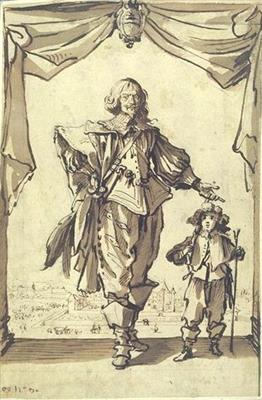
Claude Deruet was a French[1] artist of the early Baroque period, working most actively for the court of Lorraine. While he is better known as a painter, he also produced prints. Deruet's skills as a draughtsman are evident in his prints. These works form a notable segment of his artistic output. Deruet's prints display considerable skill and delicacy. He is known to have worked with etching techniques. These prints are an important part of Deruet's wider artistic production. They show his attention to detail and mastery of line. Printmaking allowed Deruet to explore different subjects and compositions, and offered a way to circulate his artistic ideas to a wider audience.Why are Claude Deruet's works important today?
Claude Deruet (1588[1]-1660[1]) was a French[1] artist working in Lorraine. He is mainly known for his large-scale allegories and religious compositions, executed in a style that combines elements of mannerism and early baroque. Deruet's importance stems from his role as a court painter and his contribution to the development of painting in Lorraine during the early 17th century. He trained under the Italian mannerist painter, Antonio Tempesta, in Rome. Deruet later returned to Nancy, where he became a prominent figure in the court of Duke Henry II of Lorraine. His commissions included decorations for ducal residences and religious institutions. Deruet's most famous pupils were Claude Lorrain and Israël Silvestre. His influence can be seen in their early works. Deruet's paintings offer insights into the artistic tastes and cultural values of his time. They also document the history of Lorraine during a period of political and social change.What techniques or materials did Claude Deruet use?
Claude Deruet was a Lorraine painter, draughtsman and printmaker working in the first half of the 17th century. As a painter, he is best known for large-scale allegories and religious scenes, many of which were commissions for churches and civic buildings. Like many artists of his period, Deruet would have been trained in the standard techniques of painting, including preparing canvases, mixing pigments with oil, and applying paint in layers to achieve desired effects of colour and texture. Although no specific documentation of his methods survives, comparison with contemporary practice suggests that he employed preparatory drawings and underpainting to establish the composition before adding colour. Seventeenth-century artists often experimented with different materials and techniques to achieve particular aesthetic effects, and Deruet may have explored various approaches in his own work. However, without more specific information, it is difficult to provide a detailed account of his materials.Who did Claude Deruet influence?
Claude Deruet (1588[1]-1660[1]) was a French[1] artist whose impact is complex to trace directly. He is best known as a master of Lorraine art, a style that blended French and Italian influences. His pupils included Charles Le Brun, who later became a dominant figure in French art under Louis XIV. Le Brun's later academic style, with its emphasis on grand compositions and classical ideals, contrasts with Deruet's more decorative and narrative approach. However, Deruet's studio provided Le Brun with foundational training. Other artists associated with Deruet's circle include his son, Henri Deruet, and Israël Silvestre. Henri followed in his father's footsteps as a painter. Silvestre became a noted printmaker, documenting French architecture and courtly life. While Deruet's personal style may not have been widely imitated, his role as an instructor and his connections within the artistic community helped shape the careers of significant artists in subsequent generations. His influence is therefore best understood through the work of his students and associates.Who influenced Claude Deruet?
Claude Deruet's artistic development occurred in a period with varied influences. One significant figure was Claude Lorrain, whom artists such as Thomas Couture regarded as a model of excellence. Couture admired how Lorrain's technique seemed invisible, freeing him from academic constraints while paradoxically becoming a standard for academics. Lorrain's style involved carefully differentiated light and colour, aligning with academic ideals of expressive technique. His compositions, exemplified by works such as *The Ford* (circa 1636[1]), demonstrated a hierarchical order of elements, guiding viewers through the artwork with continuous visual transitions. Another influence came from the independent artists and movements challenging the established Académie. Figures like Charles Gleyre and Thomas Couture, though not part of the Académie, offered alternative approaches. Couture, who taught Édouard Manet, encouraged rapid, simple work to capture vivid first impressions, suppressing detail in favour of spontaneity. He also instilled in Manet a love for the Old Masters, though Manet later diverged by blending classical themes with modern subjects.What is Claude Deruet's most famous work?
Claude Deruet, born in Nancy around 1588[1], was a painter of portraits and decorative designs. He studied in Rome with Antonio Tempesta and Cavalier d’Arpino. Deruet later returned to Nancy, where his work gained attention beyond Lorraine. Louis XIII even took painting lessons from him. A portrait in gouache of Deruet by Louis XIII is held in the Musée Lorrain at Nancy. In 1621[1], Deruet received letters of nobility. He served as painter-in-ordinary to Duke Henri II. Deruet employed assistants, including Claude Lorrain. Deruet, along with his assistants, was commissioned to decorate the roof of a Carmelite Monastery church. The Prince de Phalsbourg and the Prior oversaw the project. Sadly, the church and its decorations were destroyed during the French[1] Revolution.What style or movement did Claude Deruet belong to?
Claude Deruet is associated with Mannerism[1], a style that spread through Europe in the 16th century. Mannerism, deriving from the Italian "maniera" (meaning style or manner), was favoured by princely courts and reflected their refined tastes. Mannerist artists built upon the achievements of Raphael and Michelangelo. They placed emphasis on technical skill, erudite subject matter, and complex compositions designed to appeal to sophisticated viewers. The style valued grace, variety, and virtuoso display rather than clarity or unity. Artists explored new definitions of beauty, experimenting with proportions and idealised figures. Mannerism has been interpreted in different ways. Some see it as a decline from the High Renaissance, while others view it as an expression of cultural crisis, linked to the Reformation and Counter-Reformation, or as a product of elite identity. Regardless of its precise meaning, Mannerism marked a shift in artistic focus towards self-conscious artifice and intellectual complexity.
Sources
Where to See guide aggregates verified holdings of Claude Deruet's works across the following collections.
- [1] wikipedia Wikipedia: Claude Deruet Used for: biography.
- [2] book Gellée Lorrain , Claude, Masters of Art - Claude Lorrain Used for: biography, stylistic analysis.
Editorial overseen by Solis Prints. Sources verified 2026-08-31. Click a source for details, or hover over [N] in the page above to preview.
Editorial standardsMethodologyCorrectionsAI disclosureAbout the editorial team