



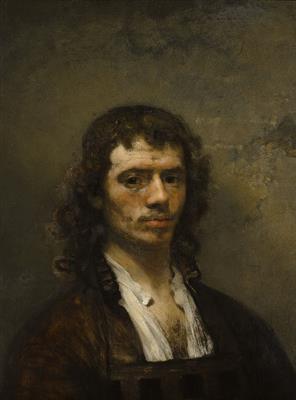
About Carel Fabritius
Museums18
Countries8
Most worksMauritshuis, The Hague · 2 works
Loading map…
Where to see Carel Fabritius
Ranked by works you can see in person.
-
2 works
Mauritshuis
The Hague, Netherlands
-
2 works
National Gallery
London, United Kingdom


-
2 works
Groninger Museum
Groningen, Netherlands
-
2 works
Landesmuseum Hannover
Hanover, Germany
-
1 works
Toledo Museum of Art
Toledo, United States
-
1 works
Führermuseum
Linz, Austria
Also here (6)
-
1 works
Munich Central Collecting Point
Munich, Germany
Also here (6)
-
1 works
Louvre
Paris, France
-
 1 works
Musée Granet
Aix-en-Provence, France
-
1 works
Leiden Collection
New York City, United States


View all 18 museums
-
1 works
Museum Boijmans Van Beuningen
Rotterdam, Netherlands
-
1 works
Walker Art Gallery
Liverpool, United Kingdom
-
1 works
Nationalmuseum
Stockholm, Sweden
-
1 works
Rijksmuseum
Amsterdam, Netherlands
-
1 works
Fries Museum
Leeuwarden, Netherlands
-
1 works
Kelvingrove Art Gallery and Museum
Glasgow, United Kingdom
-
1 works
Los Angeles County Museum of Art
Los Angeles, United States
-
1 works
National Museum in Warsaw
Warsaw, Poland


Frequently Asked Questions
Where can I see Carel Fabritius's work?
Carel Fabritius's paintings can be viewed in a number of museums. These include the Staatliche Museen, Berlin; the Herzog Anton Ulrich-Museum, Braunschweig; and the Gemiildegalerie Alte Meister, Dresden. Other European museums that hold his works are the National Gallery of Scotland, Edinburgh; the Galleria degli Uffizi, Florence; and the Stadel Museum, Frankfurt am Main. You can also find his paintings at the Niedersachsisches Landesmuseum, Hanover; the Walker Art Gallery, Liverpool; and the National Gallery, London. More locations include the National Portrait Gallery, London; the Tate, London; and the Victoria and Albert Museum, London. Outside of Europe, his art can be seen at the J. Paul Getty Museum, Los Angeles; and the Metropolitan Museum of Art, New York. Other museums exhibiting his works are the Museo Thyssen-Bornemisza, Madrid; the Staatliche Graphische Sammlung, Munich; the Ashmolean Museum, Oxford; the Musée du Louvre, Paris; the Royal Cabinet of Paintings, The Hague; the Kunsthistorisches Museum, Vienna; and the National Gallery of Art, Washington.What should I know about Carel Fabritius's prints?
Carel Fabritius (1622[3]-1654[3]) was a Dutch[3] painter, a student of Rembrandt, and a teacher of Johannes Vermeer. He died young, in the Delft Thunderclap explosion, and his surviving oeuvre is small. When considering prints related to Fabritius, it is important to distinguish between prints *by* the artist and prints *after* his paintings. It is not generally believed that Fabritius created any prints himself. However, his paintings have been reproduced as prints. Reproductions of paintings were often commissioned to circulate images and information about particular works, or to promote the artists who created them. These reproductive prints are sometimes reversed compared to the original painting. Seventeenth-century collectors often assembled large collections of paper art, including both drawings and prints. Rembrandt was a compulsive collector, and print shops were part of the art market of his time.Why are Carel Fabritius's works important today?
Carel Fabritius (1622[3]-1654[3]) was a Dutch[3] Golden Age painter. Although his career was short, his experimentation with perspective and light had a considerable impact on later artists. Fabritius was a student of Rembrandt in the 1640s. He developed his own style, moving away from Rembrandt's dramatic use of chiaroscuro. Fabritius explored the effects of daylight and employed a lighter palette. His compositions often feature a single figure or object against a pale, subtly textured background, creating a sense of stillness and quiet observation. He was interested in optical effects, including perspective and reflected light. One of his most famous paintings, "The Goldfinch" (1654[3]), demonstrates his skill in creating a three-dimensional illusion. The bird seems to project forward from the wall. Fabritius's innovative approach influenced other Dutch painters, including Johannes Vermeer. Vermeer adopted Fabritius's interest in light, colour, and the use of perspective to create realistic and engaging scenes. Fabritius died young, in the Delft gunpowder explosion of 1654.What techniques or materials did Carel Fabritius use?
Carel Fabritius's specific techniques are not widely documented, but some inferences can be made from the practices of his contemporaries. Painters of the Baroque[3] period typically used a limited range of colours on their palettes, planning each stage of the work carefully. The development of style was linked to technique, with painters like Rembrandt moving away from smooth surfaces to more textured ones. Rembrandt employed complex layers, building up pictures from back to front using delicate glazes and generously applied body colours. Frans Hals, a contemporary, transitioned from wood panel to canvas, like many painters of the time. By the 1620s, canvas had become the preferred support due to its lower cost and ease of transport. Hals used different grades of canvas and typically primed his supports with lead white, although he also used chalk-glue grounds. He employed a limited palette, with browns and yellows dominating in the 1620s and 1630s, and greys becoming more prevalent in later decades. Hals did not use rare colours such as lapis lazuli or gold leaf.Who did Carel Fabritius influence?
Carel Fabritius, who settled in Delft around 1650[3], had a strong impact on painters of his generation and the next. Pieter de Hooch, Emanuel de Witte, and Johannes Vermeer all learned from Fabritius. They were influenced by his depictions of daylight, his understanding of perspective, and his ability to impart monumentality to small-scale compositions. Vermeer owned at least three paintings by Fabritius at the time of his death. Arnold Bon's poem of 1668 compares Fabritius, who died in an explosion in Delft in 1654[3], to a mythical phoenix. Bon writes that Vermeer rose from the fire in which Fabritius had been consumed, emulating him. This poem suggests a succession in time, with one great painter following another and taking up his predecessor's legacy. It is doubtful that Vermeer studied with Fabritius for very long, since Fabritius only registered with the guild in October 1652, fourteen months before Vermeer did.Who influenced Carel Fabritius?
Carel Fabritius, like other artists, would have been influenced by the masters that preceded him. According to artistic and literary theory, pupils typically studied models in three ways. The first was *translatio*, a close copy for technical study. The second was *imitatio*, a variant demonstrating an understanding of structure and style. The last was *aemulatio*, a version surpassing the model. This process presumed competition between the adaptor and the source. Franciscus Junius advised artists to take the best masters for guidance. If the selection of a prompt was recognisable, it had to be an improvement; in this way, it would be both homage to the model and a display of superiority on the part of the artist. Van Hoogstraten's treatise is based on a desire to emulate the erudition of Junius’s book on the artists of classical antiquity. Junius's *Schilderkonst der oude* (1641[3]) is Van Hoogstraten’s primary source.What is Carel Fabritius's most famous work?
Carel Fabritius, a Dutch[3] artist born in 1622[3], is known for his innovative approach to painting, particularly his use of light backgrounds, which contrasted with the style of his teacher Rembrandt. Although his career was cut short by his death in 1654[3], several of his works survive. They offer insight into his artistic skill. Among his most recognised pieces is *The Goldfinch* (1654[3]). This small oil-on-panel work depicts a goldfinch perched on a green stand, set against a light background. Its realism and simplicity have made it one of Fabritius's most popular works. Some believe it was part of a shop sign or furniture piece. Other notable works include *Raising of Lazarus* (1643) and *View of Delft* (1652), the latter of which may have been created using a camera obscura. Fabritius's style influenced later artists, including Pieter de Hooch and Johannes Vermeer.What style or movement did Carel Fabritius belong to?
Carel Fabritius is usually described as belonging to the Dutch[3] Golden Age, and more specifically, the Delft School. Born in 1622[3], he became a pupil of Rembrandt in Amsterdam around 1641[3], remaining in his studio until about 1643. Later, Fabritius moved to Delft, joining the Guild of St Luke in 1652. His time in Delft saw him develop a style that moved away from Rembrandt's, towards brighter colours and delicate tonal gradations to suggest spatial recession. Fabritius had a particular talent for capturing the effects of light. His interest in perspective constructions and illusionism was noted by his contemporaries. Fabritius's known works are few; only about a dozen are attributed to him, and fewer still are authenticated. Among these are *The Goldfinch* (1654[3]) and *View of Delft* (1652). He died in 1654, in an explosion that destroyed a large part of Delft, including his studio. Despite his short career, Fabritius influenced other artists, including Pieter de Hooch and Johannes Vermeer.
Sources
Where to See guide aggregates verified holdings of Carel Fabritius's works across the following collections.
- [1] museum Musée Granet Used for: museum holdings.
- [2] museum Leiden Collection Used for: museum holdings.
- [3] wikipedia Wikipedia: Carel Fabritius Used for: biography.
- [4] book Beard, Lee, 1973- author, Butler, Adam, author; Van Cleave, Claire, author; Fortenberry, Diane, author; Stirling, Susan, author, Beard, Lee, 1973- author, Butler, Adam, author; Van Cleave, Claire, author; Fortenberry, Diane, author; Stirling, Susan, author - The Art Book_ New Edition, Mini Format Used for: biography, stylistic analysis.
- [5] book Lilian H. Zirpolo, Historical Dictionary of Baroque Art and Architecture Used for: biography, stylistic analysis.
- [6] book Masterpieces of western art : a history of art in 900 individual studies from the Gothic to the present day Used for: biography.
- [7] book John Michael Montias, Vermeer and His Milieu _ A Web of Social History Used for: biography, stylistic analysis.
Editorial overseen by Solis Prints. Sources verified 2026-08-29. Click a source for details, or hover over [N] in the page above to preview.
Editorial standardsMethodologyCorrectionsAI disclosureAbout the editorial team