



Helen Frankenthaler
Frankenthaler poured paint onto unprimed canvas laid on the floor and let it soak in. The technique, which she called 'soak-stain', produced fields of translucent colour that looked like watercolour at mural scale. Mountains and Sea (1952), painted after a trip to Nova Scotia, was the first. She was twenty-three.

Biography
Morris Louis and Kenneth Noland visited her studio, saw Mountains and Sea, and went home to Washington, D.C., to develop their own versions of the technique. The visit launched Color Field painting, an entire movement that began with one artist looking at another artist's studio floor.
She studied at the Dalton School under the Mexican painter Rufino Tamayo, then at Bennington College. She moved to New York and became part of the Abstract Expressionist circle, dating Clement Greenberg, the most influential art critic of the era. The relationship gave her access and visibility that other women artists did not have, which she acknowledged. It also meant her work was perpetually discussed in relation to his opinions, which she resented.
She was married to Robert Motherwell from 1958 to 1971. Both were painters. Both were prominent. The marriage was competitive. After the divorce she continued working for another forty years, moving between painting, printmaking, and sculpture. The late paintings are simpler: one or two large shapes of colour floating on bare canvas.
She was awarded the National Medal of Arts in 2001. She died in 2011, at eighty-three. Her technique of staining raw canvas changed what painting could look like, and she spent six decades proving it was not a one-trick discovery.
Timeline
- 1928Born on 12 December in New York City, the youngest of three daughters of a New York State Supreme Court judge. Grew up on Manhattan's Upper East Side in a cultured, progressive household.
- 1949Graduated from Bennington College in Vermont at age 20, where she had studied under painter Paul Feeley. Returned to New York and began studying with Hans Hofmann while immersing herself in the Abstract Expressionist scene.
- 1952Created Mountains and Sea at age 23 in her New York studio, pouring thinned paint directly onto raw, unprimed canvas laid on the floor. This breakthrough technique of stain painting opened an entirely new direction in American abstraction.
- 1958Married fellow painter Robert Motherwell at age 29. The couple became one of the most prominent partnerships in the New York art world, though they would divorce in 1971.
- 1964Featured in the Post-Painterly Abstraction exhibition at the Los Angeles County Museum of Art at age 35, curated by Clement Greenberg. The show positioned her stain painting as the foundation of a new movement, Colour Field painting.
- 1969Represented the United States at the Montreal World Exposition at age 40, and held a major retrospective at the Whitney Museum of American Art. By this point she had exhibited for nearly two decades and was among the most influential living American painters.
- 2001Received the National Medal of Arts from President George W. Bush at age 72 in Washington, DC. She continued to work prolifically in painting and printmaking from her studio in Darien, Connecticut.
- 2011Died on 27 December in Darien, Connecticut, at age 83. Her career spanned more than six decades and over 10,000 works across painting, printmaking and sculpture.
Notable Works
Tap to view larger.
Where to See Helen Frankenthaler
10 museums worldwide.
-
 45 works
National Gallery of Art
Washington D.C., United States
Mon–Sat 10:00–17:00, Sun 11:00–18:00 · Free
-
 5 works
Smithsonian American Art Museum
Washington D.C., United States
Mon–Sun 11:30–19:00 · Free
-
5 works
Seattle Art Museum
Seattle, United States
-
 5 works
Whitney Museum of American Art
New York City, United States
Mon–Thu 10:30–18:00, Fri 10:30–22:00, Sat–Sun 10:30–18:00 · $30 adults, $24 seniors and students
-
 4 works
Crystal Bridges Museum of American Art
Bentonville, United States
Sat–Mon & Wed 10:00–18:00, Thu–Fri 10:00–20:00, closed Tuesdays · Free
-
 5 works
Museum of Modern Art
New York City, United States
Daily 10:30–17:30 (Sat until 19:00; first Fri of month until 20:00) · Adults $30, students $17

Next stop
Abstract Expressionism →
Explore the artists and ideas of Abstract Expressionism.
Helen Frankenthaler prints
Hand-finished archival prints from Helen Frankenthaler's body of work.


Related Artists


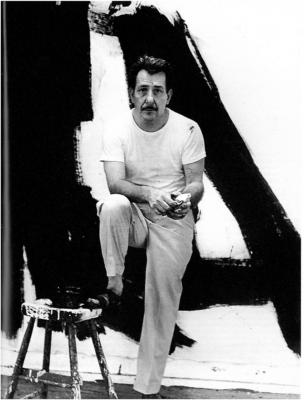

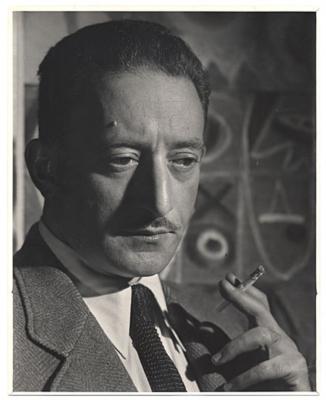

Take Helen Frankenthaler home.
See all Helen Frankenthaler prints →Frequently Asked Questions
Did helen frankenthaler use acrylic paint?
Helen Frankenthaler worked with both oils and acrylics. She used turpentine-thinned paint on large canvases.Helen frankenthaler art movement?
Mountains and Sea, painted in 1952, established Helen Frankenthaler's voice and introduced her way of working. This laid the groundwork for what made a painting uniquely hers.How did helen frankenthaler paint?
Helen Frankenthaler painted on large canvases using turpentine-thinned paint, either oils or acrylics. This produced clear washes of luminous colour.Is helen frankenthaler an abstract expressionist?
Helen Frankenthaler was part of the New York Abstract Expressionists. Her work instigated the development of Colour Field painting, which became part of Abstract Expressionism.Is helen frankenthaler still alive?
No, Helen Frankenthaler died in 2011.What is helen frankenthaler best known for?
Helen Frankenthaler is best known for instigating the development of Colour Field painting. This became part of Abstract Expressionism.When did helen frankenthaler die?
Helen Frankenthaler died in 2011 at the age of 83.Where can i see helen frankenthaler paintings?
Helen Frankenthaler's works can be seen at National Gallery of Art, Prints in the National Gallery of Art, Metropolitan Museum of Art, and 2 other museums worldwide.Who was helen frankenthaler married to?
Helen Frankenthaler was married to Robert Motherwell from 1958 to 1971. Both were painters and prominent figures, making the marriage competitive.Why did helen frankenthaler start painting?
Helen Frankenthaler knew from an early age that she needed to make art. However, painting was not her primary pursuit early on, as writing was just as important to her.Why is helen frankenthaler important?
Helen Frankenthaler is important because she instigated the development of Colour Field painting. This became part of Abstract Expressionism.Helen frankenthaler painting technique?
Helen Frankenthaler's technique, called 'soak-stain', involved pouring paint onto unprimed canvas laid on the floor and letting it soak in. This produced fields of translucent colour that looked like watercolour at mural scale.
Sources
Editorial draws on the following primary and tertiary references for Helen Frankenthaler.
- [1] museum Toledo Museum of Art Used for: museum holdings.
- [2] museum Buffalo AKG Art Museum Used for: museum holdings.
- [3] museum Kettle's Yard Used for: museum holdings.
- [4] museum San Francisco Museum of Modern Art Used for: museum holdings.
- [5] museum New Britain Museum of American Art Used for: museum holdings.
- [6] museum Ulster Museum Used for: museum holdings.
- [7] book guggenheim-guhe00solo Used for: biography.
- [8] book Penelope J.E. Davies, Walter B. Denny, Frima Fox Hofrichter, Joseph Jacobs, Ann S. Roberts, David L. Simon, Janson's History of Art_ The Western Tradition (8th Edition) Used for: biography.
- [9] book Hodge, Susie, 1960- author, The short story of women artists : a pocket guide to movements, works, breakthroughs, & themes Used for: biography.
Editorial overseen by Solis Prints. Sources verified 2026-08-29. Click a source for details, or hover over [N] in the page above to preview.
Editorial standardsMethodologyCorrectionsAI disclosureAbout the editorial team