

![Abstract Composition in Brown, Green, Blue, Black, and Orange [recto] by Mark Rothko](https://cdn.shopify.com/s/files/1/0833/9292/1935/files/artwork-mark-rothko-abstract-composition-in-brown-green-blue-black-and-orange-re.jpg?width=480)


Mark Rothko
Rothko did not want his paintings explained. He refused to discuss colour theory. He denied being an abstract painter. He said anyone who was moved to tears by his work was having the experience he intended. He meant it: he once reduced a restaurant patron to weeping and considered it a success.

Biography
He was born Marcus Rothkowitz in Dvinsk, Latvia (now Daugavpils), and emigrated to Portland, Oregon, at ten. He won a scholarship to Yale but dropped out after two years, finding it elitist and suffocating. He moved to New York and drifted into art, studying briefly under Max Weber at the Art Students League. He painted figurative scenes through the 1930s and Surrealist-influenced work through the 1940s, none of which looks like the paintings people associate with his name.
The mature format appeared around 1949: large canvases with two or three rectangles of colour, edges blurred, stacked vertically. The rectangles float. They are not geometric; the boundaries soften and breathe. The paint is thin, sometimes translucent, layered so that earlier colours show through. The effect is not decorative. Standing in front of one at the right distance, which Rothko specified (he wanted viewers close), the colour fills your peripheral vision. The painting becomes an environment.
He accepted a commission for the Four Seasons restaurant in the Seagram Building in 1958, then returned the money after eating there and deciding the clientele did not deserve the paintings. The Seagram Murals ended up in the Tate, the National Gallery of Art, and a museum in Japan.
He became increasingly depressed in his final years. The late paintings are dark: black on grey, brown on brown. He took his own life in his studio in 1970, at sixty-six. Nine paintings destined for a chapel in Houston arrived after his death. The Rothko Chapel opened in 1971.
Timeline
- 1903Born Marcus Rothkowitz in Dvinsk, Latvia (then Russian Empire).
- 1913Family emigrated to Portland, Oregon. Father died within months of arrival.
- 1921Enrolled at Yale University on scholarship. Left after two years without graduating.
- 1925Moved to New York City. Enrolled briefly at the Art Students League under Max Weber.
- 1933First solo exhibition at the Portland Art Museum. Began teaching at the Center Academy of the Brooklyn Jewish Center.
- 1935Co-founded The Ten, a group of expressionist painters opposed to abstraction and regionalism.
- 1940Legally changed name from Marcus Rothkowitz to Mark Rothko.
- 1943Exhibited with Adolph Gottlieb at a Federation of Modern Painters show. Published letter in The New York Times defending modern art.
- 1947Began transitioning to the "multiform" paintings, moving away from figurative and surrealist imagery.
- 1949First mature colour field paintings emerged: stacked rectangular forms with soft, luminous edges.
- 1950Travelled to Europe for five months. Visited Pompeii, Florence, and Rome; deeply affected by Fra Angelico frescoes.
- 1958Commissioned to paint murals for the Four Seasons restaurant in the Seagram Building. Completed the works but withdrew from the commission.
Notable Works
Tap to view larger.
Where to See Mark Rothko
19 museums worldwide.
-
2054 works
National Gallery of Art
Washington D.C., United States
Mon–Sat 10:00–17:00, Sun 11:00–18:00 · Free
-
 10 works
Museum of Modern Art
New York City, United States
Daily 10:30–17:30 (Sat until 19:00; first Fri of month until 20:00) · Adults $30, students $17
-
 9 works
Metropolitan Museum of Art
New York City, United States
Sun–Tue, Thu 10:00–17:00; Fri–Sat 10:00–21:00; closed Wed · Adults $30, students $17 (pay-what-you-wish for NY residents)
-
 9 works
Fogg Museum
Cambridge, United States
Tue-Sun 10:00-17:00, closed Mon · Free
- 9 works
Harvard Art Museums
Cambridge, United States
Tue-Sun 10:00-17:00, closed Mon · Free
-
6 works
Yale University Art Gallery
New Haven, United States
Tue–Sat 10:00–17:00, Sun 13:00–17:00; closed Mon · Free


Next stop
Abstract Expressionism →
Explore the artists and ideas of Abstract Expressionism.
Mark Rothko prints
Hand-finished archival prints from Mark Rothko's body of work.
 Orange and Yellow - Mark Rothko
From £28.00
Orange and Yellow - Mark Rothko
From £28.00
 No. 14, 1960 - Mark Rothko
From £28.00
No. 14, 1960 - Mark Rothko
From £28.00
 Yellow, Cherry, Orange - Mark Rothko
From £28.00
Yellow, Cherry, Orange - Mark Rothko
From £28.00
 Untitled (Three Rectangles, Shades of Red) - Mark Rothko
From £28.00
Untitled (Three Rectangles, Shades of Red) - Mark Rothko
From £28.00
 Untitled (Three Rectangles) - Mark Rothko
From £28.00
Untitled (Three Rectangles) - Mark Rothko
From £28.00
 Untitled (Red Rectangle) - Mark Rothko
From £28.00
Untitled (Red Rectangle) - Mark Rothko
From £28.00
Related Artists


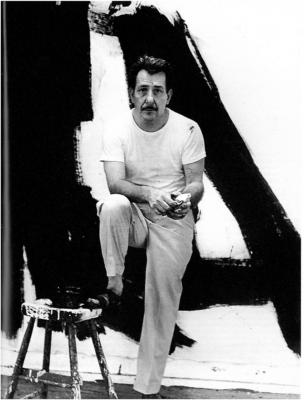


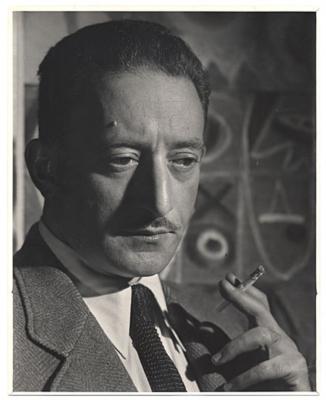
Take Mark Rothko home.
See all Mark Rothko prints →Frequently Asked Questions
Is mark rothko famous?
Mark Rothko's most famous statement is a redefinition of romanticism, originally published in Possibilities in 1947. By the 1930s, he was bringing a lyric gift to paintings of New Yorkers at the beach or on the subway.Is mark rothko still alive?
No, Mark Rothko died in 1970.Mark rothko paintings style?
Mark Rothko became known for colour-field painting, though he rejected labels. His style involved canvases covered with colour.Was mark rothko an abstract expressionist?
Mark Rothko became known as a Color Field painter, though he refused to adhere to any label. He considered colour to be merely an instrument.What is mark rothko best known for?
Mark Rothko ranks among the best-known colour-field painters. His paintings from the 1940s draw heavily from Greek tragedy, such as Aeschylus Oresteia, and from Christ's Passion cycle and death scenes with a harrowing psychology where the lone individual faces ultimate truths about existence, death, and spirituality.Where can i see mark rothko paintings?
Mark Rothko's works can be seen at National Gallery of Art, drawings in the National Gallery of Art, Tate, and 2 other museums worldwide.Who was mark rothko's assistant?
Ray Kelly became Mark Rothko's assistant in December 1966 and remained in that role until 1968. Roy Edwards also worked as his assistant until August 1966.Why did mark rothko die?
Mark Rothko died in 1970 at the age of 67.How did mark rothko apply paint to the canvas?
In a 1963 painting at the Kunsthaus Zurich, drips may be seen running in three directions. In at least two 1964 paintings, unmistakable drips run horizontally across the width of the dominant form.Where to see mark rothko?
Mark Rothko's works can be seen at National Gallery of Art, drawings in the National Gallery of Art, Tate, and 2 other museums worldwide.
Sources
Editorial draws on the following primary and tertiary references for Mark Rothko.
- [1] museum Toledo Museum of Art Used for: museum holdings.
- [2] museum Buffalo AKG Art Museum Used for: museum holdings.
- [3] museum San Francisco Museum of Modern Art Used for: museum holdings.
- [4] museum Sprengel Museum Used for: museum holdings.
- [5] museum Stedelijk Museum Amsterdam Used for: museum holdings.
- [6] museum National Museum of Fine Arts, Argentina Used for: museum holdings.
- [7] book Jed Perl, Art in America 1945-1970 Used for: biography.
- [8] book guggenheim-handboo00pegg Used for: biography.
Editorial overseen by Solis Prints. Sources verified 2026-08-29. Click a source for details, or hover over [N] in the page above to preview.
Editorial standardsMethodologyCorrectionsAI disclosureAbout the editorial team