



Adolph Gottlieb
In May 1948[4], Adolph Gottlieb stood at the Museum of Modern Art and lectured on the importance of "Unintelligibility." It was a provocation, but also a sincere statement of principle. His Pictograph series, begun around 1941, drew its vocabulary from Jungian archetypes, Northwest Coast Native American[4] art, and Surrealist automatism, but deliberately refused to decode itself. Eyes, teeth, snakes, masks, eggs, and anatomical fragments occupied the compartments of a free-form grid across the canvas, each form isolated to enhance its emotive force.
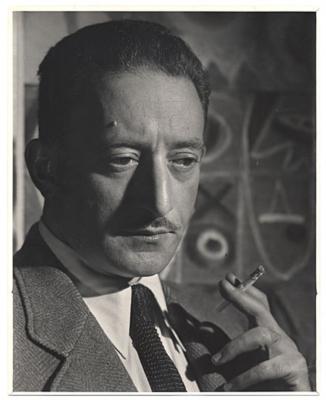
Biography
Clement Greenberg, assessing Gottlieb around 1954[4], called him "a very uneven artist, but a much more solid and accomplished one than is generally supposed" and credited him with "a greater range of controlled effects than any other abstract expressionist." Greenberg also placed the Pictographs within a specific structural lineage: the compartmentalised grids of Joaquín Torres-García and Paul Klee. Gottlieb's ability to place a flat silhouette "with a rightness beyond the capacity of ostensibly stronger painters" was one of Greenberg's more precise technical observations. The 1948 canvas "Letter to a Friend" (121.6 x 92.7 cm, oil, tempera and gouache) captures the Pictograph series at its most considered: a grid that organises without resolving, forms that gesture toward meaning without surrendering it.
By 1950[4], the critic Weldon Kees noticed at a Kootz Gallery show that Gottlieb's forms were beginning to break free of their grid enclosures. The Imaginary Landscapes that followed led eventually to the Bursts: a globe-like orb above a raw calligraphic explosion, the most distilled expression of his concerns and the work for which he is most widely recognised today.
Born in New York in 1903[4], he died there in 1974[4], having moved from the most systematic to the most elemental image-making of any painter in his generation.
Timeline
- 1903Born in New York
- 1941Began Pictograph series
- 1948Lectured on "Unintelligibility" at MoMA
- 1948"Letter to a Friend" created
- 1950Forms began to break free of grid enclosures
- 1974Died in New York
Notable Works
Tap to view larger.
Where to See Adolph Gottlieb
3 museums worldwide.
-
6 works
Victoria and Albert Museum
London, United Kingdom
Daily 10:00–17:45, Friday 10:00–22:00 · Free
-
 3 works
Smithsonian American Art Museum
Washington D.C., United States
Mon–Sun 11:30–19:00 · Free
-
 1 works
Harvard Art Museums
Cambridge, United States
Tue–Sun 10:00–17:00, closed Mondays · Free

Next stop
Abstract Expressionism →
Explore the artists and ideas of Abstract Expressionism.
Related Artists


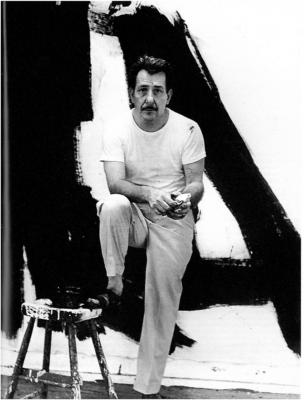


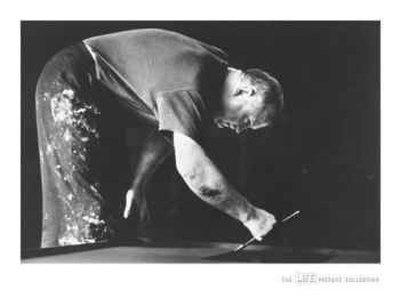
Frequently Asked Questions
What is Adolph Gottlieb known for?
Adolph Gottlieb is widely recognised for the Bursts, which feature a globe-like orb above a raw calligraphic explosion. These works are the most distilled expression of his concerns.What is Adolph Gottlieb's most famous work?
It is difficult to name Adolph Gottlieb's single most famous work. However, his "Burst" paintings from 1957[4] to the early 1970s are among his best-known. These paintings typically feature a disc hovering above an explosive, calligraphic mass on large colour fields. Gottlieb is also known for his earlier "pictographs". By 1941, he had begun painting these compositions, divided into irregular grids, with each section filled with archetypal, mythic, and symbolic images. In 1951, he began painting imaginary seascapes, which divided the field into two horizontal zones: sky above and sea below. Examples of Gottlieb's work held by the Guggenheim Museum include *W* (1954) and *Mist* (1961). *W* demonstrates a move away from the grid-like structure of his pictographs toward the isolation of forms that would come to dominate his later work.What should I know about Adolph Gottlieb's prints?
Adolph Gottlieb (1903[4]-1974[4]) was an American[4] abstract expressionist painter, sculptor, and printmaker. He studied at the Art Students League in 1920[4], and later in Paris. Gottlieb was associated with the New York School and exhibited widely from the 1940s until his death. His first solo show occurred at the Dudensing Gallery in New York in 1930. From 1935 to 1940, he exhibited with The Ten, a group of artists devoted to expressionist and abstract painting. Gottlieb's work progressed through several distinct phases. By 1941, he had painted his first pictographs; compositions divided into irregular grids, each compartment filled with archetypal, mythic and symbolic images. In 1951, he began imaginary skylines, dividing the field into two horizontal zones; sky, with shapes floating above the horizon, and a sea below. These elements were simplified in the Burst paintings of 1957 to the early 1970s. Here, a disc hovers above an explosive, calligraphic mass. Examples include *W* (1954) and *Mist* (1961).What style or movement did Adolph Gottlieb belong to?
Adolph Gottlieb is associated with the New York School and Abstract Expressionism[4]. Born in New York in 1903[4], Gottlieb studied at the Art Students League. During the early 1930s, he became close friends with Milton Avery and Mark Rothko. From 1935[4] to 1940, he exhibited with The Ten, a group of artists focused on expressionist and abstract painting. By 1941, Gottlieb had begun painting his pictographs; these compositions were divided into irregular grids, with each section filled with archetypal and symbolic images. Like many New York artists, Gottlieb subscribed to the Surrealist belief in dream imagery and the power of the subconscious. In 1951, he began imaginary views, dividing the field into two horizontal zones. Later, Gottlieb simplified these elements in his Burst paintings, from 1957 into the early 1970s. Gottlieb died in New York in 1974[4].What techniques or materials did Adolph Gottlieb use?
Adolph Gottlieb explored various techniques and materials throughout his career. Early on, he worked with oil paint on canvas, often in a representational style. During the 1940s, he developed his "Pictograph" series, characterised by compartmentalised images and symbols. These works employed bold colours and strong lines, achieved with oil paint and sometimes mixed media. Later, Gottlieb transitioned to his "Burst" paintings. These are perhaps his best-known works, and they typically feature a textured, often dark, circular form above a more chaotic, energetic field of colour. He achieved these effects by using oil paint thinned with turpentine or other solvents, applied with brushes and palette knives. Gottlieb also experimented with different supports, including canvas and paper. He sometimes incorporated sand or other granular materials into the paint to create texture. In his later years, he also created sculptures in bronze and aluminium.What was Adolph Gottlieb known for?
Adolph Gottlieb (1903[4]-1974[4]) was an American[4] abstract expressionist painter and sculptor. He is known for his symbolic pictographs from the early 1940s and, later, his "Burst" paintings. Gottlieb studied at the Art Students League of New York and travelled to Europe in 1921[4]. His early work from the 1930s was influenced by Milton Avery, and he was involved with avant-garde circles in New York, including the "Ten" group. In the early 1940s, Gottlieb developed his pictograph style: a grid-like composition with loosely defined compartments containing symbolic images and motifs drawn from mythology, psychoanalysis, and primitive art. These works aimed to express universal human experiences through abstract means. Examples include *Voyager's Return* (1946) and *Alchemist* (1945). From the late 1950s, Gottlieb moved away from the pictographs. He began his "Burst" series, characterised by a simple format of two contrasting abstract forms: a textured, dark orb above and an explosive burst of colour below. These paintings explored themes of duality and tension. Gottlieb continued to develop this format throughout the 1960s and 1970s, creating variations in colour and texture.When did Adolph Gottlieb live and work?
Adolph Gottlieb was born in New York City on 14 March 1903[4]. He studied at the Art Students League in 1920[4] with John Sloan and Robert Henri. From 1921 to 1923, he was in Europe, attending the Academie de la Grande Chaumiere in Paris, and other studio schools. He also travelled to Berlin and Munich. Gottlieb returned to New York in 1923. There, he finished high school and studied at Parsons School of Design, Cooper Union, and the Educational Alliance Art School. His first solo show occurred at the Dudensing Gallery, New York, in 1930. From 1935 to 1940, he exhibited with The Ten, a group of artists devoted to expressionist and abstract painting. He worked in the easel division of the WPA Federal Art Project in 1936 and, the following year, moved to the desert near Tucson, Arizona, before returning to New York in 1939. He spent his summers in Provincetown, Massachusetts, from 1946 until 1960, when he moved to East Hampton, Long Island. Gottlieb died in New York on 4 March 1974[4].Where can I see Adolph Gottlieb's work?
Adolph Gottlieb's works are held by many major public art museums. These include the Solomon R. Guggenheim Museum and the Whitney Museum of American[4] Art, both in New York. Gottlieb had a retrospective exhibition at the Guggenheim in 1968[4]. Other New York venues include the Metropolitan Museum of Art, and the Museum of Modern Art. Outside New York, his art can be seen at the Art Institute of Chicago, the Los Angeles County Museum of Art, and the National Gallery of Art (Washington, D.C.). International locations include the Musée National d'Art Moderne (Paris), the Peggy Guggenheim Collection (Venice), the National Gallery of Canada (Ottawa), the Australian National Gallery (Canberra), and the Tate Gallery (London). Gottlieb was born in New York in 1903[4]. During the 1920s, he studied at the Art Students League, Parsons School of Design, and Cooper Union. His first solo show was at the Dudensing Gallery in 1930. He died in New York in March 1974[4].Where was Adolph Gottlieb from?
Adolph Gottlieb was born in New York City on 14 March 1903[4]. His parents, Benjamin and Ida Gottlieb, were Jewish immigrants from Austria-Hungary. He attended public schools there and showed an early interest in art. In 1920[4], at the age of 17, Gottlieb left high school to study at the Art Students League of New York. He also frequented European modern art exhibitions at local galleries. In 1921, he travelled to Europe, spending time in Paris and Berlin, where he absorbed the artistic culture. He returned to New York in 1923 and resumed his studies at the Art Students League, working with John Sloan and Robert Henri. Gottlieb remained a New Yorker for most of his life. He died in New York City on 4 March 1974[4], just shy of his 71st birthday.Who did Adolph Gottlieb influence?
Adolph Gottlieb, born in New York in 1903[4], is associated with the New York School. He studied at the Art Students League in 1920[4], and travelled in Europe from 1921 to 1923. He exhibited with The Ten, a group of artists devoted to expressionist and abstract painting, from 1935 to 1940. Gottlieb's art evolved from the grid-based 'pictographs', begun by 1941, to imaginary fields divided into zones. His 'Burst' paintings, from 1957 to the early 1970s, characteristically show a disc hovering over an explosive mass. Gottlieb and Mark Rothko had a close friendship, beginning in the late 1920s. They shared interests and attitudes, such as a love of primitive art and an intense concern with myth. By 1941, Gottlieb and Rothko were working to define an art based upon myth. For over a decade, from the mid-1930s to the mid-1940s, each artist's painting changed from realistic representation to a new language of archetypes. Rothko was more concerned with inner states; Gottlieb remained interested in the external world.Who influenced Adolph Gottlieb?
Adolph Gottlieb studied at the Art Students League in 1920[4] with John Sloan and Robert Henri. Between 1921 and 1923, he studied in Paris at the Académie de la Grande Chaumière, also travelling to Berlin and Munich. Back in New York in 1923, he finished high school while also studying at Parsons School of Design, Cooper Union, and the Educational Alliance Art School. During this time, he developed a friendship with Barnett Newman. Gottlieb's close friendship with Mark Rothko began in the early 1930s. Both were interested in primitive art and myth. From the mid-1930s to the mid-1940s, they shared aesthetic goals, moving from realistic representation to a language of archetypes. By 1941, Gottlieb and Rothko were working together to create art based upon classical mythology. In the 1940s, Gottlieb's pictographs, with their grid-like structure, show the influence of Uruguayan artist, Torres-Garcia, whose works used a similar grid format. Gottlieb also cited Italian primitive predella panels as an important precedent.Who was Adolph Gottlieb?
Adolph Gottlieb (1903[4]-1974[4]) was an American[4] abstract expressionist painter and sculptor. Born in New York City, he studied at the Art Students League, and travelled to Europe in 1921[4]-1922[4]. Gottlieb is known for his abstract paintings, often featuring simple shapes and bold colours. During the 1940s, Gottlieb explored "pictographs": grid-like arrangements of symbols drawn from mythology and psychoanalysis. His work moved away from pure abstraction during this period. Later, in the 1950s, he developed his "Burst" series. These paintings typically feature a dark, amorphous shape above a bright, sun-like disc. These works are often interpreted as representing the duality between order and chaos. Gottlieb was a member of "The Ten", a group of American abstract expressionist artists who protested the Metropolitan Museum of Art's perceived lack of support for modern American art. He advocated for the importance of abstract art and its ability to communicate complex ideas and emotions. He died in New York City.
Sources
Editorial draws on the following primary and tertiary references for Adolph Gottlieb.
- [1] museum Harvard Art Museums Used for: museum holdings.
- [2] museum Victoria and Albert Museum Used for: museum holdings.
- [3] museum Smithsonian American Art Museum Used for: museum holdings.
- [4] wikipedia Wikipedia: Adolph Gottlieb Used for: biography, birth dates, death dates, identifiers, movement attribution, nationality.
- [5] book guggenheim-artofth00solo Used for: biography.
- [6] book guggenheim-guggenh01solo Used for: biography.
- [7] book guggenheim-guhe00solo Used for: biography.
Editorial overseen by Solis Prints. Sources verified 2026-09-22. Click a source for details, or hover over [N] in the page above to preview.
Editorial standardsMethodologyCorrectionsAI disclosureAbout the editorial team