


Willem de Kooning
Willem de Kooning arrived in the United States as a stowaway from Rotterdam in 1926, docking in Newport News, Virginia. He then made his way to New York City, where he initially supported himself as a house painter and commercial artist. For many years, de Kooning lived a bohemian existence, sharing a studio with fellow artist Arshile Gorky and immersing himself in the city's burgeoning art scene. His early work moved between figuration and abstraction.
Biography
By the late 1940s, de Kooning had developed his distinctive style of gestural abstraction. His first solo exhibition in 1948, featuring his black and white abstractions, brought him critical attention. However, it was his 'Woman' series, begun around 1950, that truly defined his public image. These large-scale paintings, often aggressively rendered, depicted female figures with distorted features, provoking both admiration and criticism from the art world.
In 1963, de Kooning moved permanently to Springs, Long Island, seeking a quieter life away from the city. Here, his work began to incorporate more light and open spaces, reflecting the coastal environment. He continued to paint into his eighties, despite health challenges in later years. De Kooning's approach to painting, combining raw energy with formal complexity, impacted twentieth-century art.
Timeline
- 1904Born in Rotterdam, Netherlands
- 1926Arrived in the United States as a stowaway
- 1926Moved to New York City
- 1940Developed distinctive style of gestural abstraction
- 1948First solo exhibition featuring black and white abstractions
- 1950Began the 'Woman' series
- 1963Moved to Springs, Long Island
- 1997Died
Notable Works
Tap to view larger.
Next stop
Abstract Expressionism →
Explore the artists and ideas of Abstract Expressionism.
Related Artists

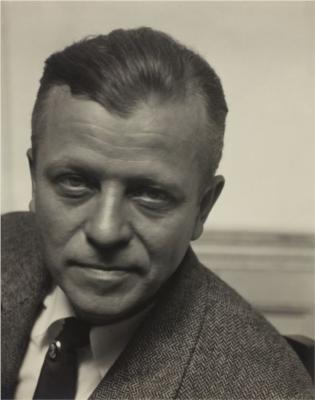
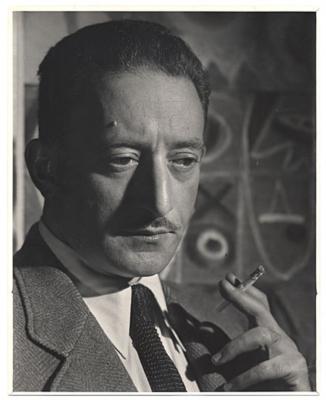

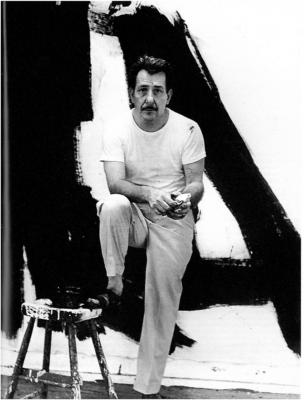

Frequently Asked Questions
What is Willem de Kooning known for?
Willem de Kooning is known for his first experiments with abstraction dating from 1928. These paintings are formalistic and use motifs such as egg shapes and vertical stripes.What is Willem de Kooning's most famous work?
Willem de Kooning is associated with the New York School of Abstract Expressionism. Although he worked in both abstract and figurative modes, he is best known for his paintings of women. He began his first series of *Women* in 1938, which became a recurrent theme in his work. *Woman, I*, created between 1950 and 1952, is one of de Kooning's most famous works. The image integrates an aggressive, distorted representation of a woman. Some have interpreted this figure as a decadent woman, robbed of her inner self by society and reduced to exaggerated physical features. De Kooning continued to explore the subject of women for more than ten years, creating caricatures and travesties of stylised media clichés of femininity. De Kooning's first solo exhibition took place at the Egan Gallery in New York in 1948. It included black-and-white abstractions he began in 1946, which helped establish his reputation. After Jackson Pollock's death, de Kooning assumed the position of Abstract Expressionism's leading painter.What should I know about Willem de Kooning's prints?
Willem de Kooning (1904-1997) is best known for his paintings; however, he also produced a substantial body of prints, particularly in the later decades of his career. Although he experimented with lithography in the 1960s, his printmaking activities increased significantly in the 1970s. De Kooning's prints often echo themes and motifs present in his paintings, such as abstract figures and gestural marks. He explored various printmaking techniques, including lithography, etching, and screenprinting. These prints are not mere reproductions of his paintings; instead, they represent a distinct area of his artistic output, with their own character. A key aspect of de Kooning’s printmaking was his collaborative approach. He worked closely with printmakers, such as Irwin Hollander, to achieve particular effects. This collaboration allowed him to translate his painterly style into the print medium, resulting in works that retain the spontaneity and energy associated with his paintings. His prints provide another avenue for understanding de Kooning's artistic vision and his exploration of form and abstraction.What style or movement did Willem de Kooning belong to?
Willem de Kooning is associated with Abstract Expressionism, an American movement that gained momentum in the 1940s. Born in Rotterdam in 1904, de Kooning immigrated to the United States in 1926. His initial abstract works, dating from 1928, displayed recurring motifs, such as egg shapes and vertical stripes. He also incorporated everyday items, arranging them with a sense of gravity. During the 1930s and 1940s, he produced both abstract and figurative pieces. His black and white pictures from the 1940s explored multiple-meaning forms. De Kooning, along with artists like Jackson Pollock and Robert Motherwell, was a leading figure in the development of Abstract Expressionism. The movement was influenced by European Surrealist ideas around automatism and free expression. De Kooning's style is characterised by energetic pigment application. His paintings often evoke emotions through abstract terms, such as urban areas or sensations outside the city. Some critics described the output of the New York School as action painting, because of the physical interaction between the painter and the canvas.What techniques or materials did Willem de Kooning use?
Willem de Kooning was versatile with materials and techniques. In his early career, he was influenced by Surrealist automatism and Cubism. He painted directly, manipulating pigment with vigorous gestures. He thinned oil paint with water, adding kerosene, safflower oil, or even mayonnaise as a binding agent. He applied pigment with house-painter's brushes, overlaying it with paper, cardboard, or vellum to create texture. Spatulas and knives were used for smaller details. De Kooning made his first sculptures in Rome in 1969, using clay that was later cast in bronze. Henry Moore encouraged him to enlarge his sculptures. He experimented with polyester resin coated with a bronze-like patina, but eventually favoured working at a large scale. In the 1970s, sculpture became more important to de Kooning than painting, but he returned to painting in 1975.What was Willem de Kooning known for?
Willem de Kooning, born in Rotterdam in 1904, is known as a leading figure in the Abstract Expressionist movement. He moved to the United States in 1926, initially working as a house painter before settling in New York in 1927. There, he met artists such as John Graham and Arshile Gorky. De Kooning's artistic development included studies at the Academie voor Beeldende Kunsten en Technische Wetenschappen in Rotterdam from 1916 to 1925. His early work was influenced by Cubism and Surrealism, particularly the styles of Pablo Picasso and Gorky. From 1935 to 1936, he was employed by the WPA Federal Art Project, after which he dedicated himself to painting full-time. A significant theme in de Kooning's work is the series *Women*, which he began in 1938. His gestural abstractionist style is characterised by sweeping brushstrokes and energetic pigment application, even in figure-based images such as *Woman I*. De Kooning's process involved continual reworking; for example, his wife Elaine estimated that he painted and scraped away around 200 images of women on the *Woman I* canvas before arriving at the final version. His first solo exhibition was at the Egan Gallery in New York in 1948.When did Willem de Kooning live and work?
Willem de Kooning was born in Rotterdam on 24 April 1904. He received academic training at the Academie voor Beeldende Kunsten en Technische Wetenschappen between 1916 and 1925. During this time, he apprenticed at a commercial art and decorating firm, later working for an art director. He also studied in Belgium, visiting museums and attending academies in Brussels and Antwerp in 1924. De Kooning moved to the United States in 1926, initially settling in Hoboken, New Jersey, where he worked as a house painter. By 1927, he had relocated to New York City and met artists such as John Graham, Stuart Davis, and Arshile Gorky. He continued to work in commercial art until 1935-1936, when he joined the WPA Federal Art Project. De Kooning lived in The Springs, East Hampton, Long Island from 1963. He died in 1997.Where can I see Willem de Kooning's work?
Willem de Kooning's artworks have been featured in many exhibitions. A major retrospective organised by the Museum of Modern Art, New York, travelled to the Stedelijk Museum in Amsterdam (September-November 1968), the Tate Gallery, London (December 1968-January 1969), the Art Institute of Chicago (May-July 1969), and the Los Angeles County Museum of Art (July-September 1969). Later displays of his drawings and sculptures were seen at the Walker Art Center, Minneapolis (March-April 1974), then the National Gallery of Canada, Ottawa (June-July 1974), and the Albright-Knox Art Gallery, Buffalo (December 1974-January 1975). His lithographs from 1970-1972 were circulated by Fourcade, Droll Inc., New York, across the United States and Canada (1974-1977). Venues included the University of Alabama, the Amarillo Art Center, the Fine Arts Gallery of San Diego, and the San Jose Museum of Art. More recent paintings were exhibited at M. Knoedler et Cie., Paris, in June 1968.Where was Willem de Kooning from?
Willem de Kooning was born in Rotterdam, Holland, in 1904. He later emigrated to the United States, arriving in 1926. De Kooning's initial abstract experiments date from around 1928. These paintings are formalistic, deploying motifs such as egg shapes and vertical stripes. Over the next few years, he introduced motifs derived from everyday life: vases, chairs, table tops, and windows. These commonplace items were arranged and painted with gravity. During the 1930s and 1940s, de Kooning painted both abstract and figurative works. In a series of black and white pictures from the 1940s, he investigated multiple-meaning forms and spatial concerns. Organic shapes were fragmented and fused with calligraphic elements, destroying ordinary relationships of figure to ground in favour of a new unity. He also produced figure drawings and paintings of seated working men. By 1948, de Kooning was a defining figure in American art.Who did Willem de Kooning influence?
Willem de Kooning influenced many artists, both Abstract Expressionists and Pop artists. He is considered a major influence on subsequent generations of abstract painters, primarily through his style rather than the subjects he depicted. His sweeping gestures, the speed of his painting, and the texture of his works are echoed by his followers. De Kooning's influence extended to Pop Art, particularly the work of Jasper Johns and Robert Rauschenberg, who employed brushstrokes reminiscent of Abstract Expressionism. Johns' painterly style and iconic treatment of subjects are often compared to de Kooning. De Kooning's method, like that of his New York School colleagues, originated in improvisation and accident. During the late 1930s and 1940s, there was an intense artistic interchange between de Kooning and Arshile Gorky. Gorky's free-flowing organic shapes reverberate in de Kooning's figures and anthropomorphic abstract forms.Who influenced Willem de Kooning?
Willem de Kooning was influenced by a number of artists and movements. Cubism and Surrealism, especially the work of Picasso, were important to his development. The randomness of automatism, a Surrealist technique, was also significant, as was their use of collage. Arshile Gorky, with whom de Kooning shared a studio, reinforced his link to Surrealism. Gorky's free-flowing organic shapes appear in de Kooning's figures and anthropomorphic abstract forms. De Kooning also benefited from Neo-Plasticism; Mondrian's grid structure, based on Cubism, reinforced de Kooning's own inclination toward Cubism. De Kooning met John Graham and Stuart Davis after he moved to New York in 1927. Like Pollock and Motherwell, de Kooning was a leader in the development of Abstract Expressionism, an American movement strongly influenced by European Surrealist notions of automatism and free expression. Some have observed the influence of Michelangelo and Rubens on his work.Who was Willem de Kooning?
Willem de Kooning (1904-1997) was a Dutch-American artist associated with the Abstract Expressionist movement. Born in Rotterdam, Netherlands, he arrived in the United States in 1924. De Kooning's initial artistic explorations involved abstraction around 1928. These paintings often used shapes like eggs and vertical stripes. Over the next few years, he introduced motifs derived from everyday life: vases, chairs, table tops, and windows. He arranged and painted these commonplace items with gravity. His work often displayed spatial ambiguity, confusing the relationships between objects. During the 1930s and 1940s, de Kooning produced both abstract and figurative works. In black and white pictures from the 1940s, he investigated multiple-meaning forms and spatial concerns. Organic shapes were fragmented and fused with calligraphic elements. He also made figure drawings and paintings of seated working men, energetically painted with formal breadth. By 1948, with his first solo show at the Charles Egan Gallery, he was already considered a defining figure in American art. The poet Robert Creeley called him "Bill the King", because "koenig" means "king" in Dutch, and because he was a leading figure in the New York avant-garde scene during the 1950s. In 1952, he completed *Woman I*, a work that stirred debate among Abstract Expressionists.
Sources
Editorial draws on the following primary and tertiary references for Willem de Kooning.
- [1] book Jed Perl, Art in America 1945-1970 Used for: biography, stylistic analysis.
- [2] book guggenheim-handboo00pegg Used for: biography.
- [3] book guggenheim-vangoghexpressio00gogh Used for: biography, stylistic analysis.
- [4] book Masterpieces of western art : a history of art in 900 individual studies from the Gothic to the present day Used for: biography.
Editorial overseen by Solis Prints. Sources verified 2026-09-23. Click a source for details, or hover over [N] in the page above to preview.
Editorial standardsMethodologyCorrectionsAI disclosureAbout the editorial team