



About Felice Casorati
1883–1963
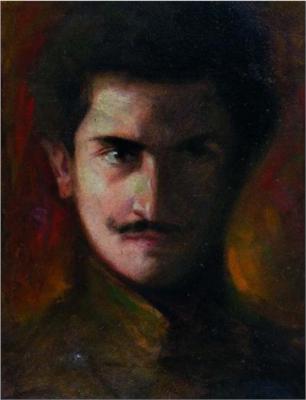
Italian Novecento painter known for eerily still figure compositions and a rigorous, architecturally structured pictorial logic.
Museums8
Countries6
Most worksMuseum of Fine Arts Boston, Boston · 2 works
Loading map…
Where to see Felice Casorati
Ranked by works you can see in person.
-
2 works
Museum of Fine Arts Boston
Boston, United States
-
2 works
Detroit Institute of Arts
Detroit, United States


-
1 works
Hungarian National Gallery
Budapest, Hungary
Also here (6)
Bertalan SzekelyVilmos Aba-NovakEndre BalintAladar Korosfoi-KrieschEgry JózsefAugust von Pettenkofen -
1 works
Stedelijk Museum Amsterdam
Amsterdam, Netherlands
-
1 works
National Museum of Fine Arts, Argentina
Buenos Aires, Argentina
Also here (6)
-
1 works
Neue Nationalgalerie
Berlin, Germany
-
1 works
Museum of Fine Arts Ghent (MSK)
Ghent, Belgium
-
1 works
National Gallery of Art
Washington D.C., United States


Frequently Asked Questions
Where can I see Felice Casorati's work?
Paintings by Felice Casorati can be viewed in numerous galleries and museums. In Europe, these include the Galleria Sabauda in Turin, and the Graf Harrach’sche Gemäldegalerie and the Kunsthistorisches Museum, both in Vienna. One can also find his works at the Nationalmuseum in Stockholm, and Sammlung Oskar Reinhart in Winterthur, Switzerland. Other locations are the Musée Fesch in Ajaccio, Corsica; the Barber Institute of Fine Arts, University of Birmingham, England; and the Musée des Beaux-Arts in Caen. In the United States, Casorati's paintings are held at the Baltimore Museum of Art; the Museum of Fine Arts, Boston; the Fogg Art Museum, Harvard University, in Cambridge, Massachusetts; the Art Institute of Chicago; the Detroit Institute of Arts; the John and Mable Ringling Museum of Art in Sarasota; the M. H. de Young Memorial Museum; and the National Gallery of Art in Washington, D.C. There is also a piece at the Museu de Arte in SÃ G PAULO.What should I know about Felice Casorati's prints?
Felice Casorati (1883[1]-1963[1]) was an Italian painter and printmaker associated with a return to order after the First World War. Printmaking as a fine art has a long history. Although the earliest paper impressions were in China, printmaking flourished in Europe by the late 1300s. Woodcuts served as book illustrations, religious icons, and playing cards. Printmaking was primarily a craft for commercial reproduction; however, masters like Dürer and Goya elevated graphics to high art. During the late 1800s, prints became a major artistic medium. The quality of each impression gained importance. Artists began signing prints, differentiating original graphics from reproductions. Signatures testified to authenticity and the artist's approval. Edition sizes were limited and numbered to influence prices and prevent excessive printing from worn plates. High-quality handmade papers further contributed to aesthetic value. Prints allowed artists to reach a wider audience because they were more affordable and could be distributed widely.Why are Felice Casorati's works important today?
Felice Casorati, born in 1883[1], occupies a position of importance in twentieth-century Italian art. Initially influenced by the Viennese Secession, his style evolved, incorporating elements of Magic Realism and reflecting an interest in essential form. After a period of musical study, Casorati turned to painting, producing his first known work in 1902[1]. He graduated in law in 1906, yet chose to pursue art. His early work was accepted by the Venice Biennale in 1907. Exposure to Gustav Klimt's work at the 1910 Biennale had a formative effect. Casorati's significance extends to his role as a teacher. In 1923, he founded the Scuola casoratiana in Turin, where he instructed young artists. His pupils included Francesco Menzio, Carlo Levi, and Jessie Boswell. He also co-founded the Societa Belle Arti Antonio Fontanesi, which organised exhibitions. Though he engaged with the Novecento movement, Casorati maintained a distinct artistic profile. His work, with its crystalline purity and enigmatic quality, contributed to the definition of Magic Realism. He received the Prize for Painting at the Venice Biennale in 1938, and his work was recognised at exhibitions internationally.What techniques or materials did Felice Casorati use?
Felice Casorati's techniques involved a meticulous approach to oil painting. He prepared his canvases with care, often using a gesso ground to create a smooth surface. This preparation allowed for precise application of paint. Casorati favoured tempera, an ancient technique using pigments bound with egg yolk. This medium creates a distinctive matte finish, contributing to the unique character of his work. He sometimes combined tempera with oil paint, layering the two for specific effects. He aimed to revive the techniques of Renaissance masters, studying their methods. This pursuit led him to experiment with materials and procedures, seeking to capture the qualities of earlier art. However, he recognised that replicating the exact effects of past masters was impossible, due to differences in available materials.Who did Felice Casorati influence?
Felice Casorati established the Scuola casoratiana in his studio in Turin, in 1923[1]. Several of his pupils later became well known. Francesco Menzio, Carlo Levi, Gigi Chessa, and Jessie Boswell, for example, went on to form the Gruppo di Sei. Beyond his direct students, Casorati's style helped to define Magic Realism, a style he shared with the early Novecento group, although he maintained a profile distinct from the Novecento movement. One Italian painter who learned from Modigliani's nudes was Casorati, who was drawn to their chromatic vibrations, delineated volumes, and tangible sense of breathing bodies. Casorati's influence extended into stage and costume design, working with major theatres like La Scala in Milan and the Maggio Musicale in Florence.Who influenced Felice Casorati?
Felice Casorati's early artistic development was significantly shaped by the Viennese Secession, particularly the decorative and symbolic style seen in Gustav Klimt's work. While in Naples (1908[1]-1911[1]), Casorati studied Pieter Brueghel the Elder. Later, during 1911-1915, while living in Verona, Casorati co-founded the journal *La Via Lattea*, contributing illustrations reminiscent of Jan Toorop and Aubrey Beardsley's Art Nouveau style. Contact with the artists of Ca’ Pesaro exposed him to contemporary artistic trends from Paris and Munich. After 1917, Casorati moved to Turin, where his mature works moved away from decoration, focusing on essential forms. This shift was influenced by mathematical spatial constructions of Quattrocento painting, and the still atmosphere of Piero della Francesca's art. Modigliani's paintings also influenced Casorati's work, specifically the chromatic qualities, defined volumes, and tangible sense of breathing bodies. Casorati's engagement with artistic and intellectual circles in Turin also played a part in his artistic choices.What is Felice Casorati's most famous work?
Felice Casorati, born in Novara in 1883[1], became a central figure in Turin's intellectual circles after moving there in 1917[1]. Although he studied law, he pursued a career as an artist, with early influences from the Viennese Secession. His mature works, created after the First World War, moved away from decorative detail. They displayed a focus on essential form, drawing inspiration from Quattrocento painting and the atmosphere in Piero della Francesca’s compositions. Examples of these works include *Portrait of Silvia Cenni* and *Midday*, both from 1922. Casorati had a solo exhibition at the Biennale in 1924. Lionello Venturi wrote an influential catalogue essay to accompany the exhibition. The crystalline purity and enigmatic nature of Casorati’s compositions helped to define the Magic Realism style, which he shared with the early Novecento group. Although associated with the Novecento exhibitions, he maintained a distinct profile. In 1923, Casorati established the Scuola casoratiana in his studio, teaching young artists. He was also involved in stage and costume design for major theatres, an activity he continued after the Second World War. Casorati won the Prize for Painting at the Venice Biennale in 1938. He died in 1963[1].What style or movement did Felice Casorati belong to?
Felice Casorati (born in Novara, 4 December 1883[1]) engaged with several styles during his career. Early on, the decorative, symbolic style of the Viennese Secession had a formative influence on his work. Illustrations he contributed to the journal *La Via Lattea* (which he co-founded in 1914[1]) recalled the Art Nouveau manner of Jan Toorop and Aubrey Beardsley. After his father's death in 1917, Casorati moved to Turin and became a central figure in the city’s intellectual circles. In his mature works of the post-war period, decorative detail was replaced by a meditation on essential form. This was influenced by mathematical spatial constructions of Quattrocento painting, and particularly the still atmosphere of Piero della Francesca’s work. The crystalline purity and enigmatic tone of Casorati’s compositions helped to define the style of Magic Realism, which he shared with the early Novecento group. Although he participated in Novecento exhibitions, he maintained a profile distinct from Margherita Sarfatti’s movement. Casorati died on 1 March 1963[1].
Sources
Where to See guide aggregates verified holdings of Felice Casorati's works across the following collections.
- [1] wikipedia Wikipedia: Felice Casorati Used for: biography.
- [2] book guggenheim-mariomerz00cela Used for: biography.
- [3] book Braun, Emily, 1957-; Asor Rosa, Alberto; Royal Academy of Arts (Great Britain), Italian art in the 20th century : painting and sculpture, 1900-1988 Used for: biography.
- [4] book Masterpieces of western art : a history of art in 900 individual studies from the Gothic to the present day Used for: biography.
Editorial overseen by Solis Prints. Sources verified 2026-08-31. Click a source for details, or hover over [N] in the page above to preview.
Editorial standardsMethodologyCorrectionsAI disclosureAbout the editorial team