



Jacques-Louis David
David staged the French Revolution as a painting. The Death of Marat (1793) shows the radical journalist murdered in his bath by Charlotte Corday, slumped against the side of the tub, a quill pen still in his hand. It was painted within months of the killing. David had visited Marat the day before his death. The painting is propaganda, but it is also one of the most powerful images of political martyrdom ever made.

Biography
He was born in Paris and studied at the Academie Royale under Joseph-Marie Vien. He won the Prix de Rome on his fourth attempt and spent five years in Italy studying classical sculpture and Renaissance painting. He returned to Paris and painted The Oath of the Horatii (1784), a scene of Roman republican virtue that became the manifesto of Neoclassicism: geometry, discipline, and moral clarity in opposition to the Rococo's curves and indulgence.
He was an active participant in the Revolution. He voted for the execution of Louis XVI. He organised revolutionary festivals and redesigned the French flag. He was imprisoned after the fall of Robespierre and nearly executed himself. He survived, switched his allegiance to Napoleon, and became the Emperor's official painter. The Coronation of Napoleon (1805-07) is a canvas over six metres wide depicting the ceremony at Notre-Dame with the precision of a court photographer.
When Napoleon fell, David was exiled to Brussels as a regicide. He painted there until his death in 1825, at seventy-seven. He trained a generation of French painters, including Ingres, and established the Neoclassical style as the dominant mode of European painting for half a century.
Timeline
- 1772Painted "Diana and Apollo piercing with their arrows the children of Niobe" aged 24.
- 1784Painted "Portrait of Madame Charles-Pierre Pecoul, nee Potain, mother-in-law of the artist" aged 36.
- 1792Painted "Allegory of the French People Offering the Crown and Sceptre to the King" aged 44.
- 1801Painted "Napoleon Crossing the Alps at the St Bernard Pass, 20th May 1800" aged 53.
- 1806Painted "The Empress Josephine Kneeling with Mme de la Rochefoucauld and Mme de la Valett" aged 58.
- 1807Painted "The Consecration of the Emperor Napoleon and the Coronation of the Empress Josephine by Pope Pius VII, 2nd December 1804" aged 59.
Notable Works
Tap to view larger.
Where to See Jacques-Louis David
24 museums worldwide.
-
 186 works
National Gallery of Art
Washington D.C., United States
Mon–Sat 10:00–17:00, Sun 11:00–18:00 · Free
-
 41 works
Louvre
Paris, France
Wed–Mon 09:00–18:00 (Fri until 21:45); closed Tue · €22 adults, free under-18
-
 12 works
Metropolitan Museum of Art
New York City, United States
Sun–Tue, Thu 10:00–17:00; Fri–Sat 10:00–21:00; closed Wed · Adults $30, students $17 (pay-what-you-wish for NY residents)
-
 5 works
Palais des Beaux-Arts de Lille
Lille, France
Mon 14:00–18:00, Wed–Sun 10:00–18:00, closed Tuesdays · 7 € adults
-

-
4 works
Museum of Fine Arts Ghent (MSK)
Ghent, Belgium
Tue–Fri 09:30–17:30, Sat–Sun 10:00–18:00, closed Mondays

Next stop
Neoclassicism →
Explore the artists and ideas of Neoclassicism.
Jacques-Louis David prints
Hand-finished archival prints from Jacques-Louis David's body of work.
 Portrait of a Young Woman - Jacques-Louis David
From £28.00
Portrait of a Young Woman - Jacques-Louis David
From £28.00
 Calliope Mourning Homer - Jacques-Louis David
From £28.00
Calliope Mourning Homer - Jacques-Louis David
From £28.00
 Portrait of Emmanuel Joseph Sieyès - Jacques-Louis David
From £28.00
Portrait of Emmanuel Joseph Sieyès - Jacques-Louis David
From £28.00
 Portrait of Emmanuel Joseph Sieyès - Jacques-Louis David
From £28.00
Portrait of Emmanuel Joseph Sieyès - Jacques-Louis David
From £28.00
 Emperor Napoleon I in His Study - Jacques-Louis David
From £28.00
Emperor Napoleon I in His Study - Jacques-Louis David
From £28.00
 Napoleon I on His Imperial Throne - Jacques-Louis David
From £28.00
Napoleon I on His Imperial Throne - Jacques-Louis David
From £28.00
Related Artists


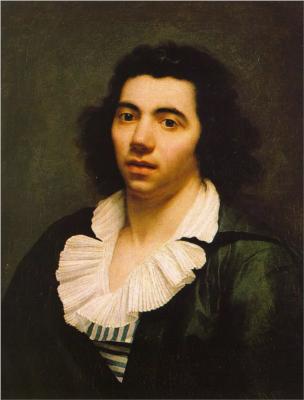
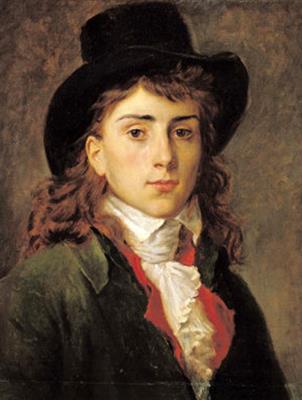
Take Jacques-Louis David home.
See all Jacques-Louis David prints →Frequently Asked Questions
Jacques-louis david famous works?
Some of Jacques-Louis David's famous works include Erasistratus Discovering the Cause of Antiochus’ Disease, Andromache Mourning Hector, and Oath of the Horatii. Other well-known paintings are The Death of Socrates, The Lictors Bring to Brutus the Bodies of His Sons, and Sketch of ‘The Tennis Court Oath’.Was jacques louis david?
Jacques-Louis David was an active revolutionary and the most prominent Neoclassical painter of his generation. He began his career admiring the work of François Boucher and other Rococo artists. As a young man, he trained in the studio of Joseph-Marie Vien and the official school of the Académie Royale de Peinture et de Sculpture.What art style is jacques louis david associated with?
Jacques-Louis David is associated with the Neoclassical art style. During the French Revolution, David painted in this style, which was considered the definitive break from the Rococo style.What is jacques-louis david best known for?
Jacques-Louis David is perhaps best known as an early official portrait painter of Napoleon. During the French Revolution, David painted in a neoclassical style that marked a definitive break from the Rococo style.What is jacques louis david known for?
Jacques-Louis David is known as perhaps the best-known early official portrait painter of Napoleon. During the French Revolution, he painted in a neoclassical style considered the definitive break from the lingering Rococo.Where is jacques louis david napoleon crossing the alps?
Between 1801 and 1805, David produced five versions of his monumental painting Napoleon Crossing the Alps. The composition, initially commissioned by the King of Spain, presents an idealised view of Napoleon and his army crossing the Great St Bernard Pass in May 1800.How did jacques louis david die?
Jacques-Louis David died in 1825 at the age of 77.Jacques louis david painting technique?
Jacques-Louis David began his career admiring the work of François Boucher and other Rococo artists. He trained in the studio of Joseph-Marie Vien and the official school of the Académie Royale de Peinture et de Sculpture.
Sources
Editorial draws on the following primary and tertiary references for Jacques-Louis David.
- [1] museum Museum of Fine Arts of Rennes Used for: museum holdings.
- [2] museum Pushkin Museum of Fine Arts Used for: museum holdings.
- [3] museum Buffalo AKG Art Museum Used for: museum holdings.
- [4] museum Royal Museum of Fine Arts Antwerp Used for: museum holdings.
- [5] museum Clark Art Institute Used for: museum holdings.
- [6] museum Musée des Beaux-Arts et d'Archéologie de Besançon Used for: museum holdings.
- [7] book Jacques-Louis David, Delphi Complete Works of Jacques-Louis David Used for: biography.
- [8] book Jacques-Louis David, Delphi Complete Works of Jacques-Louis David (Illustrated) (Delphi Masters of Art Book 43) Used for: biography.
Editorial overseen by Solis Prints. Sources verified 2026-07-23. Click a source for details, or hover over [N] in the page above to preview.
Editorial standardsMethodologyCorrectionsAI disclosureAbout the editorial team