The Calling of Saint Matthew by Caravaggio
Narcissuss by Caravaggio
Judith Slaying Holofernes by Artemisia Gentileschi
Portrait of Innocent X by Diego Velázquez
Self-Portrait as the Allegory of Painting by Artemisia Gentileschi
Portrait of Juan de Pareja by Diego Velázquez
La Bohémienne by Frans Hals
The Battle of the Amazons by Peter Paul Rubens
The Dead Christ Mourned ('The Three Maries') by Annibale Carracci
Romulus and Remus by Peter Paul Rubens
River Landscape by Annibale Carracci
Portrait of the Painter Frans Snyders by Anthony van Dyck

Baroque

93 artists · 1600–1750

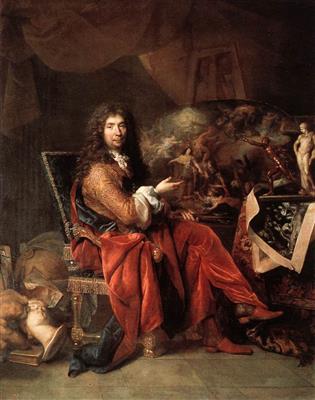
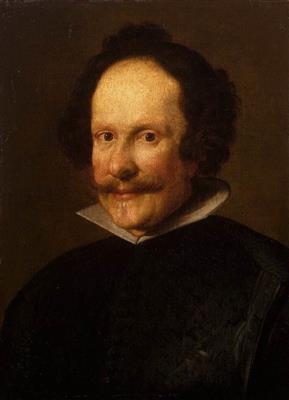
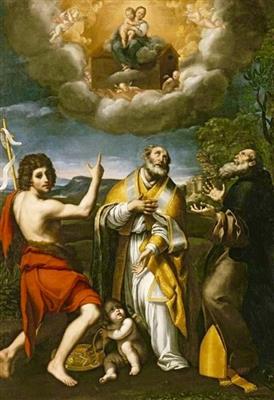
Baroque[5] art emerged in Rome around 1600 and dominated European visual culture for a century and a half. The style was born from the Catholic Church's need to reassert its authority after the Protestant Reformation, and the Council of Trent (1545-1563[5]) explicitly called for art that would move the faithful through direct emotional engagement rather than intellectual abstraction. Painters abandoned the balanced composure of the High Renaissance in favour of theatrical lighting, diagonal compositions, and figures caught in moments of extreme physical or spiritual intensity. Caravaggio's tenebrism, with its pools of darkness slashed by directed beams of light, gave the movement its visual signature. From Rome the style spread north: Rubens carried it to Flanders, Velazquez transformed it in the Spanish court, and Rembrandt and Vermeer adapted it to the Protestant mercantile culture of the Dutch Republic, where it shed its Catholic grandeur and turned inward. The Baroque was never a single style. It encompassed the monumental ceiling frescoes of Tiepolo, the quiet domestic interiors of Vermeer, and the unflinching self-scrutiny of Rembrandt's late portraits. What held these strands together was a shared conviction that painting should provoke feeling, not merely represent form.

Key Ideas

  • The Calling of Saint Matthew — Baroque

    Tenebrism and Directed Light

    Caravaggio did not invent chiaroscuro, but he was the first painter to make extreme contrasts of light and dark the structural principle of an entire composition. His method, known as tenebrism, placed figures against near-total darkness and illuminated them with a single raking light source. This was not decorative. It forced the viewer's eye to the narrative centre of the painting and gave ordinary human bodies a sculptural, almost hallucinatory presence. Within a decade of Caravaggio's Contarelli Chapel paintings (1599-1600), artists across Europe were working in his shadow. The Caravaggisti included Artemisia Gentileschi in Italy, Gerrit van Honthorst in Utrecht, and Georges de La Tour in France.

  • Narcissuss — Baroque

    The Theatricality of the Body

    Baroque painters treated the human body as a vehicle for extreme states: ecstasy, agony, awe, grief. Figures twist, strain, and reach outward from the picture plane in ways that would have seemed indecorous to Renaissance painters. Rubens's muscular forms convey physical force with an energy that borders on excess. Artemisia Gentileschi painted Judith beheading Holofernes with physical conviction, depicting the act as hard, bloody work requiring two women. This was a direct challenge to the decorous versions by male contemporaries. The Baroque body was never passive.

  • Judith Slaying Holofernes — Baroque

    Painting as Optical Experience

    Vermeer and Velazquez, working independently in Delft and Madrid, arrived at a parallel discovery: painting could record not just what the eye sees but how it sees. Velazquez's late works dissolve solid form into loose brushwork that resolves into legibility only at a distance. Las Meninas (1656) is an essay on perception itself. Vermeer pursued a different kind of optical truth, using what appear to be camera obscura effects to render domestic interiors with a luminosity that feels more real than reality. Both painters anticipated concerns that would not resurface in Western art until the nineteenth century.

  • Portrait of Innocent X — Baroque

    The Dutch Exception

    In the Protestant Dutch Republic, Baroque painting took a radically different path. Without church or court patronage on the Catholic model, Dutch painters served a mercantile middle class that wanted portraits, landscapes, still lifes, and genre scenes for private homes. Frans Hals captured personality with rapid, visible brushstrokes. Judith Leyster painted musicians and drinkers with the same bravura handling. Rembrandt spent his final decades producing self-portraits and biblical scenes of startling psychological depth, largely for himself. The Dutch Baroque proved that the movement's emotional intensity could operate at intimate scale.

  • Self-Portrait as the Allegory of Painting — Baroque

    Spectacle, Power, and Persuasion

    Baroque art was never politically neutral. The Catholic Church commissioned vast ceiling frescoes designed to overwhelm congregations with sensory evidence of divine power. Absolute monarchs adopted the same visual rhetoric: Louis XIV's Versailles was Baroque spectacle repurposed for secular authority. Rubens produced enormous allegorical cycles for the Medici and the Spanish Habsburgs. Van Dyck's portraits of Charles I transformed a short, physically unremarkable king into an image of aristocratic grace so persuasive it defined royal portraiture for generations. The Baroque understood, before the modern era formalised the idea, that images are instruments of power.

Origins

Rome After the Council of Trent

The Baroque began as an instrument of Catholic renewal. The Council of Trent declared that images should instruct the illiterate, reinforce doctrine, and move the faithful to piety. Art was to be clear, emotionally direct, and accessible. Mannerism was judged inadequate to this task. Into this environment came two painters who defined the Baroque's opposing poles: Annibale Carracci, who painted the Farnese Gallery ceiling with classicising energy, and Caravaggio, who painted sacred subjects with an unfiltered naturalism that scandalised and fascinated in equal measure.

The Spread Across Europe

By 1620 the Baroque had ceased to be a Roman phenomenon. Rubens returned to Antwerp in 1608 and established a workshop that became the most productive in Europe. His diplomatic career gave him access to courts across the continent. In Spain, Velazquez absorbed Italian lessons during two trips to Rome and synthesised them with a uniquely Spanish sobriety. In France, Poussin developed a cerebral, classicising Baroque. The Dutch Republic produced the movement's most distinctive variant: a Baroque without Catholic patronage, driven by a merchant class that wanted paintings for domestic walls.

Women in the Baroque Workshop

The Baroque period saw more women achieve professional recognition as painters than any previous era. Artemisia Gentileschi became the first woman admitted to the Florentine Accademia del Disegno in 1616. She maintained an independent workshop and took on major commissions from the Medici and the King of England. In the Dutch Republic, Judith Leyster was admitted to the Haarlem Guild of St. Luke in 1633. Her self-portrait of around 1630 shows her turning from an easel with relaxed confidence that asserts her professional identity.

The Late Baroque and Its Afterlife

By the early eighteenth century, the Baroque's intensity had begun to soften. In Venice, Tiepolo painted ceiling frescoes of extraordinary lightness. In France, Watteau translated Baroque theatricality into intimate scenes of aristocratic leisure. When Neoclassicism arrived in the 1760s with its call for moral seriousness, it defined itself explicitly against the Baroque. But the Baroque's legacy resurfaced throughout the nineteenth and twentieth centuries: in Delacroix's colour, in the chiaroscuro of film noir, and in the theatrical installations of contemporary art.

In Their Words

“You will find the spirit of Caesar in this soul of a woman.”
Artemisia Gentileschi, Letter to her patron Don Antonio Ruffo, 1649
“I regard all the world as my country, and I believe I should be very welcome everywhere.”
Peter Paul Rubens, Letter to Valavez, 1625
“I would rather be the first painter of common things than second in higher art.”
Diego Velazquez, Recorded in Antonio Palomino, Lives of the Eminent Spanish Painters and Sculptors (1724)
“My talent is such that no undertaking, however vast in size, has ever surpassed my courage.”
Peter Paul Rubens, Correspondence, cited in Ruth Saunders Magurn (ed.), The Letters of Peter Paul Rubens (Harvard, 1955)

All Baroque Artists

86 artists.

Recommended Reading

  • Principles of Art History

    Principles of Art History

    Heinrich Wolfflin · 1915

    The foundational formalist text that defined the stylistic categories still used to distinguish Renaissance from Baroque.

  • Caravaggio: A Life Sacred and Profane

    Caravaggio: A Life Sacred and Profane

    Andrew Graham-Dixon · 2010

    A thoroughly researched biography reconstructing Caravaggio's turbulent life from archival documents and close readings of the paintings.

  • Artemisia Gentileschi and the Authority of Art

    Artemisia Gentileschi and the Authority of Art

    R. Ward Bissell · 1999

    The standard catalogue raisonne with detailed entries on every known painting and a documentary appendix.

  • Rembrandt's Eyes

    Rembrandt's Eyes

    Simon Schama · 1999

    A dual biography of Rembrandt and Rubens within the political and commercial worlds of the seventeenth-century Low Countries.

Frequently Asked Questions

  • What is Baroque art?
    Baroque[5] was the dominant European visual style from roughly 1600 to 1750, born from the Catholic Church's counter-Reformation drive to reassert authority through emotionally overwhelming art. Its defining qualities are dramatic chiaroscuro (extreme light-dark contrast), diagonal compositions that break the plane, figures caught mid-action, and an appeal to the viewer's senses as a route to spiritual conviction. Caravaggio, Bernini and Rubens are its central figures.
  • When was the Baroque period?
    The Baroque[5] spans roughly 1600 to 1750, with most historians dating its start to Caravaggio's first major Roman commissions (the Contarelli Chapel St Matthew cycle, 1599 to 1600). It dominated Italian, Spanish, Flemish and some Dutch painting through the seventeenth century, architected the rebuilt churches of Counter-Reformation Rome, and tailed off into the lighter Rococo style in France from the 1720s onwards.
  • Who are the most famous Baroque painters?
    Caravaggio (1571 to 1610) set the template with his brutal chiaroscuro and unidealised street-life models. Peter Paul Rubens became the international court painter, running a Flemish workshop that supplied half of Europe. Diego Velázquez dominated the Spanish court. Artemisia Gentileschi extended Caravaggio's dramatic manner with unmatched psychological force. Rembrandt van Rijn pushed Baroque[5]'s light effects into an intimate, deeply human register in Protestant Holland.
  • What are the defining features of Baroque style?
    Five features recur: chiaroscuro (a deep dark ground with a dramatic single light source), diagonal composition replacing balanced Renaissance[5] symmetry, figures caught in mid-gesture to heighten drama, emotional directness aimed at the viewer's body not just the mind, and ornate material richness (gold, marble, carved gilt frames, rich fabrics rendered in paint). Ceiling frescoes used illusionistic architecture to make interior spaces appear to open onto the heavens.
  • How does Baroque differ from Renaissance?
    Renaissance art (roughly 1400 to 1600) prized balanced symmetry, ideal proportion, calm harmony and linear perspective organised around a stable viewpoint. Baroque[5] art kept the perspective skills but used them for theatrical drama: figures leaning off the edge of frames, extreme light contrasts, unstable diagonal axes, moments of action rather than contemplation. Renaissance appealed to the reasoned mind; Baroque appealed to the emotions and the body.
  • What is Caravaggio famous for?
    Caravaggio invented tenebrism (the extreme use of darkness with a dramatic light source) and used unidealised street models for biblical figures, scandalously naturalistic for their time. The Calling of Saint Matthew (1599 to 1600, San Luigi dei Francesi, Rome) shows Christ's summoning ray of light cutting through a dimly lit tavern. His influence was immediate and continental: the Caravaggisti spread his method from Utrecht to Naples to Spain within a generation.
  • What role did the Catholic Church play?
    Baroque[5] was largely a Counter-Reformation product. The Catholic Church had lost northern Europe to Protestantism by 1600 and needed to reassert doctrinal authority through overwhelming sensory experience. Commissioned chapels, altarpieces, and ceiling frescoes had to move the viewer to religious conviction. Bernini's Ecstasy of Saint Teresa in Santa Maria della Vittoria, Rome (1647 to 1652) is the complete embodiment: sculpture, architecture and concealed daylight working as a single emotional instrument.

Sources

Baroque editorial draws on the following published scholarship.

  1. [1] book Heinrich Wolfflin, Principles of Art History, 1915 Used for: biography, stylistic analysis, technique.
  2. [2] book Andrew Graham-Dixon, Caravaggio: A Life Sacred and Profane, 2010 Used for: biography, stylistic analysis.
  3. [3] book R. Ward Bissell, Artemisia Gentileschi and the Authority of Art, 1999 Used for: biography, political views, stylistic analysis.
  4. [4] book Simon Schama, Rembrandt's Eyes, 1999 Used for: political views, stylistic analysis.
  5. [5] wikipedia Wikipedia: Baroque Used for: biography.
  6. [6] book Susie Hodge, Art Used for: biography.
  7. [7] book Victoria Charles, Baroque Art Used for: biography.

Editorial overseen by Solis Prints. Sources verified 2026-06-18. Click a source for details, or hover over [N] in the page above to preview.

See Baroque art in person.

Plan your visit to see Baroque art →

Take Baroque home.

See all Baroque prints →
Back to Discover