



About Bradley Walker Tomlin
American · 1899–1955
American[1] Abstract Expressionist who transitioned from Cubist still lifes to calligraphic white-on-dark canvases in the last five years of his life.
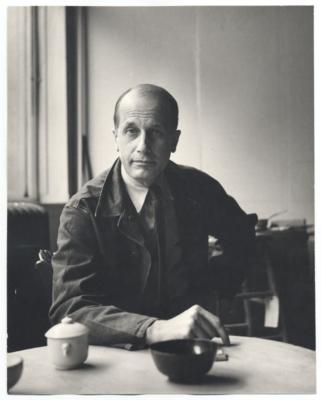
Museums5
Countries1
Most worksMuseum of Modern Art, New York City · 4 works
Loading map…
Where to see Bradley Walker Tomlin
Ranked by works you can see in person.
-
4 works
Museum of Modern Art
New York City, United States
-
2 works
Metropolitan Museum of Art
New York City, United States


-
1 works
Buffalo AKG Art Museum
Buffalo, United States
-
1 works
National Gallery of Art
Washington D.C., United States
-
1 works
Pennsylvania Academy of the Fine Arts
Philadelphia, United States


Frequently Asked Questions
Where can I see Bradley Walker Tomlin's work?
While a comprehensive list is difficult to compile, several museums hold works by Bradley Walker Tomlin. In the United States, these include the Metropolitan Museum of Art (New York), the Museum of Modern Art (New York), the Los Angeles County Museum of Art, the Minneapolis Institute of Arts, the Virginia Museum of Fine Arts (Richmond), the Charles Hosmer Morse Museum of American[1] Art (Winter Park, Florida), the Wolfsonian at Florida International University (Miami Beach), the National Gallery of Art (Washington DC), the Hirshhorn Museum and Sculpture Garden (Washington DC), the Phillips Collection (Washington DC), the Whitney Museum of American Art (New York), and the Yale University Art Gallery (New Haven). Outside the United States, Tomlin's work can be viewed at the Royal Ontario Museum (Toronto).What should I know about Bradley Walker Tomlin's prints?
Printmaking involves creating an image on a matrix (such as a woodblock, stone, or screen), then transferring it to paper. Each print in an edition is considered an original, not a copy. The artist determines the edition size, and each print is individually inked and pulled. The edition number is written on the bottom left margin of the print, expressed as a fraction (for example, 12/25, meaning the 12th print in an edition of 25). The print's title is written in the centre, and the artist's signature appears on the right. These conventions, while not legally binding, are widely respected among printmakers. Proofing is a critical stage where the artist tests the print's feel and makes artistic decisions. It can be a lengthy process, especially with multiple blocks, as each affects the others. Reviewing proofs over time is important for identifying subtle points and achieving a great print. The artist's choice limits an edition, not technical limitations.Why are Bradley Walker Tomlin's works important today?
Bradley Walker Tomlin (1899[1]-1953[1]) was an American[1] artist associated with the Abstract Expressionist movement. His works are important because they contribute to an understanding of the development of abstraction in American art. Tomlin's artistic journey moved from early commercial work and Cubist-influenced pieces to his mature style of calligraphic abstraction. This later work, characterised by layered brushstrokes and a muted colour palette, offers a visual language that balances control and spontaneity. His art provides insight into the cultural and intellectual climate of the mid-20th century, a period marked by a search for new forms of expression after the Second World War. Tomlin, along with other Abstract Expressionists, sought to create art that reflected inner states and universal themes, rather than representational depictions of the external world. His paintings remain relevant for their contribution to the history of abstract art and their continued ability to engage viewers with their subtle complexities.What techniques or materials did Bradley Walker Tomlin use?
Bradley Walker Tomlin worked primarily with oil paint. To prepare his canvases, he applied two coats of turps-thinned Flake White primer to cotton duck that had been sized with animal-skin glue; he then sanded the surface when dry. When applying colour, Tomlin mixed standard artist's oil paint with a medium of wax and turpentine. He kept this medium warm on a hot plate and mixed small amounts with the paint by brush just before application. The mixture was applied to the canvas with a brush and worked over, ensuring the medium and paint were thoroughly mixed and evenly covering the shape. He then manipulated the paint with a large painting spatula and a small painting knife until he achieved the desired effect. Tomlin aimed for consistent surfaces within a single painting. He noted that extensive heating of the medium could lead to evaporation, making the paint gummy. He often re-used leftover paint, including the wax, when mixing subsequent colours. Although he was never precise about the amount of wax added, oil remained the primary binder, unlike encaustic techniques where wax is the binder.Who did Bradley Walker Tomlin influence?
It is difficult to make definitive claims about Bradley Walker Tomlin's influence on later artists based on the provided texts. The passages do not directly address Tomlin or his impact on the art world. Instead, they offer a broad overview of American[1] painters and their influences, from the early portraitists John Singleton Copley and Gilbert Stuart to later figures such as Winslow Homer, Thomas Eakins, and George Bellows. The texts suggest a complex web of artistic relationships, with American artists drawing inspiration from various sources, including British, French, and German traditions. For example, Benjamin West emulated French historical painters, while others were influenced by the Munich school or British artists. Homer was seemingly influenced by Eakins, and Bellows is considered a descendant of Chase. However, these passages do not establish a clear line of influence connecting Tomlin to any particular artist or movement.Who influenced Bradley Walker Tomlin?
Bradley Walker Tomlin's artistic development involved exposure to several influences. At Black Mountain College, Josef Albers' Bauhaus principles were pervasive, though Tomlin's contemporary, Kenneth Noland, found Albers too rigid. Ilya Bolotowsky, another instructor, introduced Noland (and presumably other students) to Impressionism, Cubism, Neo-Plasticism, and Surrealism. Bolotowsky conveyed Piet Mondrian's ideas regarding colour relations and space. Other Bauhaus figures such as Kandinsky, Klee, and Schwitters also affected students at Black Mountain. Paul Klee's use of Cubism and colour to convey mood, as well as his proto-Surrealist images, captured the imagination of some, including Noland. Klee sought to reduce natural phenomena to fundamental elements, reconciling these forms with metaphysical beliefs. Later, Noland was drawn to Jackson Pollock's automatism, which involved chance and spontaneous images, freeing the artist from traditional constraints.What is Bradley Walker Tomlin's most famous work?
It is difficult to name Bradley Walker Tomlin's single 'most famous work'. He is best known as a mid-century abstract expressionist, developing his mature style in the late 1940s. Early in his career, Tomlin worked in a cubist-influenced figurative style. After 1945[1], his painting moved into a calligraphic abstract style, with looping brushstrokes. His paintings from the late 1940s and early 1950s are now considered his most important work, although none is a clear 'signature piece'. Examples of his mature abstract style include paintings such as *Number 9: In Praise of Gertrude Stein* (1950), *Armistice* (1953), and *Tension by Descent* (1954). These paintings typify his all-over compositions and lyrical brushwork.What style or movement did Bradley Walker Tomlin belong to?
Bradley Walker Tomlin (1899[1]-1953[1]) is generally categorised as an Abstract Expressionist. This categorisation, however, requires some qualification. Tomlin's early work, before the 1940s, was figurative. He worked in a Cubist style, producing still lifes and portraits. By the late 1940s, his style had shifted decisively toward abstraction. He developed a personal vocabulary of calligraphic marks and worked in a muted colour palette. While associated with the New York School of Abstract Expressionism[1], Tomlin's approach differed from some of his contemporaries. Artists such as Jackson Pollock and Willem de Kooning were associated with a more gestural, action-oriented style. Tomlin's work, in contrast, was more deliberate and controlled. His compositions often feature balanced arrangements of repeated forms. Some critics have noted a lyrical quality in his paintings, setting him apart from the more overtly dramatic styles of other Abstract Expressionists. His mature works include *Number 9: In Praise of Gertrude Stein* (1950) and *Armistice* (1953).
Sources
Where to See guide aggregates verified holdings of Bradley Walker Tomlin's works across the following collections.
- [1] wikipedia Wikipedia: Bradley Walker Tomlin Used for: biography.
- [2] book guggenheim-youngeramericanp00swee Used for: biography.
- [3] book Carol Strickland and John Boswell, The Annotated Mona Lisa Used for: biography.
- [4] book Carol Strickland and John Boswell, The Annotated Mona Lisa Used for: biography.
Editorial overseen by Solis Prints. Sources verified 2026-08-29. Click a source for details, or hover over [N] in the page above to preview.
Editorial standardsMethodologyCorrectionsAI disclosureAbout the editorial team