



About Alberto Magnelli
- Movimento Arte Concreta
- concrete art
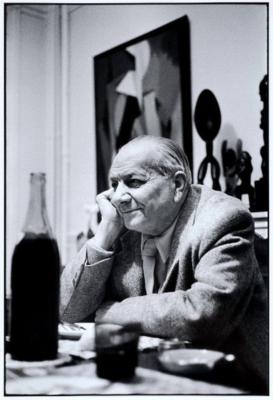
Florentine pioneer of abstraction who made non-figurative Compositions as early as 1915[1] and spent his mature career at the centre of the Paris abstract circle.
Where to see Alberto Magnelli
Ranked by works you can see in person.
-
2 works
Musée d'art moderne de Paris
Paris, France
Also here (6)
-
2 works
Finnish National Gallery
Helsinki, Finland
Also here (6)


-
1 works
Buffalo AKG Art Museum
Buffalo, United States
-
1 works
Hungarian National Gallery
Budapest, Hungary
Also here (6)
Bertalan SzekelyVilmos Aba-NovakEndre BalintAladar Korosfoi-KrieschEgry JózsefAugust von Pettenkofen -
1 works
Unterlinden Museum
Colmar, France
-
1 works
Musée national des beaux-arts du Québec
Quebec City, Canada
-
1 works
Solomon R. Guggenheim Museum
New York City, United States
-
1 works
Musée National d'Art Moderne
Paris, France


Own a piece of it
Alberto Magnelli prints
Hand-finished archival prints from Alberto Magnelli's body of work.
 With Premeditation - Alberto Magnelli
From £28.00
With Premeditation - Alberto Magnelli
From £28.00
 The Cafe - Alberto Magnelli
From £28.00
The Cafe - Alberto Magnelli
From £28.00
 The Drunk Man - Alberto Magnelli
From £28.00
The Drunk Man - Alberto Magnelli
From £28.00
 Ordered Tempest - Alberto Magnelli
From £28.00
Ordered Tempest - Alberto Magnelli
From £28.00
 Tuscan Landscape - Alberto Magnelli
From £28.00
Tuscan Landscape - Alberto Magnelli
From £28.00
 Man Smoking - Alberto Magnelli
From £28.00
Man Smoking - Alberto Magnelli
From £28.00
 Lyrical Explosion No. 12 - Alberto Magnelli
From £37.00
Lyrical Explosion No. 12 - Alberto Magnelli
From £37.00
 Farmers at Table - Alberto Magnelli
From £28.00
Farmers at Table - Alberto Magnelli
From £28.00
Can't travel? Bring Alberto Magnelli home.
See all Alberto Magnelli prints →Frequently Asked Questions
Where can I see Alberto Magnelli's work?
To view works by Alberto Magnelli, several museums hold pieces in their collections. In Italy, the Civica Galleria d’Arte Moderna in Milan has some of his output. Other Italian[1] locations include the Museo d’Arte Moderna in Venice, and the Galleria Nazionale d’Arte Moderna in Rome. Outside Italy, the Museum of Modern Art in New York holds some examples. The Solomon R Guggenheim Museum, also in New York, is another possibility. The Musée National d’Art Moderne, Centre Georges Pompidou, in Paris, may also hold works by the artist. It is always advisable to check with the museum in advance to confirm that works by Magnelli are on display, as collections can rotate.What should I know about Alberto Magnelli's prints?
Alberto Magnelli was an Italian[1] artist associated with the concrete art[1] movement. He exhibited in the 1945[1] *Art concret* show at the Galerie Rene Drouin, Paris. He also participated in the 1946 *Salon des realites non nouvelles: art abstrait, concret, constructiviste, non figuratif* exhibition at the Palais des Beaux-Arts de la Ville de Paris, which presented various historic abstractionists. Magnelli's prints are part of his wider engagement with abstract and concrete art. These movements moved away from representational art, favouring geometric forms. Magnelli explored the relationships between colour, shape, and composition. His prints often feature bold lines, flat planes of colour, and a sense of geometric balance. They reflect his exploration of non-representational forms and his place among other Italian abstractionists.Why are Alberto Magnelli's works important today?
Alberto Magnelli (1888[1]-1971) was a key figure in the development of abstract art. His early work was influenced by Cubism; however, he moved towards a more personal, non-figurative style. Magnelli's importance lies in his contribution to the language of abstraction. He explored the relationships between shapes, colours, and textures, creating dynamic compositions that are both visually stimulating and emotionally resonant. His use of geometric forms and bold colour palettes helped to define a new visual vocabulary for art in the 20th century. Magnelli's work also provides a link between early European modernism and later developments in abstract painting. He was associated with various avant-garde movements, and his ideas influenced subsequent generations of artists. His investigations into pure form and colour continue to be relevant to contemporary art practices, as artists continue to explore the possibilities of non-representational imagery.What techniques or materials did Alberto Magnelli use?
Alberto Magnelli worked with various materials and techniques throughout his career. The available passages do not offer an exhaustive list, but they do provide some insight into his methods. One passage mentions that, like other modernists, Magnelli viewed artistic material as a means to capture life. His practice involved shaking up history with "dynamic explosions of energy" using both conscious and unconscious notions. Another passage discusses the use of materials in 20th-century art, noting that after World War II, artists in Europe and America brought the material of art into the light. While it does not specifically name Magnelli, it mentions movements like Art Informel, which embraced a wider range of materials and techniques. Without more specific information, it is difficult to provide a comprehensive account of Magnelli's materials. Further research into his catalogue raisonné and exhibition catalogues might yield a more detailed understanding of his artistic practice.Who did Alberto Magnelli influence?
Alberto Magnelli's influence is complex and not easily summarised. His engagement with abstraction, combined with his earlier figurative work, places him in a web of exchanges with other artists of his time. Figures such as Fausto Melotti and Lucio Fontana, while distinct in their practices, shared some ground with Magnelli. Melotti, like Magnelli, explored the boundary between abstraction and figuration. Fontana's work, with its rejection of pre-existing schemes, echoes a sentiment found in Magnelli's move towards abstraction. Both artists, along with Osvaldo Licini, demonstrate individualistic approaches to art that resist easy categorisation. Magnelli's impact can also be seen in the broader context of Italian[1] postwar art, where artists frequently referenced their Futurist roots. While not directly linked, artists like Alberto Burri, Piero Dorazio, and Emilio Vedova engaged with ideas and materials that resonate with Magnelli's artistic trajectory.Who influenced Alberto Magnelli?
Alberto Magnelli's artistic development occurred in contact with several other artists. Piero Manzoni, associated with the Gruppo Nucleare, created works using novel materials, a practice that may have influenced Magnelli. Manzoni's theories about art originating in a collective unconscious could also have resonated with Magnelli's ideas. There is evidence that Magnelli was also stimulated by the work of Joaquin Torres-Garcia. Both artists belonged to the Abstraction-Creation group. Torres-Garcia, who had been friends with Gonzalez since youth, was committed to abstraction. His exploration of pre-Columbian art and development of 'constructive universalism' offered another possible avenue for Magnelli. Torres-Garcia combined Cubist composition with Neo-Plasticism, focusing on schematic motifs linked to urban life and figures inspired by pre-Columbian art. The muted tones and archaic character of Torres-Garcia's figures created a tactile background, which may have influenced Magnelli's artistic approach.What is Alberto Magnelli's most famous work?
It is difficult to name one single work as Alberto Magnelli's 'most famous'. He moved through several styles, and his reputation rests on his contribution to abstract art, rather than on one particular painting. Born in Florence in 1888[1], Magnelli was a self-taught painter, associated with the Florentine avant-garde from about 1909[1]. Although he began painting in a representational style, a visit to Paris in 1911 exposed him to Cubism, which influenced him towards abstraction. By the mid-1930s, he was creating purely non-figurative compositions. During the Second World War, Magnelli lived in France with other abstract artists, such as Sonia Delaunay and Jean Arp. This group developed a style of geometric abstraction known as 'concrete art[1]'. After the war, Magnelli continued to explore abstract painting, often incorporating bold colours and textured surfaces. He died in 1971, leaving behind a varied body of work that resists easy categorisation.What style or movement did Alberto Magnelli belong to?
Alberto Magnelli was associated with several movements during his career. Early on, he was linked to Futurism, an Italian[1] artistic and social movement that celebrated technology and dynamism. Later, Magnelli became a proponent of Concrete Art. This abstract movement, formally defined in 1930[1] by Theo van Doesburg, rejected any reference to the visible world. Instead, Concrete Art focused on pure geometric forms and non-representational compositions. Magnelli's involvement with Concrete Art placed him within a network of artists across Europe and Latin America. These artists shared a belief in complete abstraction, with no allusions to nature or subjective emotion. Concrete Art groups emerged in various countries, promoting the style through exhibitions and publications. In Italy, movements such as MAC (Movimento Arte Concreta[1]) gained traction around 1950, further solidifying Concrete Art's presence.
Sources
Where to See guide aggregates verified holdings of Alberto Magnelli's works across the following collections.
- [1] wikipedia Wikipedia: Alberto Magnelli Used for: biography.
- [2] book guggenheim-metph00cela Used for: biography.
- [3] book guggenheim-youngereuropeanp00swee Used for: biography.
- [4] book Braun, Emily, 1957-; Asor Rosa, Alberto; Royal Academy of Arts (Great Britain), Italian art in the 20th century : painting and sculpture, 1900-1988 Used for: biography.
Editorial overseen by Solis Prints. Sources verified 2026-09-26. Click a source for details, or hover over [N] in the page above to preview.
Editorial standardsMethodologyCorrectionsAI disclosureAbout the editorial team