



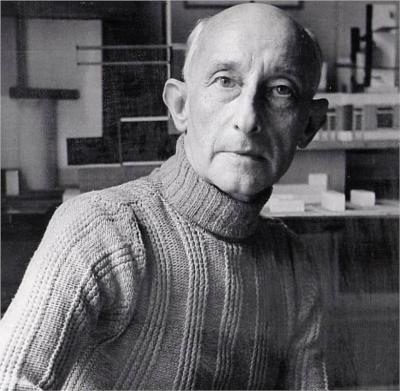
About Félix Del Marle
1889–1952
French painter who moved from Futurism through Neoplasticism to geometric abstraction, publishing the combative Montmartre manifesto of 1913[1].
Museums5
Countries3
Most worksBuffalo AKG Art Museum, Buffalo · 1 works
Loading map…
Where to see Félix Del Marle
Ranked by works you can see in person.
-
1 works
Buffalo AKG Art Museum
Buffalo, United States
-
1 works
Museum Belvédère
Heerenveen, Netherlands


-
1 works
Centre national des arts plastiques
Paris, France
-
1 works
Musée National d'Art Moderne
Paris, France
-
1 works
Yale University Art Gallery
New Haven, United States


Frequently Asked Questions
Where can I see Félix Del Marle's work?
Félix Del Marle's work can be viewed in museums across Europe and North America. In France, museums with holdings include the Musée d’Art et d’Industrie in Roubaix, the Musée de l’Ecole de Nancy, the Musée des Arts Décoratifs, the Musée des Beaux-Arts in Nancy, the Musée National Fernand Léger in Biot, the Musée d’Art Moderne de la Ville de Paris, the Musée d’Orsay, and the Musée du Louvre. In Belgium, his work is held in the Brangwyn Museum in Bruges, the Clockarium Museum in Brussels, and the Musées Royaux des Beaux-Arts de Belgique, also in Brussels. In the United Kingdom, see the Manchester Art Gallery, the National Museums of Scotland (Royal Museum) in Edinburgh, and the Victoria & Albert Museum in London. In the United States, museums include the Charles Hosmer Morse Museum of American Art in Winter Park, Florida; the Los Angeles County Museum of Art; the Metropolitan Museum of Art and the Museum of Modern Art in New York; the Minneapolis Institute of Arts; the Virginia Museum of Fine Arts in Richmond; and the Wolfsonian in Miami Beach, Florida. The Royal Ontario Museum in Toronto also holds his work.What should I know about Félix Del Marle's prints?
Prints allowed artists to reach larger audiences because they could be produced in greater quantities than other art forms, and distributed widely at comparatively low cost. By the late nineteenth century, prints were viewed as a major artistic medium. The quality of each individual impression gained importance. Artists began to sign their prints, differentiating original graphics, with aesthetic value, from reproductions. A signature also testified to the authenticity of a print and the artist's approval. Artists controlled quality by limiting the size of editions and numbering them. This influenced the price of each print, and prevented prints from being pulled after the plate or stone wore down. They also started to use handmade or specially manufactured paper, contributing to the aesthetic value. Printmaking's origins trace back to ancient Egypt and China, where seals or stamps made impressions. Incised wood blocks printed repeated patterns on textiles before paper. Paper became readily available in Europe at the end of the fourteenth century, and printmaking began to flourish. Woodcuts illustrated books, and were used for icons, souvenirs, New Year's cards, and playing cards. Handmade prints were used whenever multiples of images were desired, until photography.Why are Félix Del Marle's works important today?
Félix Del Marle (1889[1]-1952[1]) was part of a generation of artists who moved away from Expressionist disfiguration and Surrealist literary references. After the 1920s, new aesthetic movements appeared, but the avant-gardes had waned without a clear replacement. In 1930[1], art historian Georges Marlier praised the exhibition *L’Art du Bas-Empire* in Paris. Marlier suggested artists should look to Roman art, with its detailed investigation of faces, as a model. He believed artists might turn towards their authentic heritage: anti-classical, humanist art that was both romantic and baroque. The 1931 *New Generation* exhibition at the Giroux gallery featured young artists who had begun paths distinct from Expressionism and Surrealism. Marlier saw the exhibition as a magnificent anthology of Belgian art from the first third of the century. He noted the youthful ardour of painters over fifty, contrasting it with the worrying wisdom and prudence of those under thirty.What techniques or materials did Félix Del Marle use?
Information on Félix Del Marle's specific techniques and materials is scarce in the provided texts. However, the passages do discuss earthen architecture techniques, which may be relevant to his practice. Traditional earthen construction involved the use of adobe (sun-dried bricks), bauge (hand-shaped earth), and pisé (rammed earth). Adobe was created by mixing earth, plant stabilisers, and water in a rectangular mould. The bauge technique used composite material, often incorporating domestic waste. Pisé involved compacting a mixture of sand, silt, and clay. The texts describe how the proportions of earth mixtures were determined and tested. These tests included measuring grain size, methylene blue absorption, and Atterberg limits (liquid limit, plastic limit, and plasticity index). Mechanical mixing was sometimes used to improve the consistency of the earth mixtures. Curing methods, such as air drying or covering with plastic, also affected the final product.Who did Félix Del Marle influence?
Many artists admired Henri Matisse, and some were directly affected by his practice. Several artists who frequented the Café du Dôme, some of whom studied with Matisse, include Friedrich Ahlers-Hestermann, Bela Czobel, Rudolph Grossmann, George Kars, Rudolf Levy, Oscar and Greta Moll, Franz Molken, and Hans Purrmann. Patrick Henry Bruce and Arthur Burdett Frost Jr. became pupils of Matisse; this turned them toward a more abstract mode of representation, as well as toward the use of pure colour. Max Weber's introduction to modern art came through Matisse's teaching and his study of Cézanne's work under Matisse's guidance. Ellsworth Kelly spent 1949[1] to 1956 in France, when several large exhibitions of Matisse's late cut-paper work were mounted. Although Kelly did not always admit the importance of these works for him, common elements and approaches can be found in the work of both artists.Who influenced Félix Del Marle?
It is difficult to summarise the influences on Félix Del Marle (1889[1]-1952[1]). He was associated with Futurism and contributed to the development of French Purism. His influences can be analysed through the lens of his involvement with various artistic movements and figures. Del Marle's connections to Futurism suggest the influence of Italian Futurists, such as Umberto Boccioni and Carlo Carrà. These artists advocated for the incorporation of technology and dynamism into art. His role in Purism, alongside artists like Amédée Ozenfant and Le Corbusier, points to an interest in simplification, geometric forms, and the aesthetics of machines. These diverse affiliations show the wide range of artistic ideas that shaped Del Marle's work.What is Félix Del Marle's most famous work?
It is difficult to name one single "most famous" work by Félix Del Marle; however, several pieces are well known. Del Marle was part of the Belgian group Les Compagnons de l'Art with René Magritte. He shared an exhibition with Magritte in Brussels in 1936[1] and participated in the Exposition Internationale du Surréalisme in Paris in 1938. His paintings often feature classical details and perspectival distortion. The silent, introspective figures are also a signature. In particular, his formidable nude or seminude women pose immobile, their arms frozen in gestures. Men make their way through the world he creates, often preoccupied. One noted work is *The Break of Day* (1937). It includes many of Delvaux's typical motifs, such as classical details and nude women. The metamorphosis of the women in the foreground suggests the myth of Daphne. This painting also introduces the subject of the mirror, a theme favoured by the Surrealists.What style or movement did Félix Del Marle belong to?
Félix Del Marle (1889[1]-1952[1]) was a French painter who explored several styles during his career. He is primarily associated with post-Cubism and Futurism; however, he engaged with other movements as well. Initially, Del Marle was influenced by Cubism, which is evident in his early works that fracture objects and space. Later, he became involved with Futurism, an Italian movement that celebrated modernity, technology, and speed. Futurism encouraged artists to depict the dynamism of modern life through fragmented forms and energetic lines. Del Marle adopted these techniques to represent movement and the excitement of the industrial age. His association with Futurism is documented through his participation in Futurist exhibitions and his friendship with key figures of the movement. After his Futurist period, Del Marle experimented with other abstract styles, including Constructivism and Purism, before developing his own abstract language.
Sources
Where to See guide aggregates verified holdings of Félix Del Marle's works across the following collections.
- [1] wikipedia Wikipedia: Félix Del Marle Used for: biography.
- [2] book guggenheim-moder00artg Used for: biography.
- [3] book guggenheim-piecesfm00solo Used for: biography.
- [4] book Masterpieces of western art : a history of art in 900 individual studies from the Gothic to the present day Used for: biography.
Editorial overseen by Solis Prints. Sources verified 2026-09-24. Click a source for details, or hover over [N] in the page above to preview.
Editorial standardsMethodologyCorrectionsAI disclosureAbout the editorial team