



About Ellen Gallagher
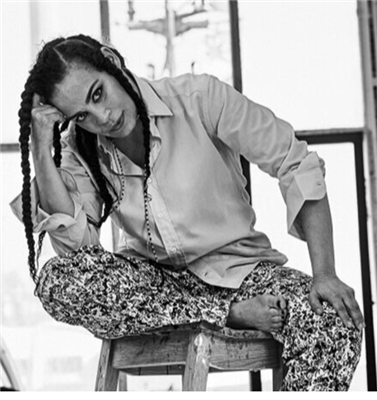
Museums8
Countries2
Largest reported holdingMetropolitan Museum of Art, New York City · 3 recorded works
Loading map…
Where to see Ellen Gallagher
Collection holdings are reported here; current display varies. Check with each museum before visiting.
-
3 recorded works
Metropolitan Museum of Art
New York City, United States
-
2 recorded works
National Galleries Scotland
Edinburgh, United Kingdom


-
2 recorded works
The Broad
Los Angeles, United States
-
2 recorded works
Museum of Modern Art
New York City, United States
-
1 recorded work
Buffalo AKG Art Museum
Buffalo, United States
-
1 recorded work
Art Institute of Chicago
Chicago, United States
-
1 recorded work
Seattle Art Museum
Seattle, United States
-
1 recorded work
Saint Louis Art Museum
St. Louis, United States


Frequently Asked Questions
Where can I see Ellen Gallagher's work?
Ellen Gallagher's work can be viewed in several prominent museums in the United States. These include the Museum of Modern Art, at 11 West 53rd Street, New York; the Metropolitan Museum of Art, at 1000 Fifth Avenue, New York; the Los Angeles County Museum of Art (LACMA), at 5905 Wilshire Boulevard, Los Angeles; and the Walker Art Center, at 1750 Hennepin Avenue, Minneapolis. Other museums with collections including Gallagher's pieces are the Yale University Art Gallery, at 1111 Chapel Street, New Haven; the Whitney Museum of American[1] Art, at 945 Madison Avenue, New York; the Philadelphia Museum of Art, at 26th Street and Benjamin Franklin Parkway, Philadelphia; the Carnegie Museum of Art, at 4400 Forbes Avenue, Pittsburgh; the Hirshhorn Museum and Sculpture Garden, on Independence Avenue at 7th Street SW, Washington DC; and the National Gallery of Art, at 6th Street and Constitution Avenue NW, Washington DC.What should I know about Ellen Gallagher's prints?
Ellen Gallagher is an American[1] artist known for work that combines painting, printmaking, and collage. Her prints often explore themes of race, identity, and history, using a variety of techniques and materials. Printmaking workshops play a central role in the creation of fine art prints. These workshops are collaborative environments where artists work with skilled printers to realise their visions. The printers' knowledge of materials and processes can introduce new ideas and possibilities to the artist. Workshops are equipped with presses for various techniques, such as woodblocks for relief printing, metal plates for etching, and screens for screenprinting. They also have a range of supplies, including inks, solvents, and papers. Some well-known printmaking workshops in the United States include Universal Limited Art Editions (ULAE), Graphicstudio/University of South Florida, Gemini GEL, and Tyler Graphics Ltd. These workshops have different characteristics, but they all provide artists with the resources and expertise needed to create complex and innovative prints.Why are Ellen Gallagher's works important today?
Ellen Gallagher's art is important because of her engagement with race and representation through a modernist sensibility. Her working method involves isolating motifs with specific associations, repeatedly inscribing them on the surface. This is not mere representation; it distorts the terms of representation itself. Gallagher is interested in a painting's immediate appearance and its slower manifestation, linking her to a modernist sensibility. She focuses on how materials manifest meaning in paint, lines, ink, and drawings. Her relationship with her subject matter maintains critical distance. Gallagher's paintings and prints employ a radically encoded visual vocabulary filtered through a subjective structure. By treating signs as shapes, she strips them of their original associations, reshaping them to signify differently. Her motifs have historical narratives, but a reading that stops at historical association misses the point. The signs of lips and eyes smother the grid, breeding like viruses; murky rubbings and discolourations resemble cultures on petri dishes or magnified DNA.What techniques or materials did Ellen Gallagher use?
Ellen Gallagher is known for mixed media works that combine painting, drawing, and collage. She often alters the surface of her work, creating varied textures. Gallagher frequently uses materials such as paper, canvas, and plasticine. She is particularly recognised for using found advertisements from magazines, especially those aimed at a black audience from the 1930s to 1960s. These advertisements often feature stereotypical images of black people, which Gallagher reworks and subverts. One of Gallagher's techniques involves layering images and materials, building up surfaces over time. She often applies paint in thin washes, allowing previous layers to show through. This layering creates a sense of depth and complexity. She also employs techniques such as cutting, scratching, and collaging to manipulate the surface of her works. Plasticine is sometimes pressed into the canvas to create raised, textured areas. These techniques allow Gallagher to explore themes of race, identity, and representation in her art.What is Ellen Gallagher's most famous work?
Ellen Gallagher's working method often isolates a motif with a particular set of associations. She repeatedly inscribes it over the surface. Her motives are oriented towards subversive ends, dealing with race and representation. Her practice reinvents or distorts the terms of representation itself. Gallagher has said she is interested in a painting’s immediate appearance and what it can manifest slowly. She links this to a modernist sensibility, saying she is interested in the way materials manifest meaning, in the paint, the lines, the ink, and the drawings. Her relationship with her subject matter ensures sufficient critical distance. Her paintings are syncretic in both scope and import. Her aggregations of materials, such as oils, inks, pencil drawings, paintings, and prints, encompass historical forms that accumulate, grow, but never fuse together. A painting such as Untitled (1998) conveys ambivalence towards its particularities and the possibility of their untrammelled communication.What style or movement did Ellen Gallagher belong to?
Ellen Gallagher's work has been linked to modernism, although her relationship to it is complex. Her practice involves isolating motifs with specific associations and repeatedly inscribing them on the support. Thyrza Nichols Goodeve observed that this approach distorts the terms of representation itself, aligning with a modernist sensibility. Goodeve noted Gallagher's interest in both a painting's immediate appearance and its slower unfolding, which she sees as connecting Gallagher to modernism. Gallagher herself has stated that she is interested in how materials manifest meaning in paint, lines, ink, and drawings. Paul Gilroy identified Robert Farris Thompson as the originator of the concept of the "Black Atlantic[1]" in 1993. Thompson stressed the creativity and flexibility of Black Atlantic traditions. In 1991, Thompson wrote a piece titled "Afro-Modernism."What was Ellen Gallagher known for?
Ellen Gallagher is known for work that explores themes of identity and history, often related to the Black diaspora. Her art considers how identities and cultural objects move through different historical periods. This approach complements models that examine the relationship between diaspora and homeland. Gallagher’s work fits within a context of contemporary Black diaspora artists who adopt an outward-looking attitude, venturing into uncharted realms to test curiosity. These artists operate within networks of Afro-modern world-making, where populations traverse cities and continents with attachments to multiple histories and geographies. This gives way to cross-cultural exchange, in which transnational flows of images and information are constantly recombined. Gallagher's art participates in a dialogue about the experiences, insights, and ideas that Black artists and communities accumulate.What is Ellen Gallagher known for?
Ellen Gallagher is known for her canvases and mixed-media works that explore the visual archive of American[1] minstrelsy and 20th-century Black popular culture. She uses recurring motifs of stylised eyes and lips across gridded surfaces in paint, ink, and photogravure.
Sources
Where to See guide aggregates verified holdings of Ellen Gallagher's works across the following collections.
- [1] wikipedia Wikipedia: Ellen Gallagher Used for: biography.
- [2] book Richard Klin, Abstract Expressionism For Beginners Used for: stylistic analysis.
- [3] book Staff, Craig, After Modernist Painting_ The History of a Contemporary Practice (International Library of Modern and Contemporary Art Book 3) Used for: biography.
- [4] book Staff, Craig, After Modernist Painting_ The History of a Contemporary Practice (International Library of Modern and Contemporary Art Book 3) Used for: biography.
- [5] book Dorling Kindersley, Artists: Inspiring Stories of the World's Most Creative Minds Used for: stylistic analysis.
- [6] book Boylan, Alexis L. (editor), Ellen Emmet Rand_ Gender, Art, and Business (Contextualizing Art Markets) Used for: biography.
- [7] book Boylan, Alexis L. (editor), Ellen Emmet Rand_ Gender, Art, and Business (Contextualizing Art Markets) Used for: biography.
- [8] book Hodge, Susie, 1960- author, The short story of women artists : a pocket guide to movements, works, breakthroughs, & themes Used for: biography.
Editorial overseen by Solis Prints. Sources verified 2026-09-30. Click a source for details, or hover over [N] in the page above to preview.
Editorial standardsMethodologyCorrectionsAI disclosureAbout the editorial team