



About Clara Peeters
- Flemish Baroque painting
Flemish still-life painter who embedded self-portraits in reflective surfaces and helped establish the breakfast piece as an independent genre.
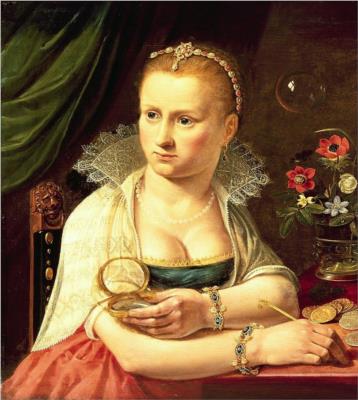
Where to see Clara Peeters
Collection holdings are reported here; current display varies. Check with each museum before visiting.
-
4 recorded works
Museo del Prado
Madrid, Spain
-
2 recorded works
Rijksmuseum
Amsterdam, Netherlands


-
1 recorded work
Royal Museum of Fine Arts Antwerp
Antwerp, Belgium
-
1 recorded work
Mauritshuis
The Hague, Netherlands
-
1 recorded work
National Gallery of Art
Washington D.C., United States
-
1 recorded work
Metropolitan Museum of Art
New York City, United States
-
1 recorded work
Los Angeles County Museum of Art
Los Angeles, United States
-
1 recorded work
Kröller-Müller Museum
Otterlo, Netherlands
-
1 recorded work
Museum of Fine Arts, Houston
Houston, United States


Own a piece of it
Clara Peeters prints
Hand-finished archival prints from Clara Peeters's body of work.
 Still Life with Cheeses, Artichoke, and Cherries - Clara Peeters
From £28.00
Still Life with Cheeses, Artichoke, and Cherries - Clara Peeters
From £28.00
 Still Life with Silver-gilt Tazza - Clara Peeters
From £28.00
Still Life with Silver-gilt Tazza - Clara Peeters
From £28.00
 Table with Orange, Olives and Pie - Clara Peeters
From £28.00
Table with Orange, Olives and Pie - Clara Peeters
From £28.00
 Still Life with Nuts, Candy and Flowers - Clara Peeters
From £28.00
Still Life with Nuts, Candy and Flowers - Clara Peeters
From £28.00
 Still Life with Cheeses, Almonds and Pretzels - Clara Peeters
From £28.00
Still Life with Cheeses, Almonds and Pretzels - Clara Peeters
From £28.00
 Bodegón (Still Life with Fish, Artichoke, and Crab) - Clara Peeters
From £28.00
Bodegón (Still Life with Fish, Artichoke, and Crab) - Clara Peeters
From £28.00
 Still Life with Crab, Shrimps and Lobster - Clara Peeters
From £28.00
Still Life with Crab, Shrimps and Lobster - Clara Peeters
From £28.00
 Vanitas - Clara Peeters
From £28.00
Vanitas - Clara Peeters
From £28.00
Can't travel? Bring Clara Peeters home.
See all Clara Peeters prints →Frequently Asked Questions
Where can I see Clara Peeters's work?
Clara Peeters's paintings are included in several major museum collections. The Museo del Prado in Madrid holds the largest number of her known works. Other institutions with paintings attributed to Peeters include the Ashmolean Museum at the University of Oxford; the Fitzwilliam Museum in Cambridge; the Staatliche Kunsthalle in Karlsruhe; and the Muzeum Narodowe w Warszawie (National Museum in Warsaw). Several of her paintings are in private collections, and these are occasionally loaned for special exhibitions. Because scholarship on Peeters continues to develop, locations of attributed works may change. It is always best to check museum websites for current information about their holdings and displays. Major exhibitions dedicated to female artists of the early modern period sometimes include her still lifes. These travelling shows offer opportunities to view her paintings alongside those of her contemporaries.What should I know about Clara Peeters's prints?
Clara Peeters did not produce any prints herself. However, her paintings have occasionally been reproduced as prints, usually long after her death. These reproductions vary widely in quality and accuracy. They often flatten the colours and details of her original works. Some are simple line drawings, while others attempt to mimic the tonal range of her paintings through engraving or etching techniques. One example is "The Immortal Rewards of Virtue", attributed to Philips Galle, c. 1564, engraving and etching, 381 x 520, Maarten Peeters. Another is "Tabula Cebetis", Philips Galle, 1561, engraving from two plates, Left: 455 x 300; right: 455 x 299, Maarten Peeters. When examining a print purporting to be after Peeters, it is useful to compare it to known paintings to assess its fidelity. Factors such as the printmaker's skill, the printing process used, and the paper quality all affect the final result. Therefore, approach these prints with a critical eye, recognising that they are interpretations rather than exact copies.Why are Clara Peeters's works important today?
Clara Peeters was a still-life painter from Antwerp. She was active during the first half of the 17th century. Her paintings are important because very few women worked as professional artists in that period. She is one of the earliest female artists for whom a reasonable body of work survives. Peeters specialised in depictions of food, often including expensive imported goods. These included cheeses, fruit, fish, and game. Her compositions are carefully arranged, displaying these items on a tabletop. Her paintings offer insights into the material culture and dining habits of the period. They also demonstrate considerable technical skill in representing textures and surfaces. Several of her paintings include her self-portrait reflected in metal or glass objects. This is a clever device that inserts the artist's presence into the work. Interest in Peeters's art has grown in recent decades, with exhibitions dedicated to her work. Her paintings can be found in major museum collections, such as the Ashmolean Museum, Oxford, and the Museo del Prado, Madrid. She provides an important example of a successful female artist in a male-dominated field.What techniques or materials did Clara Peeters use?
Clara Peeters was a still-life painter of the Baroque period. She is known for her detailed depictions of food, luxury items, and tableware. Peeters typically painted on wood panels. Her oil paints were applied in thin layers. This technique allowed for smooth surfaces and careful rendering of textures. She employed glazing, a technique of layering translucent paint over opaque underlayers. This created luminosity and depth. Her compositions often feature a high viewpoint. Objects are arranged on a tabletop. She paid close attention to detail. This is evident in her depictions of metalwork, glassware, and the surfaces of food. Peeters was skilled at capturing the reflective qualities of objects. Peeters sometimes included her self-portrait in reflections on metal or glass surfaces. These small, almost hidden images offer insight into the artist's identity and presence. Her technique demonstrates a mastery of observation and paint application.Who influenced Clara Peeters?
Clara Peeters's artistic influences are not well documented. As a female artist in the early 17th century, details of her training and exposure to other artists are scarce. However, art historians have drawn some conclusions based on her style and the artistic environment of Antwerp, where she worked. Peeters was likely influenced by the broader Flemish still-life tradition. Artists such as Osias Beert and Georg Flegel, who were active slightly earlier, created still lifes with similar characteristics. These include high viewpoints, symmetrical arrangements, and detailed depictions of objects. Their works may have provided a stylistic foundation for Peeters's compositions. The influence of Jan Brueghel the Elder is also possible. Brueghel was known for his flower paintings and collaboration with other artists, and his style may have affected Peeters's approach to colour and detail. However, direct evidence of a connection between Peeters and these artists remains limited, so these connections are based on stylistic similarities and the artistic context of the time.What is Clara Peeters's most famous work?
It is difficult to identify a single "most famous" work by Clara Peeters, as her notability rests on her overall contribution to still-life painting, particularly her detailed depictions of food and luxury items. She was a pioneer, one of the few recognised women artists in the early 17th century. Peeters is best known for her breakfast pieces and still lifes, which often feature cheese, bread, fish, and expensive tableware. These paintings provide insights into the culinary habits and material culture of the period. Several of her works are held in prominent museum collections, including the Ashmolean Museum in Oxford and the Museo del Prado in Madrid. Still Life with Cheeses, Almonds and Pretzels (c. 1615[1]) is a frequently cited example of her work. It demonstrates her skill in rendering textures and surfaces. This painting, along with others such as Still Life with Fish and Candles, showcases her ability to create visually appealing and meticulously detailed compositions. Her paintings are admired for their realism and their contribution to the development of still-life as a genre.What style or movement did Clara Peeters belong to?
Clara Peeters is associated with the Flemish Baroque. She worked primarily in Antwerp during the first half of the 17th century. Her paintings are categorised as still life, a genre that gained popularity during this period. Peeters's style is characterised by its realism and attention to detail. She often depicted food, particularly breakfast pieces with cheese, bread, and fish. Her compositions are typically simple and balanced. Textures and surfaces are rendered with great accuracy. While Peeters's work shares some characteristics with other Baroque painters, such as a focus on naturalism, it also possesses unique qualities. Her still lifes are often smaller in scale than those of her contemporaries. She sometimes included her self-portrait reflected in metal or glass objects within the painting. This adds a personal element to her work. Her paintings contributed to the development of still-life painting in the Netherlands.What was Clara Peeters known for?
Clara Peeters, a Flemish artist active during the first half of the 17th century, is best known for her still-life paintings. She was one of the few women artists working professionally in Europe at this time. Peeters specialised in banquet still lifes and breakfast pieces. These paintings often feature food and expensive objects displayed on a tabletop. Her paintings are characterised by their detailed depictions of objects, such as pewterware, glassware, and imported fruits. Several of Peeters's paintings include her self-portrait reflected in the surfaces of metal or glass objects. Examples of this can be seen in *Still Life with Cheeses, Almonds and Pretzels* (c. 1615[1]) and *Still Life with Flowers, Goblet, Dried Fruit and Pretzels* (1611). These reflections offer a glimpse of the artist herself within her work. Although the details of her life remain scarce, the paintings that survive provide insight into the world of a successful woman artist during the Baroque period. Her works are now held in collections such as the Museo del Prado in Madrid and the Ashmolean Museum in Oxford.
Sources
Where to See guide aggregates verified holdings of Clara Peeters's works across the following collections.
- [1] wikipedia Wikipedia: Clara Peeters Used for: biography.
- [2] book Charlotte Mullins, A Little History of Art Used for: biography, stylistic analysis.
- [3] book Penelope J.E. Davies, Walter B. Denny, Frima Fox Hofrichter, Joseph Jacobs, Ann S. Roberts, David L. Simon, Janson's History of Art_ The Western Tradition (8th Edition) Used for: biography, stylistic analysis.
- [4] book Hodge, Susie, 1960- author, The short story of women artists : a pocket guide to movements, works, breakthroughs, & themes Used for: biography, stylistic analysis.
Editorial overseen by Solis Prints. Sources verified 2026-10-14. Click a source for details, or hover over [N] in the page above to preview.
Editorial standardsMethodologyCorrectionsAI disclosureAbout the editorial team