



About Charles Spencelayh
- genre painting
- portrait
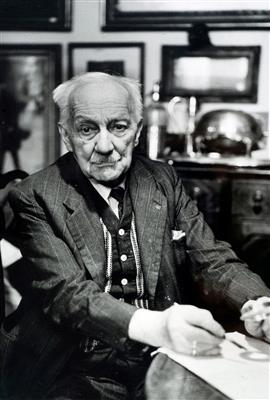
British[1] genre painter of meticulous domestic interiors who exhibited at the Royal Academy for 66 years; Queen Mary was among his collectors.
Where to see Charles Spencelayh
Collection holdings are reported here; current display varies. Check with each museum before visiting.
-
2 recorded works
Manchester Art Gallery
Manchester, United Kingdom
-
1 recorded work
Harris Museum
Preston, United Kingdom


-
1 recorded work
Newport Museum and Art Gallery
Newport, United Kingdom
-
1 recorded work
Laing Art Gallery
Newcastle upon Tyne, United Kingdom
-
1 recorded work
National Gallery
London, United Kingdom
-
1 recorded work
Cartwright Hall Art Gallery
Bradford, United Kingdom
-
1 recorded work
Northampton Museum and Art Gallery
Northampton, United Kingdom
-
1 recorded work
Blackburn Museum and Art Gallery
Blackburn, United Kingdom
-
1 recorded work
Nottingham Museums
Nottingham, United Kingdom


Frequently Asked Questions
Where can I see Charles Spencelayh's work?
To view the work of Charles Spencelayh, several museums have collections. In the United Kingdom, these include the Brighton Museum & Art Gallery (located in the Royal Pavilion Gardens), the Geffrye Museum (Kingsland Road, London), the Manchester Art Gallery (Mosley Street), the National Museums of Scotland (Royal Museum, Chambers Street, Edinburgh), and the Victoria and Albert Museum (Cromwell Road, London). In the United States, collections can be found at the Charles Hosmer Morse Museum of American Art (Winter Park, Florida), the Los Angeles County Museum of Art (LACMA), the Metropolitan Museum of Art (New York), the Minneapolis Institute of Arts, the Museum of Modern Art (New York), the Virginia Museum of Fine Arts (Richmond), and the Wolfsonian at Florida International University (Miami Beach).What should I know about Charles Spencelayh's prints?
Charles Spencelayh (1865[1]-1958[1]) was a British[1] artist known for his detailed paintings of domestic interiors and everyday life. Although he primarily worked in oil paint, some of his works were reproduced as prints, allowing for wider distribution of his art. Prints of Spencelayh's paintings offer a way to appreciate his meticulous style at a lower price point than original artworks. These prints often capture the charm and nostalgia associated with his depictions of the past. They are collected for their historical interest and their representation of a bygone era. When considering a Spencelayh print, it is important to check its provenance and condition. Factors such as the printing technique (e.g. photogravure, lithograph), the paper quality, and the presence of any damage can affect its value. Prints signed by the artist are, as a rule, more desirable. Collectors should also research the specific image featured in the print, as some of Spencelayh's paintings are more sought after than others.Why are Charles Spencelayh's works important today?
It is difficult to discuss the importance of Charles Spencelayh without specific reference to his artistic style, themes, and historical context. However, some general observations can be made about the value of studying artists whose work may not be universally well-known today. The recovery of forgotten artists and the reassessment of their work is an ongoing process in art history. Changes in taste, new information, and revised historical perspectives can all contribute to a renewed appreciation for artists who were once overlooked. The dispersal of collections and the movement of artworks across borders mean that paintings can resurface in unexpected places, leading to new discoveries and attributions. Studying lesser-known figures such as Spencelayh can provide a more nuanced understanding of a particular period or artistic movement. Their work may reflect the tastes and concerns of a specific audience or community, offering insights into social and cultural history that are not apparent from the study of more famous artists alone. The accessibility of images and information through modern technology also makes it easier to compare works and trace influences, potentially leading to a re-evaluation of an artist's place in the broader art historical narrative.Who did Charles Spencelayh influence?
Charles Spencelayh's artistic style did not lend itself to direct imitation. However, he can be situated within a broader artistic context. The Pre-Raphaelite Brotherhood, with its emphasis on detailed realism and literary themes, influenced many subsequent artists. Figures such as Laurence Housman and Charles Ricketts took Pre-Raphaelite illustration in new directions, informing the Private Press movement's aesthetic of tasteful design. Stanley Spencer, a Neo-Primitive painter, shared Spencelayh's interest in depicting everyday life with spiritual undertones. Spencer, like Spencelayh, infused ordinary scenes with personal meaning, although Spencer's style was more stylised. David Jones, influenced by neo-Thomist theology, also explored the sacred in the quotidian, similar to Spencelayh's approach. Georges Rouault, while stylistically distinct, shared Spencelayh's focus on portraying the lives of ordinary people. Rouault aimed to express spiritual and Christian themes through modern aesthetics.What style or movement did Charles Spencelayh belong to?
Charles Spencelayh (1865[1]-1958[1]) was a British[1] painter associated with the art movements of realism and genre painting[1]. Realism seeks to depict subjects as they appear in everyday life, without idealisation or romanticisation. Genre painting portrays scenes from ordinary life. Spencelayh's work often featured detailed depictions of domestic interiors and everyday activities, executed with careful attention to detail. His style is characterised by its minute detail, small scale, and use of light to create atmosphere. Spencelayh's paintings often evoke a sense of nostalgia for a bygone era. His subjects included portraits, still lifes, and interior scenes, all rendered with a high degree of realism. Although he lived through periods of significant artistic change, Spencelayh remained committed to his representational style, setting him apart from many of his contemporaries who embraced modernism.What was Charles Spencelayh known for?
Charles Spencelayh was an English artist known for his detailed genre paintings, often depicting scenes of domestic life. Born in 1865[1], he developed a distinctive style characterised by its realism and attention to minute details. Spencelayh's paintings frequently featured interiors cluttered with objects, reflecting the everyday lives of ordinary people. He had a meticulous approach to his work, often spending considerable time on each piece to achieve the desired level of accuracy. His subjects ranged from intimate family moments to scenes of elderly people in their homes, capturing a sense of nostalgia and quiet observation. Although he received some recognition during his lifetime, Spencelayh's work gained wider appreciation in later years. His paintings offer a glimpse into the past, providing insight into the social customs and material culture of early 20th-century England. Spencelayh died in 1958[1].What is Charles Spencelayh known for?
Charles Spencelayh is known for his detailed paintings of working-class and lower-middle-class English interiors. He is also known for winning the Royal Academy's Picture of the Year in 1939[1] with his painting 'Why War?'. Queen Mary commissioned him to paint a miniature of George V.What was Charles Spencelayh's art style?
Charles Spencelayh's art style involved near-photographic detail and patient observation. He documented ordinary lives in the interiors of working-class and lower-middle-class England.
Sources
Where to See guide aggregates verified holdings of Charles Spencelayh's works across the following collections.
- [1] wikipedia Wikipedia: Charles Spencelayh Used for: biography.
- [2] book Beard, Lee, 1973- author, Butler, Adam, author; Van Cleave, Claire, author; Fortenberry, Diane, author; Stirling, Susan, author, Beard, Lee, 1973- author, Butler, Adam, author; Van Cleave, Claire, author; Fortenberry, Diane, author; Stirling, Susan, author - The Art Book_ New Edition, Mini Format Used for: biography.
- [3] book Lilian H. Zirpolo, Historical Dictionary of Baroque Art and Architecture Used for: biography, stylistic analysis.
- [4] book Jennifer D. Milam, Historical Dictionary of Rococo Art Used for: stylistic analysis.
- [5] book Mark Lamster, Master of shadows Used for: biography.
- [6] book Post-impressionism : cross-currents in European painting Used for: biography.
- [7] book Beckett, Wendy, Sister Wendy's odyssey : a journey of artistic discovery Used for: biography.
Editorial overseen by Solis Prints. Sources verified 2026-09-30. Click a source for details, or hover over [N] in the page above to preview.
Editorial standardsMethodologyCorrectionsAI disclosureAbout the editorial team