

About Carlos Merida
Guatemala · 1891–1984
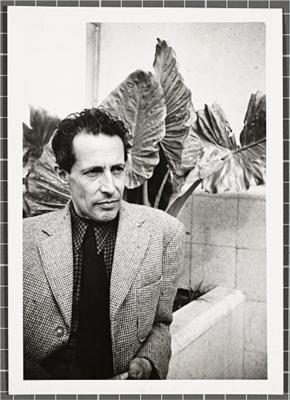
Guatemalan-Mexican painter who synthesised Maya visual culture with Cubist and geometric abstraction across a career spanning eight decades.
Museums6
Countries1
Most worksLos Angeles County Museum of Art, Los Angeles · 5 works
Loading map…
Where to see Carlos Merida
Ranked by works you can see in person.
-
5 works
Los Angeles County Museum of Art
Los Angeles, United States
-
4 works
National Gallery of Art
Washington D.C., United States


-
2 works
Princeton Art Museum
Princeton, United States
-
1 works
Seattle Art Museum
Seattle, United States
-
1 works
Fine Arts Museums of San Francisco
San Francisco, United States
-
1 works
Saint Louis Art Museum
St. Louis, United States


Frequently Asked Questions
Where can I see Carlos Merida's work?
Carlos Merida's artwork can be viewed in several locations. His pieces are held in both private and public collections. In Guatemala[1] City, Guatemala, the Museo Nacional de Arte Moderno Carlos Mérida holds a significant collection. This museum is dedicated to his work, providing an overview of his artistic development. Other institutions that hold his work include the Museum of Modern Art in New York; the Museo Nacional de Bellas Artes in Buenos Aires, Argentina; and the Archer M. Huntington Art Gallery at the University of Texas, Austin. These collections include a range of his work, from early figurative paintings to his later geometric abstractions. Smaller selections of Merida's work may appear in temporary exhibitions at other galleries and museums. Checking museum websites or art databases before visiting is advisable. These resources will provide the most up-to-date information on where his pieces are on display.What should I know about Carlos Merida's prints?
When considering Carlos Merida's prints, it is helpful to understand the distinction between an original print and a reproduction. Original prints, such as woodcuts, engravings, or lithographs, are produced by hand by the artist. The work is created specifically to be a print, with the artist directly creating the artwork on the plate, woodblock, or screen. Each print is considered an original. These are often sold through specialist print galleries, frame shops, and fine art galleries. The plates for original prints are made by hand, and, as a result, can only withstand a certain amount of use. The number of prints pulled is limited by the number of impressions that can be made before the plate wears out. Some publishers impose their own limits on the number of impressions to increase a print’s value. These limits may be set as high as 700 to 1,000 impressions, but some prints are limited to just 250 to 500, making them highly prized by collectors. Offset reproductions, also known as posters and image prints, are reproduced by photochemical means. Since plates used in offset reproductions do not wear out, there are no physical limits on the number of prints that can be made. Quantities, however, may still be limited by the publisher in order to add value to the edition.Why are Carlos Merida's works important today?
Carlos Merida's importance lies in his fusion of European modernism with indigenous Guatemalan and Mexican themes. Born in 1891[1], Merida moved between Guatemala[1] and Mexico, absorbing influences from both cultures. He studied with Santiago Rebull at the Academy of San Carlos, then in Paris between 1910[1] and 1914. Merida's early work was figurative, but he moved towards abstraction in the 1920s. He incorporated geometric forms and pre-Columbian motifs into his art. This synthesis is a significant contribution to Latin American modernism. Merida helped to create a visual language that was both modern and rooted in local history. His work also contributed to a wider appreciation of pre-Hispanic art. Terms such as "pagan" and "exotic" had been used to describe its forms. Merida, along with others, helped to legitimise indigenous art, and incorporate it into a broader historical consciousness. By the mid-20th century, Mexican intellectuals considered works from the pre-Columbian period to be expressions of high aesthetic value.What techniques or materials did Carlos Merida use?
Carlos Merida employed diverse techniques and materials throughout his career. He did not limit himself to traditional approaches. Merida explored various media, including oil paint, often combined with other materials. Some of his works incorporate mixed media on resin panels. He manipulated these panels, sanding and preparing them to receive transfer images and paint. The addition of layers of silk and other fabrics is also part of his process. In addition to painting, Merida engaged with other art forms. He combined edging, screen-printing, image transfers, stitching, and ceramics. His practice extended to sculpture, where he used materials such as bronze, copper, and aluminium. He also experimented with video and art installation, creating multidisciplinary assemblages. This approach allowed him to transcend conventional visuals and explore new methods of visual expression.Who did Carlos Merida influence?
Carlos Merida's influence is most apparent in the work of later Latin American artists who explored geometric abstraction and indigenous themes. While it is difficult to isolate specific individuals, his theories about art had a broad impact. Merida's exploration of combining modernism with Mayan and Guatemalan artistic traditions provided a path for others. His work helped to legitimise the incorporation of pre-Columbian motifs into modern art. This is evident in the work of artists who followed, who sought to create a distinct Latin American identity in their art. His move towards geometric abstraction also resonated with artists interested in non-representational forms. Merida's theories, lectures, and writings about art were influential in shaping the artistic discourse in Mexico and beyond. He encouraged artists to experiment and to find their own unique voices, which led to a diverse range of artistic expressions.Who influenced Carlos Merida?
Carlos Merida was influenced by a range of artists and movements. Early on, he was struck by a Cubist still life by Braque; this encounter spurred him to study Cubism[1] and the work of Picasso. He then explored Cézanne and van Gogh. Merida also expressed interest in Gauguin, although he was not entirely convinced by Gauguin's symbolic forms. Later, Merida sought to energise the works of Mondrian, but he realised Mondrian had already addressed those issues himself. He found the path taken by Moholy-Nagy important, and he also discovered Calder, Marcel Duchamp, and Gabo. Merida aimed to take elements liberated by these artists, develop them, and attempt to answer questions they had raised but not fully resolved. He was also interested in Klee's works that sought perspective from various points of view, and he discovered Albers's work later on.What is Carlos Merida's most famous work?
Determining Carlos Merida's single most famous work is difficult, as his notability varies across different audiences and periods of his career. However, some of his most recognised pieces include works that demonstrate his unique fusion of European modernism and indigenous Guatemalan themes. Merida is well known for his contributions to geometric abstraction, and his murals are particularly significant. These large-scale works often incorporate pre-Columbian motifs and modernist aesthetics. He explored themes of cultural identity and heritage throughout his career, and his work is admired for its innovative approach to abstraction and its celebration of Guatemalan culture. He produced paintings, prints, and costume designs, and he wrote about art. He remains an important figure in Latin American modernism.What style or movement did Carlos Merida belong to?
Carlos Merida's artistic affiliations are complex, as he engaged with several styles throughout his career. Expressionism and Surrealism are often associated with his work. Cubism[1], an influential style of the early 20th century, involved a rejection of traditional perspective and the concept that art should simply copy nature. Cubism's effects are still visible today in art and architecture. The style's characteristics can be defined by examining paintings and reconstructing the attitudes of the painters themselves, as well as recording how the public and critics greeted Cubism at the time. Picasso and Braque pioneered Cubism, dissecting objects into planes and integrating motifs subtly, while painters such as Léger and Delaunay developed individual variants of the style. Picasso's later style of 1926[1] employed interlacing curves, freeing his pictures from the constraints of the rectilinear grid without reverting to naturalism. This "curvilinear Cubism" led to a style known as "free form".
Sources
Where to See guide aggregates verified holdings of Carlos Merida's works across the following collections.
- [1] wikipedia Wikipedia: Carlos Merida Used for: biography.
- [2] book Ansel Adams; Beaumont Newhall; Nancy Newhall; Louise Dahl-Wolfe; Aaron Siskind; Richard Avedon; Harry Callahan; Lee Friedlander; Tina Modotti; W. Eugene Smith; Paul Strand; Edward Weston; Garry Winogrand; Amy Rule, Ansel Adams; Beaumont Newhall; Nancy Newhall; Louise Dahl-Wolfe; Aaron Siskind; Richard Avedon; Harry Callahan; Lee Friedlander; Tina Modotti; W. Eugene Smith; Paul Strand; Edward Weston; Garry Winogrand; Amy Rule - Original sources _ art and ar Used for: biography.
- [3] book Patrick Frank, Readings in Latin American Modern Art Used for: biography.
- [4] book Witting, Félix(Author), Temptis : Caravaggio Used for: biography.
- [5] book Landauer, Susan, The not-so-still life : a century of California painting and sculpture Used for: biography, stylistic analysis.
Editorial overseen by Solis Prints. Sources verified 2026-08-29. Click a source for details, or hover over [N] in the page above to preview.
Editorial standardsMethodologyCorrectionsAI disclosureAbout the editorial team