



About Alonzo Chappel
American · 1828–1887
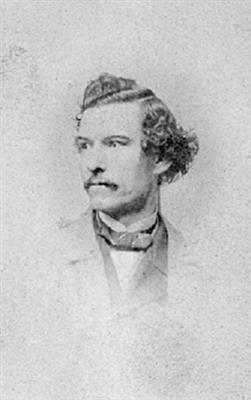
- portrait
American[1] historical painter whose Revolutionary War scenes reached millions as engravings in mid-19th-century illustrated histories.
Museums7
Countries1
Most worksNew York Historical, New York City · 1 works
Loading map…
Where to see Alonzo Chappel
Ranked by works you can see in person.
-
1 works
New York Historical
New York City, United States
-
1 works
Museum of Fine Arts Boston
Boston, United States


-
1 works
Gilcrease Museum
Tulsa, United States
-
1 works
RISD Museum
Providence, United States
-
1 works
Minneapolis Institute of Art
Minneapolis, United States
-
1 works
Metropolitan Museum of Art
New York City, United States
-
1 works
Smithsonian American Art Museum
Washington D.C., United States


Frequently Asked Questions
Where can I see Alonzo Chappel's work?
Alonzo Chappel's work can be viewed in several locations. In the United States, these include the Metropolitan Museum of Art in New York, the Los Angeles County Museum of Art (LACMA), the Minneapolis Institute of Arts, the Museum of Modern Art in New York, the Virginia Museum of Fine Arts in Richmond, the Wolfsonian at Florida International University in Miami Beach, and the Charles Hosmer Morse Museum of American[1] Art in Winter Park, Florida. Other locations include the Art Institute of Chicago, the Philadelphia Museum of Art, the Saint Louis Art Museum, the Nelson-Atkins Museum of Art in Kansas City, the Worcester Art Museum, and the Yale University Art Gallery in New Haven. In Canada, his work can be seen at the Art Gallery of Ontario in Toronto and the National Gallery of Canada in Ottawa.What should I know about Alonzo Chappel's prints?
Alonzo Chappel was a 19th-century American[1] artist who created historical and portrait[1] paintings, plus illustrations for books and magazines. Prints of his works were often sold to a broad audience; prints after paintings by artists such as John Everett Millais were discovered in locations from Siberia to South Africa. Prints can secure an artist's reputation, travelling widely as published editions bought in large numbers. Original prints are produced by hand, with the work created specifically to be a print. Each print is considered an original because the artist creates the artwork directly on the plate, woodblock, stone, or screen. These include woodcuts, engravings, linocuts, mezzotints, etchings, lithographs and serigraphs. They are sold through print galleries, frame shops, decorating outlets and fine-art galleries. Alternatively, offset reproductions (also known as posters and image prints) are reproduced by photochemical means. Plates do not wear out, so there are no physical limits on the number of prints made. Quantities may be limited by the publisher to add value.Why are Alonzo Chappel's works important today?
Alonzo Chappel (1828[1]-1887[1]) was an American[1] painter, best known for historical and patriotic scenes. His works are valued today as illustrations of 19th-century American historical consciousness and popular taste. Chappel created paintings of events from American history, such as the American Revolution and the lives of significant figures like George Washington. These paintings were often reproduced as prints, making them accessible to a wide audience. His images helped shape the visual culture of the period, influencing how Americans understood their past. While not considered an innovator, Chappel's art provides insight into the historical and cultural values of his time. His paintings reflect a desire to create a shared national identity through depictions of heroic events and figures. They offer a window into the 19th-century perspective on American history, revealing what aspects of the past were considered important and how they were visually represented for public consumption.What techniques or materials did Alonzo Chappel use?
Without reference to specific works, Alonzo Chappel's techniques can be discussed in general terms. Artists make important choices regarding media and technique. Understanding these choices helps us to better understand the artwork. Some artists are not always confined by the medium in which they work. Pencil techniques include hatching (filling an area with parallel strokes), crosshatching (layering strokes at different angles for darker shading), and applying heavy pressure for dark areas. Gradated values can be achieved by varying pressure, and blending tools can smooth transitions. Textures can be created using uneven strokes. Acrylic techniques involve different tools to create varied textures and effects. A flat wash, for example, is a thin mixture of acrylic paint diluted with water, applied in overlapping strokes.Who did Alonzo Chappel influence?
It is difficult to establish a direct line of influence from Alonzo Chappel to later artists. The art world only recently started to recognise the artistic contribution of Grafton Tyler Brown (1841[1]-1918[1]), some twenty years after his death. Brown was a lithographer and painter. Harry Twyford Peters noticed Brown's large black, white, and tinted city views while compiling *California on Stone* (1935). Peters had previously rehabilitated Nathaniel Currier and James Merritt Ives, making their ephemeral hand-coloured prints collectible. Brown's fame grew with the social unrest of the 1960s and the emergence of civil rights as a national concern. Coincidentally, the Oakland Museum of California became the first museum in the nation to feature Grafton Tyler Brown. Interest in Brown as an artist intensified after his first one-man show in the United States. In 2003, Lizzetta LeFalle-Collins curated *Grafton Tyler Brown: Visualizing California and the Pacific Northwest*.Who influenced Alonzo Chappel?
Without specific primary source material, it is difficult to assess Alonzo Chappel's influences. However, by examining the artistic milieu of his time, we can infer some potential sources of inspiration. Chappel was active during a period when history painting was popular, and he created many images of American[1] historical events and figures. Therefore, it is reasonable to assume that he looked to earlier history painters, both European and American, for guidance in terms of composition, subject matter, and technique. Also, the rise of reproductive printmaking meant artists could gain wider exposure to artwork. It is likely Chappel would have been familiar with the work of Benjamin West, John Trumbull, and other artists who specialised in historical subjects. These artists often combined meticulous research with dramatic visual storytelling, elements that are also present in Chappel's work. Further research into the collections and exhibitions Chappel would have had access to might clarify a more complete picture of his artistic influences.What is Alonzo Chappel's most famous work?
It is difficult to name one single work as Alonzo Chappel's most famous, as he was a prolific painter and illustrator of historical scenes. He is best known for his depictions of American[1] history, particularly scenes from the lives of prominent figures like George Washington, Abraham Lincoln, and other Founding Fathers. Chappel created many illustrations for books and periodicals; these images reached a wide audience and helped to shape popular perceptions of historical events. His paintings were often reproduced as prints, further disseminating his work. Without specific sales or survey data, it is hard to isolate one piece as definitively his 'most famous'. Instead, it is more accurate to recognise the collective impact of his historical paintings and illustrations in visualising and popularising American history.What style or movement did Alonzo Chappel belong to?
It is difficult to assign Alonzo Chappel to a single style or movement. In art, movement refers to how an artist uses technical and creative skills to elicit a viewer’s perception; it is the path that causes a viewer’s eyes to follow an intended direction. Artists use elements, such as shape and line, to create points of interest within a drawing. These elements determine how well an artwork communicates its visual dynamic to a viewer. Some artists incorporate graceful movements into their gestures and hold them from 30 seconds to 5 minutes. During this time, artists lightly sketch a long line of action into an overall silhouette and then quickly add the head, torso, and limbs using contour lines of varied sizes and values. A sensation of energy and movement is created by accent lines and value changes.
Sources
Where to See guide aggregates verified holdings of Alonzo Chappel's works across the following collections.
- [1] wikipedia Wikipedia: Alonzo Chappel Used for: biography.
- [2] book Alfred Frankenstein, After the Hunt _ William Harnett and Other American Still Life Painters, 1870-1900 Used for: biography.
- [3] book Jennifer D. Milam, Historical Dictionary of Rococo Art Used for: biography.
- [4] book Masterpieces of western art : a history of art in 900 individual studies from the Gothic to the present day Used for: biography.
- [5] book Landauer, Susan, The not-so-still life : a century of California painting and sculpture Used for: biography.
Editorial overseen by Solis Prints. Sources verified 2026-08-29. Click a source for details, or hover over [N] in the page above to preview.
Editorial standardsMethodologyCorrectionsAI disclosureAbout the editorial team