



About Achille Zo
French · 1826–1901
- history painting
A Bayonne-born painter trained under Thomas Couture, Zo made his name with Spanish genre scenes in the 1860s, earning a gold medal and royal patronage.
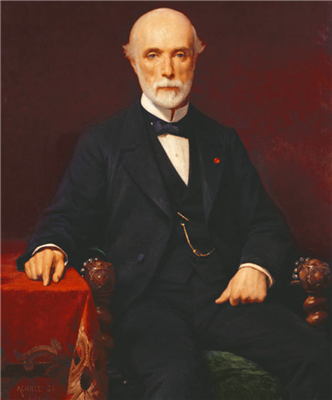
Museums3
Countries1
Largest reported holdingMusée des Beaux-Arts de Bordeaux, Bordeaux · 1 recorded work
Loading map…
Where to see Achille Zo
Collection holdings are reported here; current display varies. Check with each museum before visiting.
-
1 recorded work
Musée des Beaux-Arts de Bordeaux
Bordeaux, France
-
1 recorded work
Musée des beaux-arts de Marseille
Marseille, France


-
1 recorded work
Musée d'Orsay
Paris, France

Frequently Asked Questions
Where can I see Achille Zo's work?
Achille Zo's works can be viewed in several museums internationally. In the United States, these include the Charles Hosmer Morse Museum of American Art (Winter Park, Florida), the Los Angeles County Museum of Art (Los Angeles), the Metropolitan Museum of Art (New York), the Minneapolis Institute of Arts, the Museum of Modern Art (New York), the Virginia Museum of Fine Arts (Richmond), and the Wolfsonian at Florida International University (Miami Beach). In Canada, Zo's art can be seen at the Royal Ontario Museum (Toronto). In the United Kingdom, visit the Bakelite Museum (Williton), the Brighton Museum & Art Gallery, the Geffrye Museum (London), the Manchester Art Gallery, the National Museums of Scotland Royal Museum (Edinburgh), and the Victoria & Albert Museum (London).What should I know about Achille Zo's prints?
Achille Zo was a French[2] painter, born in 1826[2] in Marseille. He is known for paintings of military scenes and genre works. He studied at the École des Beaux-Arts in Paris under Léon Cogniet. Zo began exhibiting at the Salon in 1847[2]. He gained recognition for his depictions of military life, particularly his paintings of the Crimean War and the Franco-Prussian War. His style is characterised by attention to detail and realistic portrayals of soldiers and battle scenes. In addition to military subjects, Zo also painted genre scenes depicting everyday life in France and North Africa. He was influenced by Orientalism, a movement that romanticised Middle Eastern and North African subjects. Zo received several awards and honours during his career, including a medal at the Salon in 1868. He became director of the École des Beaux-Arts in Bordeaux in 1889, a post he held until his death in 1901[2]. His works are held in museums and private collections.Why are Achille Zo's works important today?
Achille Zo (1826[2]-1901[2]) was a French[2] painter known for genre scenes and Orientalist subjects. Zo's importance stems from his academic skill and his documentation of late 19th-century life and tastes. He studied at the École des Beaux-Arts and later became director of the École des Beaux-Arts in Bordeaux. His paintings often depict everyday life in a romanticised manner. He also explored historical themes, reflecting the period's interest in the past. Zo's Orientalist works, while products of their time, offer insight into European perceptions of the Middle East and North Africa. These paintings, though not always accurate, are valuable as cultural documents. They show the fascination with, and often misrepresentation of, other cultures that was common in European art. Zo's attention to detail and colour in these works is notable. Today, Zo's art is appreciated for its technical skill and as a record of 19th-century social interests. His paintings provide a window into the past, showing both the artistic conventions and the cultural attitudes of his era.Who did Achille Zo influence?
It is difficult to identify specific artists who were directly influenced by Achille Zo. Art history tends to focus on those who influenced Zo, rather than those he influenced. However, it is possible to discuss influence in a broader sense. Artists build upon the art of the past, extracting what they need for their own expression. One way to measure an artist's importance is to consider how later artists have used their work. Paul Cézanne, for example, drew inspiration from painters such as Courbet, and his work, in turn, stimulated the Nabis, Kandinsky, the Cubists, and even the Surrealists. Picasso's institutional legacy has been significant, with many artists acknowledging his impact. While it may be impossible to speak of "Picassoites" today, many artists still work in his shadow. Similarly, Delacroix, while not founding a school of followers, was important to younger independent artists, particularly the Impressionists, due to his expressive colour and bold brushwork.What is Achille Zo's most famous work?
It is difficult to name one single work as Achille Zo's "most famous". He was a prolific painter of 19th-century genre scenes, portraits, and historical subjects. Zo studied at the École des Beaux-Arts, and he is associated with the academic style. He exhibited regularly at the Paris Salon. His paintings often feature colourful costumes and theatrical settings, drawing inspiration from historical events and literature. Some of his well-known works include depictions of fêtes galantes (courtly festivals), scenes from the lives of artists, and episodes from French[2] history. He also produced Orientalist paintings, reflecting the taste for exotic subjects. Without more specific information, it is challenging to pinpoint one definitive "most famous" work within his varied output.What style or movement did Achille Zo belong to?
It is difficult to place Achille Zo within a single artistic movement. The passages mention Jacques-Louis David, Jean-Auguste-Dominique Ingres, Théodore Géricault, and François-Joseph Navez. David was a major figure in Neoclassicism, and his influence is noted. The passage mentions David advising Navez not to imitate Ingres. David's *Anger of Achilles* is discussed in terms of its dramatic conflict and figural arrangements. Ingres is mentioned as reviving codes of chivalry. Géricault is mentioned as treating themes of outcasts and marooned survivors. The emotional and social pathos of their subjects acquired extra urgency and symbolic weight from changes in the actual climate of Europe, strange weather beyond the capacity of contemporary science to comprehend, as if the earth itself shared the distress of humanity under the Restoration.What was Achille Zo's art style?
Achille Zo's mature work was defined by his experiences in Andalusia, Spain. Later in his career, he adopted an orientalist style.
Sources
Where to See guide aggregates verified holdings of Achille Zo's works across the following collections.
- [1] museum Musée des Beaux-Arts de Bordeaux Used for: museum holdings.
- [2] wikipedia Wikipedia: Achille Zo Used for: biography.
- [3] book Braun, Emily, 1957-; Asor Rosa, Alberto; Royal Academy of Arts (Great Britain), Italian art in the 20th century : painting and sculpture, 1900-1988 Used for: biography.
- [4] book Post-impressionism : cross-currents in European painting Used for: biography.
- [5] book Post-impressionism : cross-currents in European painting Used for: biography.
Editorial overseen by Solis Prints. Sources verified 2026-09-30. Click a source for details, or hover over [N] in the page above to preview.
Editorial standardsMethodologyCorrectionsAI disclosureAbout the editorial team