

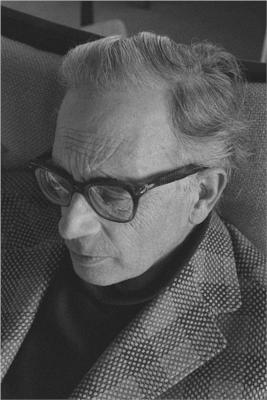
Carlos Botelho
Carlos Botelho was born in Lisbon in 1899[1] and died there in 1982[1], and the city never left his work. Its trams, hills, laundry-draped facades, and afternoon light appear across hundreds of paintings that record an urban life largely dissolved by the late twentieth century. He enrolled at the Lisbon School of Fine Arts but left quickly, finding the institution too constraining; his real education came from three years of study at the Grande Chaumière in Paris from 1929[1].
Biography
Before Paris, Botelho had built a parallel career in comics and illustration. From 1928[1] to 1950 he produced roughly 1,200 pages of comic strips for Ecos da Semana, combining autobiography, journalism, and political satire with a graphic economy that would later inform his painting. He also contributed to the children's weekly ABCzinho and worked on the Portuguese[1] pavilions at the Paris expositions of 1930 and 1937 and the San Francisco and New York world's fairs of 1939.
His painting sits in expressionist territory but with a distinctive emphasis on line as an autonomous element rather than a boundary for colour. He was not interested in Renaissance perspective; his Lisbon views flatten and compress, giving them a graphic directness that feels closer to printmaking than to traditional oil painting. Social subjects, washerwomen, labourers, café scenes, run alongside architectural studies of Paris, Florence, Amsterdam, and New Orleans.
His awards came quickly: the Amadeo de Souza-Cardoso Prize in 1938[1], first prize at the San Francisco International Contemporary Art Exposition in 1939, and the Columbano Prize in 1940. He exhibited at the Venice Biennials in 1950 and 1960 and at the São Paulo Biennials across the 1950s and 1960s. He remains among the most distinctive urban painters Portugal produced in the twentieth century.
Timeline
- 1899Born in Lisbon.
- 1928Began producing comic strips for Ecos da Semana, creating roughly 1,200 pages until 1950.
- 1929Began three years of study at the Grande Chaumière in Paris.
- 1930Contributed to the Portuguese pavilion at the Paris exposition.
- 1937Contributed to the Portuguese pavilion at the Paris exposition.
- 1938Received the Amadeo de Souza-Cardoso Prize.
- 1939Contributed to the Portuguese pavilions at the San Francisco and New York world's fairs; also won first prize at the San Francisco International Contemporary Art Exposition.
- 1940Received the Columbano Prize.
- 1950Exhibited at the Venice Biennial.
- 1982Died in Lisbon, aged 83.
Notable Works
Tap to view larger.
Next stop
Browse the movements →
Every movement in the collection, from the Renaissance to Pop art.
Related Artists

Frequently Asked Questions
What is Carlos Botelho known for?
Carlos Botelho is known for his paintings of Lisbon, which capture the city's trams, hills, laundry-draped facades, and afternoon light. He is also known for his comic strips for Ecos da Semana, his contributions to the children's weekly ABCzinho, and his work on the Portuguese[1] pavilions at the Paris expositions of 1930[1] and 1937 and the San Francisco and New York world's fairs of 1939.What was Carlos Botelho's art style?
Carlos Botelho's painting sits in expressionist territory, but with an emphasis on line as an autonomous element. He flattened and compressed his Lisbon views, giving them a graphic directness that feels closer to printmaking than to traditional oil painting; he was not interested in Renaissance perspective.How did Carlos Botelho die?
Carlos Botelho died in 1982[1] at the age of 83.
Sources
Editorial draws on the following primary and tertiary references for Carlos Botelho.
- [1] wikipedia Wikipedia: Carlos Botelho Used for: biography, birth dates, death dates, identifiers, movement attribution, nationality.
- [2] book Ernst Hans Gombrich, Fritz Saxl, Aby Warburg _ an intellectual biography Used for: biography.
- [3] book Natalya Strizhkova Andrei Sarabyanov, Art and Power_ The Russian Avant-garde under Soviet Rule, 1917–1928 Used for: biography.
- [4] book guggenheim-latinamericanpai00catl Used for: biography.
- [5] book guggenheim-modernsculpturef00hirs Used for: biography.
- [6] book guggenheim-twopri00weis Used for: biography.
- [7] book Erwin Panofsky, The Codex Huygens And Leonardo Da Vinci's Art Theory Used for: biography.
Editorial overseen by Solis Prints. Sources verified 2026-10-07. Click a source for details, or hover over [N] in the page above to preview.
Editorial standardsMethodologyCorrectionsAI disclosureAbout the editorial team