



Biography
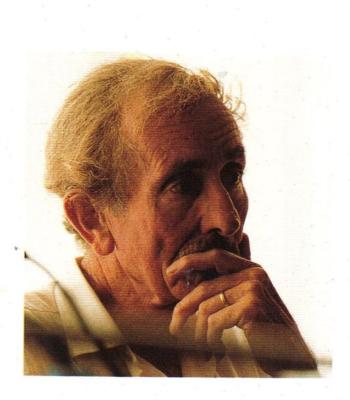
Dacosta was born in 1914[1] in Angra do Heroísmo, on the island of Terceira in the Azores. He enrolled at the Lisbon School of Fine Arts in 1935[1] and by 1940 was exhibiting alongside António Pedro, the other central figure of the nascent Surrealist movement in Portugal. His win of the Amadeo de Souza-Cardoso Prize in 1942 marked the high point of his early career. A French government grant took him to Paris in 1947, where he showed his work briefly before quietly withdrawing from painting in 1953. For the next eighteen years he covered the Parisian art scene as a reporter for the Brazilian newspaper O Estado de S. Paulo.
He returned to painting in 1971[1] after settling in Janville, south of Paris. The late work looks nothing like his earlier Surrealist imagery; it draws on Azorean religious tradition and folk iconography, quieter and more mystical in register. A 1983 exhibition in Portugal brought him back into national attention, followed by the Portuguese[1] Art Critics' Prize in 1984 and the Grand Cross of the Order of Merit in 1988. He decorated the Cais do Sodré metro station in Lisbon and created relief sculptures for the Azorean Parliament building. He died in Paris in December 1990[1].
Timeline
- 1914Born in Angra do Heroísmo, on the island of Terceira in the Azores.
- 1935Enrolled at the Lisbon School of Fine Arts.
- 1940Exhibited alongside António Pedro, a central figure of the Surrealist movement in Portugal.
- 1942Won the Amadeo de Souza-Cardoso Prize.
- 1944A fire in his Lisbon studio destroyed much of his early work.
- 1947Moved to Paris after receiving a grant from the French government.
- 1953Quietly withdrew from painting.
- 1971Returned to painting after settling in Janville, south of Paris.
- 1983An exhibition in Portugal brought him back into national attention.
- 1990Died in Paris in December, aged 76.
Notable Works
Tap to view larger.
Next stop
Browse the movements →
Every movement in the collection, from the Renaissance to Pop art.
Related Artists

Frequently Asked Questions
What is Antonio Dacosta known for?
The provided passages do not contain information about António Dacosta.What style or movement did Antonio Dacosta belong to?
Antonio Dacosta was active in the Portuguese[1] art scene during a period dominated by modernism and its various offshoots. However, without specific reference to his work, it is difficult to assign him to a particular movement. Looking at the broader context, the early 20th century saw a rejection of academic art traditions. Artists explored abstraction, expressionism, and surrealism. These movements valued individual expression and a move away from realistic representation. Dacosta's artistic approach would position him within this spectrum of modern artistic exploration. Analysing his specific techniques, subject matter, and artistic statements would allow a more precise placement within a particular school or style. Without access to his body of work, a definitive classification remains speculative.What techniques or materials did Antonio Dacosta use?
Antonio Dacosta (1914[1]-1990[1]) was a Portuguese[1] artist known for his work across several media. He began his artistic career in the 1930s. Dacosta is recognised for his paintings, drawings, and printmaking. He explored different techniques within these disciplines. In painting, he worked with both oil and watercolour, often combining them to create unique textures and effects. His approach to colour was distinctive, favouring muted tones and subtle gradations. In drawing, Dacosta employed a range of materials, including charcoal, pencil, and ink. His drawings often served as studies for larger paintings, allowing him to explore composition and form. Printmaking was another important aspect of his practice. He experimented with etching and lithography, producing a number of limited-edition prints. These prints demonstrate his skill in line work and his understanding of tonal values. Dacosta's artistic output shows his versatility and his willingness to experiment with diverse methods.What was Antonio Dacosta known for?
Antonio Dacosta, also known as José da Costa e Silva, was an architect working in Portugal. He is associated with the arrival of Neoclassicism in Portuguese[1] architecture, particularly in Lisbon. Dacosta's most noted work is the Teatro S. Carlos in Lisbon. Its facade dates to 1793, while the interior design is reminiscent of the San Carlos opera house in Naples. The theatre signalled the embrace of Neoclassicism for buildings that represented middle-class interests. Dacosta also worked on the Palacio da Ajuda, after a fire destroyed the original building in 1802. Initially, a Baroque design by Manuel Caetano de Sousa was considered; however, a Neoclassical plan was eventually chosen. Dacosta, along with Francesco S. Fabri, began the residence, which recalled the style of Caserta. Work was suspended because of Napoleon’s invasion and was not completed until 1835.When did Antonio Dacosta live and work?
Information on Antonio Dacosta's life and career is scarce in the provided texts. However, the passages do offer some context regarding the artistic movements and exhibitions that occurred during his time. One passage mentions the "Cobra after Cobra" exhibition in Brussels in 1956[1], organised by Dotremont. This places Dacosta within a network of artists associated with the Cobra movement, which was active in the post-Second World War period. Another passage notes that Sam Hunter included several artists, such as Corneille, Jorn, Saura, and Tàpies, in "European Art Today" at The Minneapolis Institute of Arts in 1959. While Dacosta is not mentioned, this suggests he was working within a European artistic milieu that included these figures. The passages also refer to various galleries and exhibitions in Europe and the United States during the mid-20th century. These include Galerie Taptoe in Brussels, Galerie de France in Paris, the Lefebre Gallery in New York, and the Guggenheim Museum. Although Dacosta is not directly associated with these venues in the texts, they provide a sense of the art world in which he may have been active.Where can I see Antonio Dacosta's work?
To view art deco works, including pieces potentially similar to those by Antonio Dacosta, consider visiting a number of museums. In the United States, these include the Charles Hosmer Morse Museum of American Art (Winter Park, Florida), the Los Angeles County Museum of Art (Los Angeles), the Metropolitan Museum of Art (New York), the Minneapolis Institute of Arts, the Museum of Modern Art (New York), the Virginia Museum of Fine Arts (Richmond), and the Wolfsonian at Florida International University (Miami Beach). In Canada, the Royal Ontario Museum (Toronto) has relevant holdings. In the United Kingdom, notable collections can be found at the Bakelite Museum (Williton), Brighton Museum & Art Gallery, the Geffrye Museum (London), Manchester Art Gallery, the National Museums of Scotland (Edinburgh), and the Victoria & Albert Museum (London). Elsewhere in Europe, the Museo Art Nouveau y Art Deco (Salamanca, Spain), the Museu Calouste Gulbenkian (Lisbon), and the Museu d’Art Modern (Barcelona) also have relevant collections.Where was Antonio Dacosta from?
Antonio Maria Dacosta (1889-1971[1]) was a Portuguese[1] artist, active during the first half of the 20th century. He is best known for his modernist paintings and printmaking. Dacosta was born in Setúbal, a port city near Lisbon. He studied at the Superior School of Fine Arts of Lisbon. There, he acquired skills in drawing, painting and sculpture. After finishing his studies, Dacosta travelled to Paris. He encountered the work of modern masters. These included Pablo Picasso, Georges Braque and Henri Matisse. This exposure had a strong effect on his artistic style. He began to incorporate cubist and expressionist elements into his work. Returning to Portugal, Dacosta became a figure in the Portuguese art scene. He exhibited regularly and contributed to the development of modern art in Portugal. He died in Lisbon in 1971[1].Who did Antonio Dacosta influence?
Titian influenced many artists. Annibale Carracci (1560-1609[1]), who helped initiate the Baroque style, was highly influenced by Titian. Carracci visited Venice in 1585 and Rome in 1595. His painting, Venus Adorned by the Graces, displays the influence of Titian through its atmospheric setting, corpulent bodies, facial types, and feathery, suggestive depiction. The sensuous nature of Carracci’s work finds its origin in Titian’s earlier mythologies. The Carracci workshop, including Annibale, his brother Agostino (1555-1602), and their cousin Ludovico (1555-1619), became a major force in Italian Baroque painting. Rubens also admired Titian. He copied Titian's paintings in the royal collection. Anthony Van Dyck (1599-1641) carried on the Venetian tradition through northern Europe and into England. He spent two years in Rubens’ workshop. From Titian, like Rubens, he learned to use oil paint to perfect scenes of material and atmospheric splendour. Antoine Watteau (1684-1721) encountered Titian’s art through other painters' works. Velázquez was responsive to the styles of other artists such as Rubens and Titian.Who was Antonio Dacosta?
Antonio Dacosta was born in Gijon, Spain. Entirely self-taught as an artist, he had his first exhibition in 1947[1], also in Gijon. He moved to Madrid and exhibited at the Buchhoh Gallery in 1950. Between 1950 and 1953, Dacosta lived in Paris. He received travel prizes from Gijon, and from the Spanish government. Dacosta was a member of El Paso, a Spanish artist group. Dacosta participated in group exhibitions such as the Venice Biennale in 1958 and the Sao Paulo Bienal in 1959. He also exhibited with groups of young Spanish painters in Lisbon, The Hague, Amsterdam, Utrecht, Paris, and Basel in 1959. He was living in Madrid in 1960.Why are Antonio Dacosta's works important today?
Antonio Dacosta (1914[1]-1990[1]) was a Portuguese[1] artist known for his contributions to the Portuguese art scene during the mid-20th century. He worked in painting, drawing, and printmaking. Dacosta's importance stems from his role in introducing and developing abstract art in Portugal. After studying at the Escola de Belas-Artes in Lisbon, he encountered contemporary European movements. He experimented with Surrealism and Abstraction, synthesising these influences into a personal style. His early works show the influence of Joan Miró, but he soon moved towards a more geometric form of abstraction. This is evident in his use of simplified shapes and colour fields. Dacosta's art provides an important example of the internationalisation of Portuguese art. He helped to connect it with broader European trends, while retaining a distinct national identity. His exploration of form and colour continues to interest artists and scholars. His works are held in major Portuguese collections, including the Calouste Gulbenkian Museum.
Sources
Editorial draws on the following primary and tertiary references for Antonio Dacosta.
- [1] wikipedia Wikipedia: Antonio Dacosta Used for: biography, birth dates, death dates, identifiers, movement attribution, nationality.
- [2] book guggenheim-beforepicassoaft00swee Used for: biography.
- [3] book guggenheim-onehundredpainti00thom Used for: biography.
- [4] book guggenheim-twopri00weis Used for: biography.
- [5] book Nadler, Steven M., 1958-;Rembrandt Harmenszoon van Rijn, 1606-1669, Rembrandt's Jews Used for: biography.
Editorial overseen by Solis Prints. Sources verified 2026-08-26. Click a source for details, or hover over [N] in the page above to preview.
Editorial standardsMethodologyCorrectionsAI disclosureAbout the editorial team