



Alberto Carneiro
Before he turned eleven, Alberto Carneiro was working in a religious image workshop in rural northern Portugal, carving stock saint figures from wood and stone. That early, constrained encounter with craft shaped everything that followed: a lifelong preoccupation with the relationship between the human body, memory, and the natural world.

Biography
Born in 1937[1] into a farming community in northern Portugal, Carneiro pursued evening courses in Oporto and Lisbon before enrolling at the Oporto School of Fine Art, graduating in Sculpture in 1967[1]. He mounted his first solo exhibition that same year, then travelled to London to study at St Martin's School of Art under Anthony Caro and Philip King, immersing himself simultaneously in the phenomenology of Merleau-Ponty, structuralist anthropology, and Taoist philosophy.
In London he drafted the 'Notes Towards a Manifesto of Ecological Art' (1968[1]-1972[1]), published in 1973 in Revista de Artes Plasticas. The term 'ecological art' was chosen deliberately: it separated his practice from the land art of Richard Long or Hamish Fulton. The critic Isabel Carlos put the distinction plainly: where Long and Fulton made art from a weekend in the country, Carneiro's work condensed a lived rural experience.
His signature works, which he called 'involvements' (envolvimentos), place single, unaltered natural materials inside gallery space: a reconstructed cane field in 'The Cane-field: Memory - Metamorphosis of an Absent Body' (1968[1]), tree trunks in 'A Forest for Your Dreams' (1970), and monumental bundles of rye in 'A Field After Harvest for Our Body's Aesthetic Delight' (1973-1976[1]). The Cane-field encoded colours, letters, and numbers on each cane as a combinatory system for visitors to inhabit with their own bodies and memories; it is now held in the Colecao Caixa Geral de Depositos in Lisbon.
In 1977[1] he took part in 'Alternative Zero' (Alternativa Zero), the landmark exhibition organised by Ernesto de Sousa that presented Portuguese[1] art as a genuine avant-garde formed under, and in quiet opposition to, the Salazar and Caetano dictatorships.
Timeline
- 1937Born into a farming community in northern Portugal
- 1967Graduated in Sculpture from the Oporto School of Fine Art
- 1967Mounted his first solo exhibition
- 1968Drafted 'Notes Towards a Manifesto of Ecological Art' (to 1972)
- 1968Created 'The Cane-field: Memory - Metamorphosis of an Absent Body'
- 1970Created 'A Forest for Your Dreams'
- 1973'Notes Towards a Manifesto of Ecological Art' published
- 1973Created 'A Field After Harvest for Our Body's Aesthetic Delight' (to 1976)
- 1977Participated in 'Alternative Zero' exhibition
Notable Works
Tap to view larger.
Next stop
Browse the movements →
Every movement in the collection, from the Renaissance to Pop art.
Related Artists
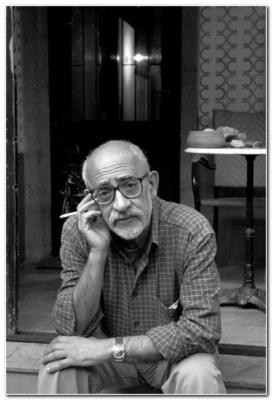
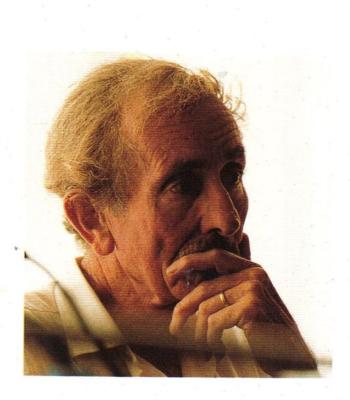
Frequently Asked Questions
What is Alberto Carneiro known for?
Alberto Carneiro is known for his 'involvements' (envolvimentos), which placed single, unaltered natural materials inside gallery spaces. These included works such as 'The Cane-field: Memory - Metamorphosis of an Absent Body' (1968[1]), 'A Forest for Your Dreams' (1970), and 'A Field After Harvest for Our Body's Aesthetic Delight' (1973-1976[1]).When was Alberto Carneiro born?
Alberto Carneiro was born in 1937[1].
Sources
Editorial draws on the following primary and tertiary references for Alberto Carneiro.
- [1] wikipedia Wikipedia: Alberto Carneiro Used for: biography, birth dates, death dates, identifiers, movement attribution, nationality.
- [2] book guggenheim-guggenhe02solo Used for: biography.
- [3] book guggenheim-refigur00kren Used for: biography.
- [4] book Jennifer D. Milam, Historical Dictionary of Rococo Art Used for: biography.
Editorial overseen by Solis Prints. Sources verified 2026-09-30. Click a source for details, or hover over [N] in the page above to preview.
Editorial standardsMethodologyCorrectionsAI disclosureAbout the editorial team