

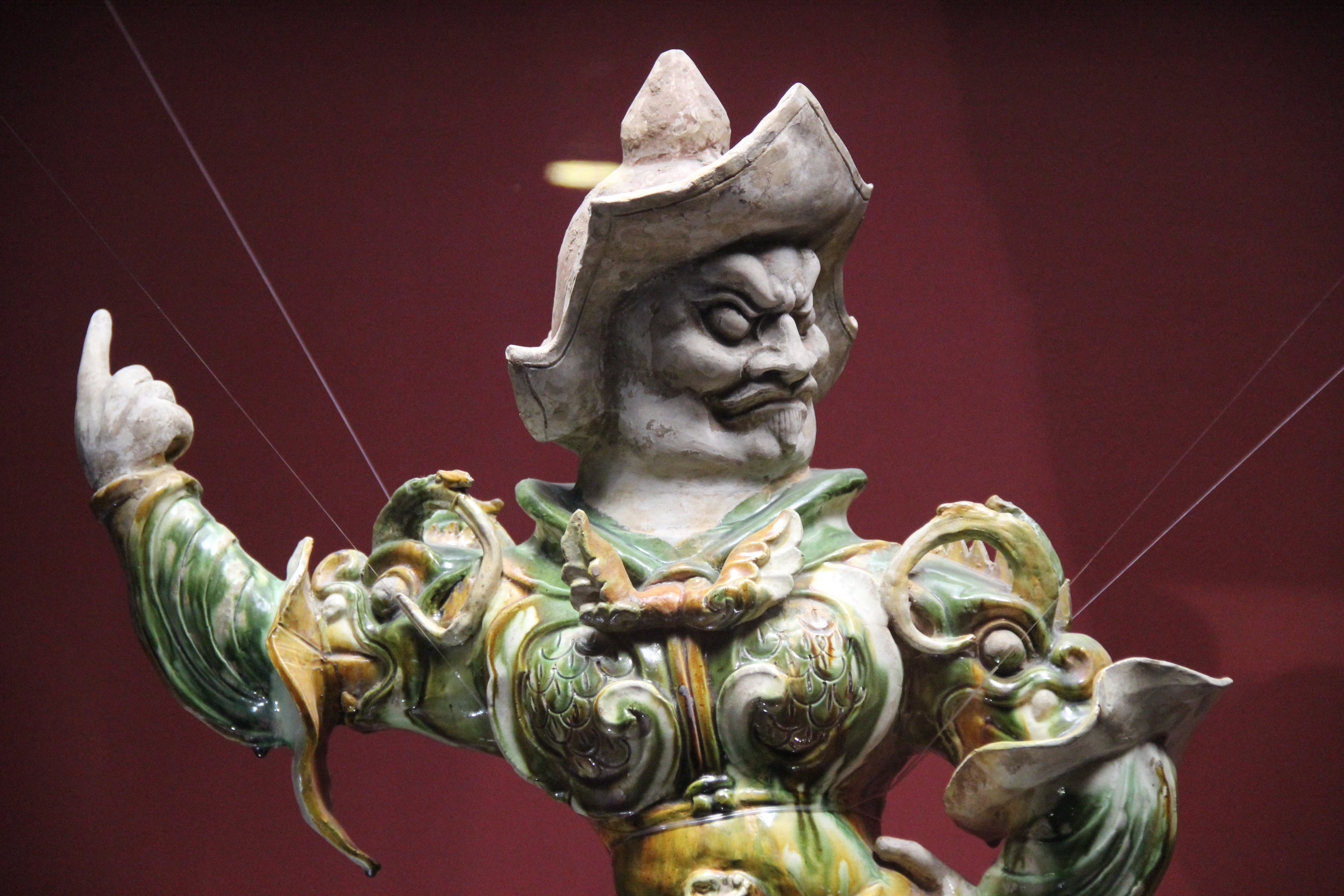
The Tang dynasty (618 to 907) was the most outward-looking period in Chinese history. The Silk Road was open, and through it flowed Persian metalwork, Sogdian textiles, and Byzantine design motifs. Tang artisans absorbed these influences with enthusiasm, producing gold and silver vessels that would have looked familiar in Isfahan, and ceramics glazed in colours no Chinese kiln had used before. Then, in 755, a rebellion shattered the cosmopolitan confidence, and Chinese decorative arts turned inward again.
Foreign Silver, Chinese Gold
Tang gold and silver work shows its debts openly. An oblong eight-lobed silver cup in a Kobe museum follows a Sassanian Persian design. The lobed form, unusual in Chinese metalwork, continued to be made through the mid and late Tang but gradually took on a rounder, more Chinese shape with fewer lobes. The shift from foreign prototype to local adaptation happened in real time, visible in the surviving objects.
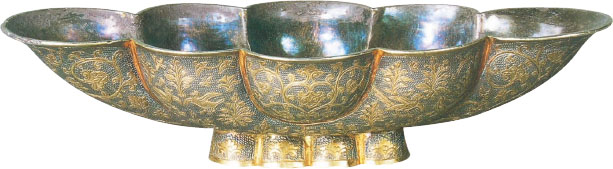
Two techniques dominated: repousss (hammering from behind to create raised patterns) and chasing (hammering from the front with punches to create intaglio patterns). The division was not merely technical. Repousss, the primary metalworking technique of the West, produced patterns with an evidently foreign character. Chasing, linked to the Chinese tradition of stone-tablet engraving, produced patterns that were distinctly Chinese. Early Tang pieces favour repousss; late Tang pieces favour chasing. The transition tracks the dynasty's shift from cosmopolitan absorption to cultural consolidation.
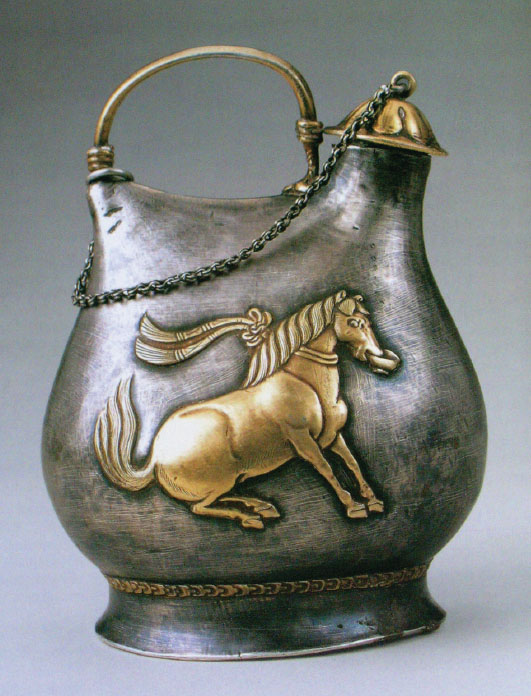
The flask above, found in a hoard at Hejia Village in Xi'an, depicts a horse holding a wine cup in its mouth, dancing to music. This was not fantasy. Horses decked with ribbons and dancing at court entertainments were a feature of Emperor Xuanzong's birthday celebrations. The ribbon, which is homophonic with "longevity" in Chinese, added a layer of symbolic meaning to what was already an extraordinary image.
Three Colours and a Camel

Tang tri-colour glazed earthenware (sancai) is perhaps the most recognisable Chinese ceramic type in Western collections. The technique used lead-based glazes in amber, green, and cream, allowed to run and blend during firing. The results were unpredictable and often spectacular. Figures of camels, horses, court ladies, and foreign merchants were made in large numbers, primarily as tomb furnishings rather than for domestic use.
The camel above carries a group of mounted musicians, a subject that captures the cosmopolitan atmosphere of Tang Chang'an, where Central Asian music was fashionable. These objects were meant to accompany the dead into the afterlife, providing entertainment and transport. Their exuberance is the opposite of what Song dynasty ceramics would later pursue, and the contrast is instructive: the Tang valued display, the Song valued restraint, and both produced masterpieces.
The An Lushan Rebellion of 755 marks the dividing line. Before it, China was remarkably open to western influences. After it, the Tang began a long decline, and the decorative arts gradually shed their foreign borrowings. By the time the Song dynasty emerged from the chaos of the Five Dynasties, the appetite for Persian shapes and Sogdian patterns had gone entirely. What replaced it was something the Chinese could claim as entirely their own.


