



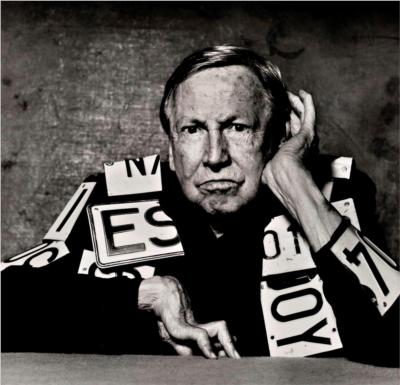
![Untitled [double Rauschenberg] by Robert Rauschenberg](https://cdn.shopify.com/s/files/1/0833/9292/1935/files/artwork-robert-rauschenberg-untitled-double-rauschenberg.jpg?width=480)
About Robert Rauschenberg
American · 1925–2008
- Neo-Dada
- Pop Art
Robert Rauschenberg revolutionised art by combining painting with everyday objects and commercial printing techniques.
Museums2
Countries1
Largest reported holdingNational Gallery of Art, Washington D.C. · 265 recorded works
Loading map…
Where to see Robert Rauschenberg
Collection holdings are reported here; current display varies. Check with each museum before visiting.
-
265 recorded works
National Gallery of Art
Washington D.C., United States
-
10 recorded works
Museum of Modern Art
New York City, United States


Frequently Asked Questions
Where can I see Robert Rauschenberg's work?
Robert Rauschenberg's artworks can be viewed in many locations. The Solomon R. Guggenheim Museum in New York held a large Rauschenberg retrospective in 1997-98; it then travelled to Houston and Europe in 1998-99. A retrospective organised by the National Collection of Fine Arts, Washington, D.C., toured the United States in 1976-78. His work was also included in group shows like the 2001 Pop Art: U.S./U.K. Connections 1956-1966 exhibition at the Menil Collection, Houston. Other exhibitions that included his pieces were staged at the Massachusetts Museum of Contemporary Art, North Adams, and the Museu de Arte Contemporanea de Serralves, Porto. Rauschenberg had his first solo show at the Betty Parsons Gallery, New York, in 1951 and a career retrospective at the Jewish Museum, New York, in 1963. His work is held in the permanent collections of major museums worldwide.What should I know about Robert Rauschenberg's prints?
Robert Rauschenberg, born Milton Rauschenberg (1925-), was a prolific artist who experimented with various media. He studied at the Kansas City Art Institute and Académie Julian before returning to the United States to study with Josef Albers at Black Mountain College. Rauschenberg's printmaking gained momentum in the 1960s. He made his first lithograph in 1961 and started incorporating silkscreen processes into his paintings around 1962. He further explored different printmaking techniques. His prints often blurred the lines between painting and sculpture. Rauschenberg is known for his "Combines", works integrating aspects of both forms, incorporating everyday objects like stuffed animals, street signs, or bedding. He also used unusual materials like tissue paper, dirt, and gold leaf. In 1963, he created "Untitled", using oil, silkscreen, ink, metal, and plastic on canvas. Rauschenberg co-founded Experiments in Art and Technology (E.A.T.) in 1966. The organisation sought to promote collaborations between artists and engineers.What techniques or materials did Robert Rauschenberg use?
Robert Rauschenberg, born in 1925, employed a wide range of techniques and materials throughout his career. In his early years, he experimented with photographic blueprints. By the early 1950s, he was creating all-black and all-white paintings. His travels in Europe and North Africa (1952-1953) inspired small collages and boxes filled with found objects. Upon his return to New York, he made sculptures from wood and stone, incorporating tissue paper, dirt, or gold leaf. From 1955 to 1959, Rauschenberg created what he termed "combines". These works blurred the lines between painting and sculpture. He incorporated everyday objects such as stuffed animals, bedding, rusted traffic signs, and frayed shirt cuffs. Rauschenberg stated that painting should relate to both art and life; he felt that "a pair of socks is no less suitable to make a painting with" than traditional art supplies. In 1961, Rauschenberg made his first lithograph and subsequently used the silkscreen process in many canvases. He continued to explore new techniques, co-founding Experiments in Art and Technology (E.A.T.) in 1966 to encourage collaboration between artists and engineers.Who did Robert Rauschenberg influence?
Robert Rauschenberg's work influenced a number of artists who explored the boundaries between painting and sculpture, and who incorporated everyday objects into their art. His use of found materials and collage techniques had a ripple effect across the art world. One significant area of influence was on Pop Art. Rauschenberg's early combines, such as "Bed" (1955), which incorporated a quilt and pillow, helped pave the way for the Pop Art movement's embrace of popular culture and mass media imagery. Artists like Andy Warhol and James Rosenquist built upon Rauschenberg's innovations, further blurring the lines between high art and commercial culture. Rauschenberg also had an impact on Conceptual Art. His emphasis on the idea behind the artwork, rather than just its aesthetic qualities, resonated with conceptual artists who prioritised concepts and processes over traditional artistic skills. His erasure of a de Kooning drawing, titled "Erased de Kooning Drawing" (1953), is an early example of conceptual art's dematerialisation of the art object. Additionally, Rauschenberg's interdisciplinary approach, which combined painting, sculpture, photography, and performance, inspired later generations of artists working in mixed media and installation art.Who influenced Robert Rauschenberg?
Robert Rauschenberg studied at Black Mountain College in North Carolina in 1948 and 1951-52. He cited Josef Albers, a former Bauhaus instructor, as his most important teacher. Albers taught Rauschenberg about visual perception, formal composition, and material analysis. Albers's Bauhaus preliminary course, adapted for Black Mountain, emphasised hands-on exercises and material studies. Albers encouraged students to explore unconventional materials and to develop a "finger-tip feeling" for material, creating unified compositions from diverse elements. Rauschenberg also met John Cage and Merce Cunningham at Black Mountain. In 1949, he moved to New York and studied at the Art Students League with Morris Kantor and Vaclav Vytlacil until 1950. During the mid-1950s, Rauschenberg began making his "combines", works influenced by Marcel Duchamp, in collaboration with Jasper Johns. These constructions incorporated found objects and challenged traditional distinctions between painting and sculpture.What is Robert Rauschenberg's most famous work?
Robert Rauschenberg, born in Port Arthur, Texas, in 1925, is well known for his "Combines", works that integrated aspects of painting and sculpture. He began to concentrate on these assemblages some years before Leo Castelli began exhibiting his work. Among Rauschenberg's early works, Bed (1955) is perhaps the most famous. It incorporates his own pillow, sheet, and quilt, which he upended and marked with oil paint. Another Combine, Monogram (1955-59), features a stuffed goat wearing a tire. These pieces exemplify Rauschenberg's use of everyday objects in his art. Before his Combines, Rauschenberg experimented with monochromatic paintings. In the early 1950s, he created series of all-white and all-black paintings. By 1953, he shifted to the colour red, creating Red Painting, which, like his Black Paintings, has a textured surface. Rauschenberg's innovative approach challenged traditional art categories. His statement, "Painting relates to both art and life. Neither can be made. (I try to act in that gap between the two,)" reflects his artistic philosophy. He worked closely with Jasper Johns, and both reacted against Abstract Expressionism. Rauschenberg's mixed-media eclecticism influenced the shift from modernism to postmodernism.What style or movement did Robert Rauschenberg belong to?
Robert Rauschenberg (born 1925) is associated with several art movements, including neo-Dada and Pop Art. He is known for his experimental approach to art, often incorporating unconventional materials and techniques into his work. Rauschenberg's early studies included time at the Académie Julian in Paris, and with Josef Albers at Black Mountain College. There, he met John Cage and Merce Cunningham, who influenced his development. Rauschenberg's work from the mid-1950s onward moved away from Abstract Expressionism. He began creating what he termed "combines"; these were neither painting nor sculpture, but three-dimensional constructions using found objects. These objects included items such as stuffed animals, beds, and tyres. Rauschenberg's combines and other works often merged Dada's radical questioning of accepted practice with Abstract Expressionist brushstrokes and a Surrealist's openness to chance. He also had connections to Jasper Johns, and both artists were influenced by Marcel Duchamp.What was Robert Rauschenberg known for?
Robert Rauschenberg (1925-), born Milton Rauschenberg, is known for his interdisciplinary approach. Reacting against Abstract Expressionism, he worked closely with Jasper Johns and was influenced by Duchamp. His early work included blueprints, monochromatic white paintings, and black paintings. After travels in Europe and North Africa, he created small collages and boxes filled with found objects. Upon returning to New York in 1953, he made sculptures from wood and stone, and paintings using tissue paper, dirt, or gold leaf. Rauschenberg is particularly known for his "combines", a term he coined for works integrating painting and sculpture. These pieces incorporate found objects such as stuffed animals, street signs, and items like quilts and pillows. He stated that he wanted his art to reflect the outside world, rather than being confined to studio conventions. Rauschenberg also experimented with lithography and silkscreen techniques. In 1966, he co-founded Experiments in Art and Technology (E.A.T.) to encourage collaboration between artists and engineers. Later, he established the Rauschenberg Overseas Culture Interchange (ROCI) project from 1985 to 1991, promoting peace through art.
Sources
Where to See guide aggregates verified holdings of Robert Rauschenberg's works across the following collections.
- [1] book guggenheim-berriarei00bilb Used for: biography.
- [2] book guggenheim-guhe00solo Used for: biography, stylistic analysis.
- [3] book guggenheim-popicons00gugg Used for: biography, stylistic analysis.
- [4] book Carol Strickland and John Boswell, The Annotated Mona Lisa Used for: biography, stylistic analysis.
Editorial overseen by Solis Prints. Sources verified 2026-10-14. Click a source for details, or hover over [N] in the page above to preview.
Editorial standardsMethodologyCorrectionsAI disclosureAbout the editorial team