Pop Art Artists

Pop Art

Pop Art

20 artists · 1955–1970

Pop Art emerged in the mid-1950s as a direct challenge to the seriousness of Abstract Expressionism. In Britain, members of the Independent Group began collaging advertisements, comic strips, and consumer packaging into new compositions. By the late 1950s, American artists were doing the same with bolder ambition, pulling imagery straight from supermarket shelves and tabloid pages. The movement treated mass culture as raw material rather than something beneath the gallery's notice. Andy Warhol's silkscreened Campbell's Soup cans, Roy Lichtenstein's blown-up comic panels, and David Hockney's sun-drenched swimming pools each found different ways to collapse the gap between commercial imagery and fine art. Pop Art questioned who owned visual culture and who got to frame it. It borrowed the tools of advertising (flat colour, repetition, mechanical reproduction) and turned them back on the viewer. The result was work that felt simultaneously familiar and disorienting, amusing and critical. By the late 1960s, Pop had reshaped public expectations of what art could look like, where it could come from, and whom it could address.

Key Ideas

Art from the Everyday

Pop artists rejected the idea that fine art must draw on myth, history, or inner emotion. Instead they looked outward: at billboards, product labels, Hollywood publicity stills, and newspaper front pages. The mundane became monumental. A soup can or a Brillo box, isolated and enlarged, forced viewers to reconsider objects they handled without thinking. This levelling impulse challenged the hierarchies that had governed Western art for centuries and opened the door to any image, from any source, entering the gallery.

Mechanical Reproduction as Method

Silkscreen printing, Ben-Day dots, stencilling, and photographic transfer replaced the painterly brushstroke. Warhol's Factory operated like a small production line, turning out multiples that blurred the boundary between original and copy. Lichtenstein hand-painted dots that mimicked cheap newsprint. These techniques were not merely stylistic choices; they were arguments. If art could be reproduced like a magazine cover, then the cult of the unique object was open to question.

Transatlantic Dialogue

Pop Art developed along two parallel tracks. British Pop, led by Richard Hamilton, Eduardo Paolozzi, and Peter Blake, grew from post-war austerity and a fascination with American consumer culture seen from a distance. American Pop, led by Warhol, Lichtenstein, and Ed Ruscha, emerged from inside that consumer culture and treated it with cooler detachment. The conversation between London and New York gave the movement range, preventing it from becoming a single national style.

Celebrity and Repetition

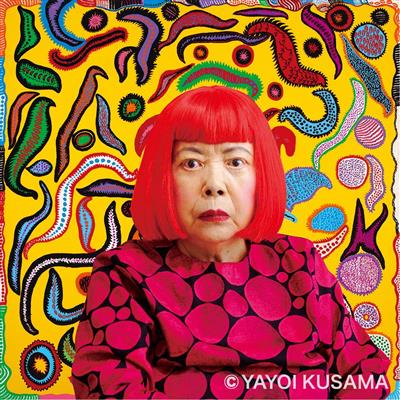
Warhol's Marilyn Monroe portraits and Lichtenstein's comic heroines turned the human face into a commodity. Repeated, flattened, and recoloured, these images drained individuality from their subjects while making them more iconic. Yayoi Kusama's obsessive dot patterns and infinity environments pushed repetition toward the psychological, linking Pop's visual strategies to questions of identity, obsession, and self-erasure.

Key Artists

Progression of Art

I Was a Rich Man's Plaything

Eduardo Paolozzi · 1947 · Collage on card

Often cited as the first true Pop Art work, this collage appeared years before the term existed. Paolozzi assembled cut-out images from American magazines: a pin-up girl, a Coca-Cola logo, a cherry pie advertisement, a wartime bomber, and a pistol. The word 'POP' appears on a cloud of smoke from the gun. Made in London during post-war rationing, the collage channels desire for an American consumer world that most Britons knew only through imported magazines and films. Its rough, pasted-together quality anticipates the movement's refusal to distinguish between high culture and mass media. Paolozzi was not celebrating or condemning this material. He was cataloguing it, and in doing so he exposed the seductive machinery of advertising with an almost anthropological eye.

Just What Is It That Makes Today's Homes So Different, So Appealing?

Richard Hamilton · 1956 · Collage on paper

Created for the This Is Tomorrow exhibition at the Whitechapel Gallery, Hamilton's small collage packs an entire consumer landscape into a single domestic interior. A bodybuilder holds an oversized lollipop labelled 'POP'. A woman on the sofa wears only a lampshade. A vacuum cleaner, a canned ham, a television set, and a framed comic strip crowd the room. Through the window, a cinema marquee glows. Every element was clipped from a magazine or advertisement. Hamilton described his intentions in a letter listing qualities he wanted the work to embody: popular, transient, expendable, mass-produced, glamorous, and witty. The collage operates as a manifesto in miniature, mapping the territory that Pop Art would spend the next decade exploring.

Drowning Girl

Roy Lichtenstein · 1963 · Oil and synthetic polymer paint on canvas
Drowning Girl by Roy Lichtenstein

Lichtenstein's painting adapts a panel from the DC Comics series Secret Hearts. A woman sinks beneath a wave, a thought bubble reading: 'I don't care! I'd rather sink than call Brad for help!' Lichtenstein enlarged the image to nearly 172 centimetres, meticulously reproducing the Ben-Day dot pattern of cheap colour printing by hand. The shift in scale transforms melodrama into something closer to tragedy. The dots, visible at gallery distance, remind the viewer that this emotion is manufactured, printed, and distributed by the thousand. Yet the composition holds genuine formal power: the curving wave, the isolated figure, and the stark colour contrast of blue, black, and white create a painting that functions on its own terms.

Marilyn Diptych

Andy Warhol · 1962 · Acrylic paint on canvas, silkscreen

Completed weeks after Marilyn Monroe's death in August 1962, this diptych silkscreens the same publicity still fifty times across two canvases. The left panel glows with bright, flat colour; the right fades to ghostly black and white, the image degrading with each repetition. The mechanical process itself becomes the subject. Colour equals life, celebrity, and spectacle; monochrome equals mortality and erasure. Warhol chose silkscreen precisely because it is impersonal, removing the artist's hand from the equation. The result questions whether an image consumed millions of times retains any connection to the person it depicts. Monroe becomes a product, endlessly reproduced and endlessly consumed.

A Bigger Splash

David Hockney · 1967 · Acrylic on canvas

Hockney painted this Los Angeles swimming pool scene from a photograph, using flat, uninflected colour and clean geometric lines that owe as much to design magazines as to painting tradition. The diving board, the low modernist house, and the two palm trees are rendered with architectural precision. The splash itself, the only moment of spontaneous energy in the painting, took Hockney two weeks to complete. That tension between the instantaneous event and the slow, deliberate labour of painting it gives the work its peculiar charge. The California light is rendered without shadow or atmosphere, producing an image that feels like a lifestyle advertisement elevated to the scale of history painting.

On the Balcony

Peter Blake · 1957 · Oil on canvas with collage elements
On the Balcony by Peter Blake

Blake's early masterpiece layers painted figures with real photographs, magazine clippings, and postcard reproductions. Four young people sit on a balcony surrounded by images within images: reproductions of paintings, product packaging, royal memorabilia, and magazine covers. The work catalogues the visual environment of 1950s Britain, where coronation souvenirs sat alongside American imports. Blake's technique mixes trompe-l'oeil painting with actual pasted objects, refusing to let the viewer settle on a single mode of representation. It is a painting about looking, collecting, and the way mass-produced images colonise domestic life.

Standard Station

Ed Ruscha · 1966 · Screenprint
Standard Station by Ed Ruscha

Ruscha reduces a roadside petrol station to a few sharp diagonals and a single word: STANDARD. The composition borrows from commercial signage and cinematic widescreen framing, compressing the American landscape into a graphic logo. The building's angular canopy slices across the print like an arrow, directing the eye toward a vanishing point that implies infinite highway. Ruscha's West Coast Pop is cooler and more laconic than its New York counterpart. There is no irony or commentary here, only observation stripped to its graphic essence. The petrol station becomes a glyph for a culture built on automobiles, petroleum, and horizontal space.

Origins

The Independent Group and British Origins

In 1952, a loose collective of artists, architects, and writers began meeting at the Institute of Contemporary Arts in London. Eduardo Paolozzi projected collages made from American magazine advertisements. Richard Hamilton, Reyner Banham, and Lawrence Alloway debated the aesthetics of mass culture. This Independent Group never issued a manifesto, but their conversations laid the intellectual groundwork for Pop Art. Alloway is often credited with coining the term, though he later said he used it to describe the products of mass media, not the art that drew on them. By 1956, the This Is Tomorrow exhibition at the Whitechapel Gallery had made the connection between popular culture and gallery art explicit.

New York Takes the Stage

By the late 1950s, Jasper Johns and Robert Rauschenberg had already cracked open the door between everyday objects and painting. Johns's flags and targets and Rauschenberg's combines, which incorporated tyres, stuffed animals, and newspaper clippings, made it possible for a younger generation to go further. When Andy Warhol exhibited thirty-two Campbell's Soup Can paintings at the Ferus Gallery in Los Angeles in 1962, the critical response was polarised but the public response was immediate. Within months, Lichtenstein, James Rosenquist, Tom Wesselmann, and Claes Oldenburg were exhibiting work drawn from comics, billboards, and household products. New York replaced London as the movement's centre of gravity.

Pop Meets the Museum

The 1963 exhibition Six Painters and the Object at the Guggenheim, curated by Lawrence Alloway, placed Pop Art inside one of modernism's most prestigious institutions. The following year, Rauschenberg won the Golden Lion at the Venice Biennale, the first American to do so. These institutional endorsements signalled that Pop was no longer a fringe provocation. Collectors, dealers, and curators embraced the movement with a speed that older avant-gardes had never experienced. Pop Art's accessibility, its bright colours and recognisable subjects, made it the first modern movement to achieve genuine popular appeal beyond the art world.

In Their Words

“Once you 'got' Pop, you could never see a sign the same way again. And once you thought Pop, you could never see America the same way again.”

Andy WarholPOPism: The Warhol Sixties, 1980

“Pop Art looks out into the world. It doesn't look like a painting of something, it looks like the thing itself.”

Roy LichtensteinInterview with John Coplans, 1963

“I think of my pictures as dramas; the shapes in the pictures are the performers.”

Ed RuschaArtforum interview, 1965

Related Movements

Recommended Reading

POPism: The Warhol Sixties
Andy Warhol and Pat Hackett, 1980

First-person account of the Factory years and the social world that produced American Pop Art.

This Is Tomorrow: Pop Art in Britain
Chris Sheridan, 2011

Tracks the movement from the Independent Group through to Peter Blake and David Hockney.

Lichtenstein: A Retrospective
James Rondeau and Sheena Wagstaff, 2012

Comprehensive survey of Lichtenstein's career with detailed analysis of technique and source material.

All Pop Art Artists

Explore Pop Art prints

Browse Pop Art Prints →