



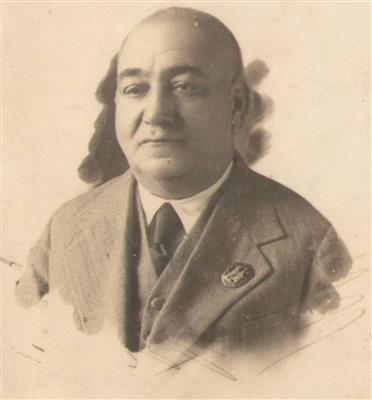
About Azim Azimzade
Azerbaijan Democratic Republic · 1880–1943
- caricature
- portrait
Self-taught Azerbaijani caricaturist who spent twenty-five years at Molla Nasraddin and was the first recipient of People's Artist of Azerbaijan.
Museums2
Countries2
Largest reported holdingNational Gallery of Armenia, Yerevan · 2 recorded works
Loading map…
Where to see Azim Azimzade
Collection holdings are reported here; current display varies. Check with each museum before visiting.
-
2 recorded works
National Gallery of Armenia
Yerevan, Armenia
Also here (6)
-
1 recorded work
National Art Museum of Azerbaijan
Baku, Azerbaijan


Frequently Asked Questions
Where can I see Azim Azimzade's work?
Many museums across the world have examples of art from Azim Azimzade. These include the Los Angeles County Museum of Art; the Metropolitan Museum of Art in New York; the Royal Ontario Museum in Toronto; and the National Museums of Scotland in Edinburgh. The Victoria and Albert Museum in London also holds a substantial collection. The Victoria and Albert Museum's collection was acquired in a short period, between 1873 and 1883[1], by Sir Robert Murdoch Smith. Smith, working in Iran for the Persian telegraph department, recognised the opportunity to acquire pieces for the South Kensington Museum. A large part of this collection came from Jules Richard, a French photographer living in Tehran. Richard had close ties to the Qajar family, which may have helped him acquire the works. Smith continued to add to the collection until 1885.What should I know about Azim Azimzade's prints?
Azim Azimzade (1880[1]-1943[1]) was an Azerbaijani artist and caricaturist, active during a period of significant social and political change in the Caucasus. He is considered a founder of Azerbaijani satirical graphics. Azimzade received his art education at the Baku Art School. His early work appeared in publications such as *Molla Nasraddin*, a multilingual satirical magazine that addressed social and political issues in the region. These illustrations often criticised social inequality, religious hypocrisy, and Tsarist rule. After the October Revolution, Azimzade's art shifted to reflect Soviet ideology. He created propaganda posters and illustrations supporting the new regime. He also designed costumes and sets for theatrical productions. Prints of Azimzade's works offer insight into the cultural and political atmosphere of Azerbaijan during the late 19th and early 20th centuries. His satirical pieces provide a critical perspective on the social issues of the time, while his later works demonstrate the influence of Soviet artistic principles. His art provides a visual record of a society undergoing transformation.Why are Azim Azimzade's works important today?
Azim Azimzade (1880[1]-1943[1]) was a prominent Azerbaijani artist, satirist, and political cartoonist. He is considered a founder of Azerbaijani satirical graphics. His work provides insight into early 20th-century Azerbaijani society. Azimzade's art often addressed social and political issues. He criticised inequality, injustice, and the Tsarist regime. After the Bolshevik Revolution, his work shifted to support the new Soviet order, although he continued to address social problems. His series of 100 colour lithographs, created in 1920[1], depict the lives of poor people and are particularly well known. These images offer a visual record of the period's social conditions. He also created illustrations for Mirza Alakbar Sabir's satirical poems, further cementing his role as a social commentator. Azimzade's artistic output includes book illustrations, theatre designs, and paintings, but his cartoons remain his most significant contribution. They offer a unique perspective on a turbulent period in Azerbaijani history and provide valuable material for understanding the social and political changes of the time. His art continues to be studied for its historical and artistic value.What techniques or materials did Azim Azimzade use?
Azim Azimzade's specific techniques and materials are not well documented in the provided sources. However, some general observations about artistic techniques can be made. One source notes that artists often combine technique and art, sometimes in conflict, but technique is always a factor. Artists choose materials that are constant and can be shaped according to their will, changing them through new laws rather than organic ones. Another source analyses the materials used in church decoration. This includes calcium carbonate, animal glue, hematite, oil, silver leaf, copper resinate, indigo, and smalt. These materials were applied using techniques such as water gilding, oil-based mordant, and glazing. The analysis of paint samples reveals layering and overpainting, which makes correct assessment difficult. The passages suggest that artists' techniques involve a combination of material selection, application methods, and an understanding of how materials interact.Who did Azim Azimzade influence?
It is difficult to assess Azim Azimzade's influence based on the material provided. However, the passages do discuss the influence of other artists in the region. Shakir Ali, active from the 1950s to the 1970s, significantly shaped a new generation of artists. These included Ahmed Parvez, the figurative cubist painter Ali Imam, Anwar Jalal Shemza (a calligraphic modernist based in the United Kingdom), and the conceptual artist Zahoorul Akhlaque. Many of these artists had already formed the modernist Lahore Art Circle in the early 1950s. Shakir Ali's teaching style involved a blend of detachment and engagement. He exerted a subtle influence, allowing students to develop their own aesthetic paths. Ali's critique was concise, focusing on formal problems and disciplined exercise, rather than narrative or expression. Sadequain, a younger contemporary of Chughtai, embraced transnational modernism. Sadequain used calligraphy to connect with Indo-Muslim heritage and engage with post-cubist modernism.Who influenced Azim Azimzade?
Azim Azimzade (1880[1]-1943[1]) was an Azerbaijani artist and caricaturist. He is considered a founder of Azerbaijani satirical graphics. Azimzade's artistic development occurred during a period of significant cultural change in Azerbaijan. The early 20th century saw increased exposure to European art styles, due to growing connections with Russia and other European nations. While specific individuals who influenced Azimzade are not widely documented, we can infer some influences from the context of his time. He would likely have been aware of Russian realist painters such as Ilya Repin, whose work often engaged with social themes. The satirical journals of Europe, particularly those from France and Germany, may have provided inspiration for his caricatures. Local Azerbaijani artistic traditions, such as manuscript illumination and folk art, could also have played a role in shaping his style. His position as a leading figure in Azerbaijani art suggests he synthesised various influences into his own unique approach.What is Azim Azimzade's most famous work?
Azim Azimzade (1880[1]-1943[1]) is best known for his contributions to Azerbaijani satirical graphics. He is considered a founder of Azerbaijani caricature[1]. His work often addressed social and political issues in the early 20th century. While Azimzade created hundreds of illustrations and cartoons, certain works have achieved particular recognition. One example is the series of illustrations for Mirza Alakbar Sabir's satirical poems, titled "Hophopnama". Sabir was a poet; "Hophopnama" was a collection of his socially critical verses. Azimzade's illustrations amplified the poems' messages. Another notable work is the 1927[1] painting "Ramadan in the Village". This piece offers a glimpse into rural life and religious customs in Azerbaijan during that period. It provides social commentary through visual storytelling. Azimzade's art is remembered for its accessibility and its critical perspective on society. His images continue to be reproduced and studied as important examples of early Azerbaijani graphic art.What style or movement did Azim Azimzade belong to?
Azim Azimzade (1880[1]-1943[1]) was a prominent Azerbaijani artist, active during a period of significant political and social change in the region. He is primarily associated with the Soviet Realism movement, which became the officially sanctioned style in the Soviet Union from the 1930s onwards. Azimzade's work often served as propaganda, promoting the ideals of the Soviet regime. However, he also produced satirical drawings and cartoons that commented on social issues. His art reflects the transition from traditional Azerbaijani culture to the new Soviet order. He created illustrations for books and magazines, and designed theatre sets. While Soviet Realism is his main association, elements of earlier artistic styles can be detected in his work. These include influences from traditional Azerbaijani art and early 20th-century realism. Azimzade's position in Azerbaijani art history is complex, as he navigated the constraints of Soviet ideology while also contributing to the development of a national artistic identity.
Sources
Where to See guide aggregates verified holdings of Azim Azimzade's works across the following collections.
- [1] wikipedia Wikipedia: Azim Azimzade Used for: biography.
- [2] book Getty, Getty - The Topkapi Scroll Geometry and Ornament in Islamic Architecture Used for: biography, stylistic analysis.
- [3] book Milwright, Marcus, Islamic Arts and Crafts: An Anthology Used for: biography, stylistic analysis.
- [4] book Milwright Marcus, Milwright Marcus, Islamic arts and crafts_ an anthology of sources Used for: biography.
- [5] book Milwright Marcus, Milwright Marcus, Islamic arts and crafts_ an anthology of sources Used for: biography, stylistic analysis.
Editorial overseen by Solis Prints. Sources verified 2026-09-30. Click a source for details, or hover over [N] in the page above to preview.
Editorial standardsMethodologyCorrectionsAI disclosureAbout the editorial team