



About Angelo Inganni
Italian · 1807–1880
- genre painting
- landscape painting
Brescia-born painter who documented Milan's streets and piazzas with precise attention, rising from military conscript to Brera-exhibited vedutist.
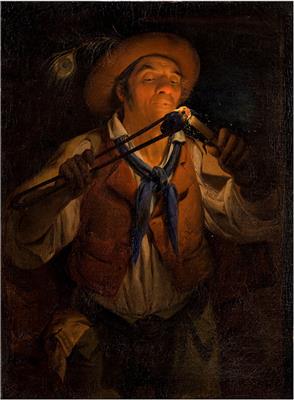
Museums4
Countries4
Largest reported holdingGallerie d'Italia – Milano, Milan · 7 recorded works
Loading map…
Where to see Angelo Inganni
Collection holdings are reported here; current display varies. Check with each museum before visiting.
-
7 recorded works
Gallerie d'Italia – Milano
Milan, Italy
-
1 recorded work
Louvre
Paris, France


-
1 recorded work
Hermitage Museum
Saint Petersburg, Russia
-
1 recorded work
Belvedere
Vienna, Austria


Frequently Asked Questions
Where can I see Angelo Inganni's work?
It is difficult to determine exactly where Angelo Inganni's work can be viewed. However, several museums and galleries exhibit art and design from the Art Deco period, during which Inganni was active. These collections may include examples of his paintings.  In the United States, you might check the collections at the Charles Hosmer Morse Museum of American Art (Winter Park, Florida), the Los Angeles County Museum of Art, the Metropolitan Museum of Art (New York), the Minneapolis Institute of Arts, the Museum of Modern Art (New York), the Royal Ontario Museum (Toronto), the Virginia Museum of Fine Arts (Richmond), or the Wolfsonian at Florida International University (Miami Beach). In the UK, possible locations include the Bakelite Museum (Williton), the Brighton Museum & Art Gallery, the Geffrye Museum (London), the Manchester Art Gallery, the National Museums of Scotland (Edinburgh), and the Victoria & Albert Museum (London). In Italy, try the Fondazione Regionale Cristoforo Colombo (Genova), the Museo del Bijou di Casalmaggiore, or the Museo Richard-Ginori della Manifattura di Doccia (Sesto Fiorentino).What should I know about Angelo Inganni's prints?
Angelo Inganni was an Italian[1] painter active in the 19th century, mainly producing scenes of daily life and architecture. Prints of his work are likely to be reproductions, created using photochemical or digital methods. These differ from original prints, which the artist produces by hand using techniques such as etching, woodcut, or lithography. Original prints are considered artworks in their own right. The artist creates the image directly on a plate or block. Each impression is unique. Reproductions, on the other hand, are copies of existing artworks, such as Inganni's paintings. The Professional Art Dealers Association of Canada defines a reproduction as a copy of a work conceived in another medium, made by photomechanical means. The market value of a print depends on factors such as the artist's reputation, the image's popularity, and the quality of the materials. Original prints, produced in limited editions, generally command higher prices than reproductions. Some publishers transfer images to canvas to give them the appearance of paintings; these may be sold in limited editions.Why are Angelo Inganni's works important today?
Angelo Inganni (1807[1]-1880[1]) was an Italian[1] painter, active mainly in his native Brescia and Milan. He is best known for genre scenes and views of urban life in Lombardy during the 19th century. Inganni's works offer valuable insights into the social history of the period. His paintings document the architecture, fashion, and daily routines of ordinary people in a rapidly changing world. Inganni's paintings also have art-historical value. He was a skilled realist, with attention to detail and accuracy. His cityscapes and interior scenes show his command of perspective and his ability to capture light and atmosphere. He was part of a broader movement towards realism in Italian art, moving away from earlier Romantic styles. His works are appreciated for their documentary value, artistic skill, and contribution to the development of 19th-century Italian painting.What techniques or materials did Angelo Inganni use?
Angelo Inganni was a painter. His techniques included the use of pale grounds, which were unusual for Neoclassical figure painting. These lighter preparations helped ensure luminosity in the finished work. Artists had long been aware that oil paint becomes more transparent as it ages; darker grounds could cause a picture to "sink" as the ground became increasingly visible. Inganni also used strong, coarse canvas, when the convention was that figure painting should be done on finely woven canvas with an invisible weave. He further broke with tradition by using white in his shadows. Earlier chiaroscuro painters thought transparency essential for producing depth. Inganni's innovative use of white created a new, low-relief flatness. His opaque shadows reflect his preference for soft, full-faced lighting, which differed from the dramatic cross-light found in the work of earlier Neoclassicists. Inganni's paint was thin and fluid, and his touch was lively. Although he was often considered a 'monochrome' painter who used colour as an afterthought, his flat areas of bright colour had a powerfully emotive and visually seductive effect.Who did Angelo Inganni influence?
It is difficult to say exactly who Angelo Inganni influenced directly. However, we can discuss the influences of an earlier artist, Raphael, who had a wide-ranging effect on those who followed. Raphael's work impacted many artists, including those who came after him. Annibale Carracci showed a particular interest in Raphael's artistic style. The artist Maratti was also influenced by Raphael, according to Bellori. Even artists who were critical of Raphael acknowledged his importance. Bellori, while praising Raphael, also critiqued his paintings for appearing "too studied". Despite some criticism, Raphael's impact on the art world is clear. His work set a standard that many artists after him aspired to, and his influence can be seen in the art of subsequent generations.Who influenced Angelo Inganni?
It is difficult to name specific individuals who directly influenced Angelo Inganni. However, some contextual information can be provided. Inganni was active as a painter in Brescia, Italy, during the 19th century. He is best known for genre scenes and views of his native city. He was part of a Brescian artistic tradition that included painters such as Giuseppe Pellizza da Volpedo. Without specific biographical information that names Inganni's influences, it is difficult to say with certainty which artists shaped his style. A general understanding of the artistic trends in 19th-century Italy suggests he would have been aware of academic painting, as well as the rise of Realism and early Impressionism. Further research into Brescian art history may reveal more specific influences.What is Angelo Inganni's most famous work?
Information on Angelo Inganni's most famous work is difficult to verify. However, Annibale Carracci (1560-1609[1]) was the most talented of the famous Bologna family of artists. After studies in Bologna, he went to Venice, where he joined his brother Agostino (1558-1602) and studied the Venetian painters. On their return to Bologna, they founded with their cousin Lodovico (1556-1619) the Accademia degli Incamminati (1582); it became the most popular. Carracci's painting Hercules at the Crossroads was originally mounted at the centre of the vaulted ceiling of Cardinal Odoardo Farnese's camerino (study) in the Palazzo Farnese, Rome. It is the keystone of an allegory of the young cardinal's virtues that Annibale elaborated in fresco on the remaining area of the vault. Reynolds's Garrick between Tragedy and Comedy was based on this picture.
Sources
Where to See guide aggregates verified holdings of Angelo Inganni's works across the following collections.
- [1] wikipedia Wikipedia: Angelo Inganni Used for: biography.
- [2] book Elizabeth Gilmore Holt; Project Muse, A Documentary History of Art, Volume 2 _ Michelangelo and the Mannerists, The Baroque and the Eighteenth Century Used for: biography.
- [3] book Elizabeth Gilmore Holt; Project Muse, A Documentary History of Art, Volume 2 _ Michelangelo and the Mannerists, The Baroque and the Eighteenth Century Used for: biography.
- [4] book Elizabeth Gilmore Holt; Project Muse, A Documentary History of Art, Volume 2 _ Michelangelo and the Mannerists, The Baroque and the Eighteenth Century Used for: biography.
Editorial overseen by Solis Prints. Sources verified 2026-09-30. Click a source for details, or hover over [N] in the page above to preview.
Editorial standardsMethodologyCorrectionsAI disclosureAbout the editorial team