



Charlotte Posenenske
In 1968[1], at the height of her critical recognition, Charlotte Posenenske announced she was stopping. Art, she concluded, could not address social inequality or change human behaviour. She retrained as a sociologist, specialising in industrial assembly line production, and refused to attend exhibitions or meet with curators until her death in 1985[1]. The institutions that now hold her work spent much of that time negotiating with a person who had actively stepped away from the conversation.
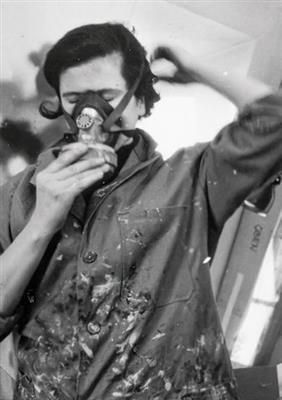
Biography
Posenenske was born in Wiesbaden in 1930[1] and trained with Willi Baumeister at the State Academy of Fine Arts Stuttgart in the early 1950s, before working as a set and costume designer. When she turned to sculpture in the mid-1960s, she produced work that looked nothing like art-world product. Her Vierkantrohre (Square Tube Series, 1967[1]-68) used factory-manufactured steel tubes resembling air-conditioning shafts, sold at material cost only, and configured differently for each installation.
The principle was systemic: she made series rather than individual pieces, refused editions, and priced work to undercut the collector market. "I make series because I do not want to make individual pieces for individuals," she wrote. The sculptures could be stacked, rearranged, and extended by any number of additional units. Museums buying them were, in her logic, buying instructions rather than objects.
Her work now sits in the permanent collections of MoMA, Tate, and the Dia Art Foundation, which holds 155 pieces. The posthumous recognition has been considerable: the very institutions she distrusted now preserve her argument.
Timeline
- 1930Born in Wiesbaden.
- 1950Trained with Willi Baumeister at the State Academy of Fine Arts Stuttgart in the early 1950s.
- 1955Worked as a set and costume designer after art school.
- 1965Turned to sculpture in the mid-1960s.
- 1967Created "Vierkantrohre (Square Tube Series)", using factory-manufactured steel tubes.
- 1968Announced she was stopping her art practice, believing art could not address social inequality.
- 1968Retrained as a sociologist, specialising in industrial assembly line production.
- 1985Died in 1985. She had refused to attend exhibitions or meet with curators after 1968.
Notable Works
Tap to view larger.
Next stop
Minimalism →
Explore the artists and ideas of Minimalism.
Related Artists

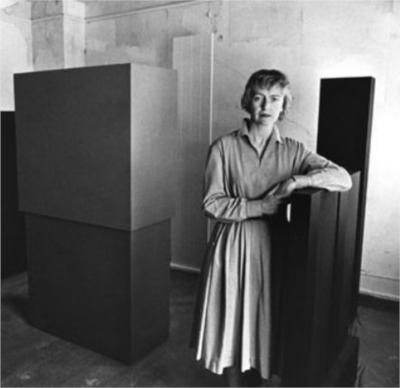

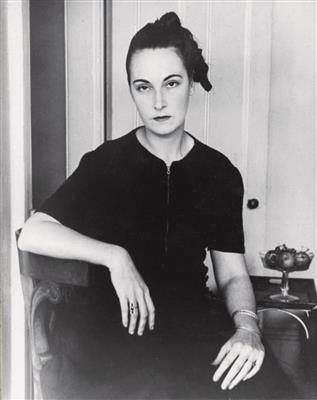
.jpg!Portrait.jpg)
Frequently Asked Questions
What is Charlotte Posenenske known for?
Charlotte Posenenske is known for her factory-manufactured steel tube sculptures, such as the Vierkantrohre (Square Tube Series, 1967[1]-68). She made series rather than individual pieces, refused editions, and priced her work to undercut the collector market. Her sculptures could be stacked, rearranged, and extended by additional units.Who was Charlotte Posenenske?
Charlotte Posenenske was a German[1] artist who later retrained as a sociologist specialising in industrial assembly line production. Born in Wiesbaden in 1930[1], she stopped making art in 1968[1], concluding that it could not address social inequality or change human behaviour. She refused to attend exhibitions or meet with curators until her death in 1985[1].What was Charlotte Posenenske's art style?
In the mid-1960s, Posenenske turned to sculpture, producing work that looked nothing like art-world product. Her Vierkantrohre (Square Tube Series, 1967[1]-68) used factory-manufactured steel tubes resembling air-conditioning shafts. Museums buying them were, in her logic, buying instructions rather than objects.How did Charlotte Posenenske die?
Charlotte Posenenske died in 1985[1] at the age of 55.
Sources
Editorial draws on the following primary and tertiary references for Charlotte Posenenske.
- [1] wikipedia Wikipedia: Charlotte Posenenske Used for: biography, birth dates, death dates, identifiers, movement attribution, nationality.
- [2] book Susie Hodge, Artistic Circles Used for: stylistic analysis.
- [3] book guggenheim-guhe00solo Used for: biography.
- [4] book guggenheim-museum00solo Used for: biography, stylistic analysis.
- [5] book guggenheim-refigur00kren Used for: biography, stylistic analysis.
Editorial overseen by Solis Prints. Sources verified 2026-10-07. Click a source for details, or hover over [N] in the page above to preview.
Editorial standardsMethodologyCorrectionsAI disclosureAbout the editorial team