



Carl Andre
The furore that erupted in Britain in February 1976[1] over the Tate Gallery's purchase of Carl Andre's Equivalent VIII told you more about class anxiety than contemporary art. The Sunday Times ran the headline "The Tate Drops a Costly Brick"; the Daily Mirror photographed bricklayers staging their own permutational arrangements on a building site. Andre, watching from New York, described the controversy as "a barricade upon which the middle classes were going to fight to gain control of English cultural and political life." He was not wrong.
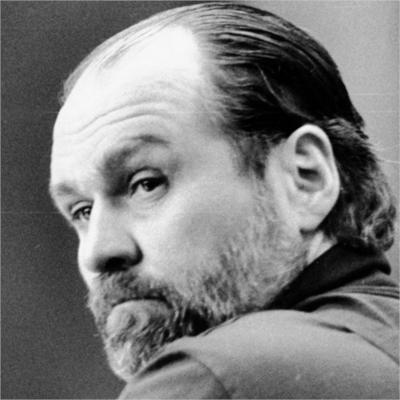
Biography
Andre was born in Quincy, Massachusetts in 1935[1] and trained under Patrick Morgan at Phillips Academy, Andover, alongside Frank Stella and filmmaker Hollis Frampton. He moved to New York in 1957[1] and worked in Stella's studio, where a casual observation by Stella redirected his practice: the untouched rear face of a column Andre was carving was already sculpture, which meant carving was simply destroying something that was already there. Between 1960 and 1964 he worked as a freight brakeman for the Pennsylvania Railroad; the daily logic of standardised, interchangeable units is directly readable in the modular sculptures that followed.
The Equivalents series (1966[1]), shown at Tibor de Nagy Gallery in New York, consisted of eight floor arrangements of 120 sand-lime bricks, each with the same mass and volume but a different rectangular footprint. The Tate's version, Equivalent VIII (1969), was acquired in 1972 for £2,297. None of the original 1966 works sold; the bricks were returned to the Long Island City Brickworks for a refund. Andre's rallying formulation was "FORM = STRUCTURE = PLACE."
The later metal plate works, 144 square plates of steel, magnesium, lead, or copper laid flat across gallery floors, took the argument further. Andre insisted that sculpture's distinctive feature was not visual shape but tactility: something "you trip over after you shut off the lights." Walking across different metals yields different sounds, different friction, a different sense of balance.
Timeline
- 1935Born in Quincy, Massachusetts.
- 1957Moved to New York and worked in Frank Stella's studio.
- 1960Worked as a freight brakeman for the Pennsylvania Railroad until 1964.
- 1966Created the "Equivalents" series, consisting of eight floor arrangements of 120 sand-lime bricks, shown at Tibor de Nagy Gallery in New York.
- 1969Created "Equivalent VIII".
- 1972The Tate Gallery acquired "Equivalent VIII" for £2,297.
- 1976Controversy erupted in Britain over the Tate Gallery's purchase of "Equivalent VIII".
Notable Works
Tap to view larger.
Next stop
Minimalism →
Explore the artists and ideas of Minimalism.
Related Artists

.jpg!Portrait.jpg)

Frequently Asked Questions
What is Carl Andre known for?
Carl Andre is known for his modular sculptures, such as the Equivalents series of 1966[1], which featured arrangements of sand-lime bricks. He is also known for his later metal plate works, which consist of square plates of steel, magnesium, lead, or copper laid across gallery floors.What is Carl Andre's most famous work?
Carl Andre is most known for his minimalist sculptures, particularly those made from arrangements of industrial materials. One of his most discussed, and controversial, works is "Equivalent VIII", created in 1966[1]. This piece consists of 120 firebricks arranged in a rectangular formation on the floor. The bricks are simply laid out; there is no mortar or adhesive holding them together. The dimensions of the rectangle are relatively low, and viewers can easily walk around or even over the work. "Equivalent VIII" gained notoriety in 1976 when it was exhibited at the Tate Gallery in London. It became a subject of public debate, largely due to the perception that the gallery had spent a significant sum of public money, £2,297, on what appeared to be ordinary building materials. The controversy surrounding the work raised questions about the definition of art, the role of the artist, and the value of minimalist sculpture. While Andre created other similar works using different materials and arrangements, "Equivalent VIII" remains his most famous, and perhaps infamous, creation.What should I know about Carl Andre's prints?
Carl Andre, born in Quincy, Massachusetts, in 1935[1], is best known as a Minimalist sculptor. However, he has also produced prints and written works, including poetry and a short novel. Andre studied art at Phillips Academy in Andover, Massachusetts, from 1951[1] to 1953. His early wood sculptures show the influence of Constantin Brancusi, and the black paintings of his friend Frank Stella. His sculpture aims to reduce the art object to its lowest level of visibility. Andre's first solo show occurred in 1965 at the Tibor de Nagy Gallery, New York. He participated, along with Dan Flavin, Sol LeWitt, and Donald Judd, in the "Primary Structures" exhibition of Minimalist sculpture at The Jewish Museum, New York, in 1966. Other solo exhibitions followed at the Dwan Gallery in New York and Los Angeles, and at the Galerie Konrad Fischer in Düsseldorf in 1967. The Guggenheim Museum, New York, and the Kunsthalle Bern presented retrospectives of Andre's work in 1970 and 1975 respectively.What style or movement did Carl Andre belong to?
Carl Andre is associated with the Minimalist art movement, which emerged in the United States during the 1950s. His first solo show was at the Tibor de Nagy Gallery in New York in 1965[1]. In 1966, he participated, along with Dan Flavin, Sol LeWitt, and Donald Judd, in *Primary Structures*, an exhibition of Minimalist sculpture at The Jewish Museum in New York. Minimalism[1] arose partly as a reaction against Abstract Expressionism. Minimalist artists often abandoned traditional artistic media; they favoured industrial materials and simple, repeated geometric forms. Andre often created what he called ‘floor works’. These sculptures typically used prefabricated materials arranged in simple patterns directly on the floor, rather than on plinths. This was intended to make the work part of the environment. Andre's definition of sculpture as "FORM = STRUCTURE = PLACE" is important for understanding his artistic choices. His art attacks the idea of sculpture as a precious object. The concept of place is very important to his work.What techniques or materials did Carl Andre use?
Carl Andre is associated with Minimalism[1], a movement that favoured industrial materials and simple geometric forms. He often worked with unaltered, mass-produced elements. His early work involved carving wood. However, he moved away from subtractive methods and began creating sculptures by arranging bricks, metal plates, or concrete blocks on the floor. One famous example is "Equivalent VIII" (1966[1]), composed of 120 fire bricks. The work is not about the individual components, but the arrangement and the viewer's interaction with it. Andre's materials were typically purchased directly from suppliers. He selected them for their physical properties and modularity. His arrangements often responded to the specific dimensions of the exhibition space. By using industrial materials in their raw state, Andre challenged traditional notions of sculpture and authorship. He eliminated the artist's hand, focusing instead on the spatial relationships between the work and the viewer.What was Carl Andre known for?
Carl Andre, born in Quincy, Massachusetts, in 1935[1], is known as a Minimalist sculptor. His definition of sculpture as "FORM = STRUCTURE = PLACE" clarifies his artistic development. Andre, along with artists such as Donald Judd and Dan Flavin, emerged in the 1950s as part of the Minimalist art movement. This movement reacted against Abstract Expressionism. Minimalists often abandoned traditional media, opting for industrial materials in repeated geometric forms. Andre's work attacks the conventional role of sculpture as a precious object. His art is viable within the context for which it was conceived. Andre is known for his "floor works". In 1966[1], he created a series of eight sculptures called *Equivalent*. Each *Equivalent* sculpture is a rectangular arrangement of 120 firebricks in two layers. While each sculpture has a different shape, they share the same height, mass, and volume; therefore, they are "equivalent" to one another. Andre often uses prefabricated industrial materials, arranging them into simple geometric patterns. These sculptures are typically placed on the floor, integrating them into the environment rather than isolating them on plinths.When did Carl Andre live and work?
Carl Andre was born on 16 September 1935[1], in Quincy, Massachusetts. He studied art with Patrick Morgan at Phillips Academy, Andover, from 1951[1] to 1953. In 1954, after a brief period at Kenyon College in Gambier, Ohio, Andre travelled to England and France. The following year, he joined United States Army Intelligence in North Carolina. By 1957, he had settled in New York, where he worked as an editorial assistant for a publishing house. Andre's first solo exhibition took place in 1965 at the Tibor de Nagy Gallery, New York. He participated, along with Dan Flavin, Sol LeWitt, and Donald Judd, in Primary Structures, a Minimalist sculpture exhibition at The Jewish Museum, New York, in 1966. In 1967, solo exhibitions of Andre's work were held at the Dwan Gallery in New York and Los Angeles, and at Galerie Konrad Fischer in Düsseldorf. Andre currently lives and works in New York.Where can I see Carl Andre's work?
Carl Andre was born in Quincy, Massachusetts, in 1935[1]. He studied art at Phillips Academy in Andover, Massachusetts, from 1951[1] to 1953. Andre's first solo exhibition occurred in 1965 at the Tibor de Nagy Gallery in New York. Later, a retrospective was held at the Guggenheim Museum in New York in 1970; another followed at the Kunsthalle Bern in 1975. During his career, Andre had solo exhibitions at the Dwan Gallery in New York and Los Angeles; Galerie Konrad Fischer, Dusseldorf; Galerie Heiner Friedrich, Munich; Wide White Space, Antwerp; and Gemeentemuseum, The Hague. He participated in group exhibitions such as Primary Structures at The Jewish Museum, New York, in 1966 and American[1] Sculpture of the Sixties at the Los Angeles County Museum of Art in 1967. In 1977, he executed Stone Field Sculpture in Hartford. A touring retrospective began at the Laguna Gloria Art Museum in Austin, Texas, in 1978.Where was Carl Andre from?
Carl Andre was an American[1] artist. He was born in Quincy, Massachusetts, on 16 September 1935[1]. His parents were George Andre, a tugboat pilot, and Harriet Andre, a homemaker. Andre attended public schools in Quincy. From 1951[1] to 1953, he studied art at Phillips Academy in Andover, Massachusetts. There, he met Hollis Frampton, who became a lifelong friend. Both men later moved to New York City. Andre served in the US Army from 1955 to 1956, and was stationed in North Carolina. After his discharge, he moved to New York City in 1956 and began his artistic career. He worked in a variety of jobs to support himself, including as a freight brakeman for the Pennsylvania Railroad from 1960 to 1964. Andre died in New York City on 31 March 2024[1], at the age of 88.Who did Carl Andre influence?
Carl Andre's definition of sculpture as 'FORM = STRUCTURE = PLACE' clarifies his own artistic development and indicates options available to contemporary artists. His concept of 'place' disrupted the traditional role of the art object. Andre retained sculpture's fundamental principles, such as mass, space, volume, and gravity, while ridding it of traditional form and structure. His work played a germinal role in experiments such as Earthworks and Conceptual Art. Along with Robert Morris, Dan Flavin, Sol LeWitt, and Donald Judd, Andre defined this position. Originally influenced by Frank Stella and Constantin Brancusi, from 1960[1] to 1964, Andre worked on the Pennsylvania Railway, which involved using standardised, interchangeable units. From the mid-1960s, he assembled groups of bricks, styrofoam planks, and cement blocks, extending them horizontally on the floor. The configurations of these identical shapes are determined by simple mathematical principles. Andre's work is associated with Albers, Judd, LeWitt, Long, and Serra.Who influenced Carl Andre?
Carl Andre's artistic development involved several influences. Early on, he befriended Hollis Frampton and helped him move to New York City in 1958[1]. Frampton introduced Andre to Constantin Brâncuși's work. Brâncuși's reductive forms and emphasis on the inherent qualities of materials had a great effect. Around the same time, Andre encountered the art critic Clement Greenberg, whose formalist ideas promoted abstraction and the importance of an artwork's physical properties. Andre also studied woodworking in his youth, which gave him practical knowledge of materials and construction techniques. This experience informed his later use of industrial materials, such as metal plates and wooden timbers. His move to New York exposed him to the burgeoning Minimalist movement. Artists like Donald Judd and Sol LeWitt, with their emphasis on simple geometric forms and industrial production, further shaped Andre's artistic direction. These combined influences steered Andre toward his signature style of arranging modular units on the floor, challenging traditional notions of sculpture.Who was Carl Andre?
Carl Andre, born in Quincy, Massachusetts, in 1935[1], is an American[1] Minimalist sculptor. He studied art with Patrick Morgan at Phillips Academy in Andover, Massachusetts, from 1951[1] to 1953. After a brief time at Kenyon College, he travelled to England and France in 1954. The following year, he joined United States Army Intelligence in North Carolina. In 1956, Andre settled in New York, working as an editorial assistant before creating wood sculptures influenced by Constantin Brancusi and Frank Stella. From 1960 to 1964, he worked for the Pennsylvania Railroad in New Jersey. His first solo exhibition was in 1965 at the Tibor de Nagy Gallery in New York. Andre participated in *Primary Structures*, a Minimalist sculpture exhibition at The Jewish Museum in New York in 1966, along with Dan Flavin, Sol LeWitt, and Donald Judd. His work often uses standard commercial materials arranged according to mathematical principles. Andre defines sculpture as "FORM = STRUCTURE = PLACE". One example is *Zinc Magnesium Plain* (1969), consisting of industrially produced magnesium and zinc plates placed directly on the floor.
Sources
Editorial draws on the following primary and tertiary references for Carl Andre.
- [1] wikipedia Wikipedia: Carl Andre Used for: biography, birth dates, death dates, identifiers, movement attribution, nationality.
- [2] book guggenheim-carlandre00wald Used for: biography, stylistic analysis.
- [3] book guggenheim-guggenheimintern1971solo Used for: biography.
- [4] book guggenheim-guhe00solo Used for: biography, stylistic analysis.
- [5] book guggenheim-micsinger00wald Used for: biography, stylistic analysis.
Editorial overseen by Solis Prints. Sources verified 2026-09-22. Click a source for details, or hover over [N] in the page above to preview.
Editorial standardsMethodologyCorrectionsAI disclosureAbout the editorial team