



Carmen Herrera
- Abstract Expressionism
- concrete art
- geometric abstraction
- hard-edge painting
Carmen Herrera did not sell a painting until she was eighty-nine years old. The sale happened in 2004[3], when painter Tony Bechara recommended her to gallery owner Federico Sève. Sève initially mistook her geometric abstractions for work by Lygia Clark, only to discover that Herrera had arrived at nearly identical formal solutions a decade earlier. It was a quietly devastating revelation about what the American art world had ignored since the 1950s.
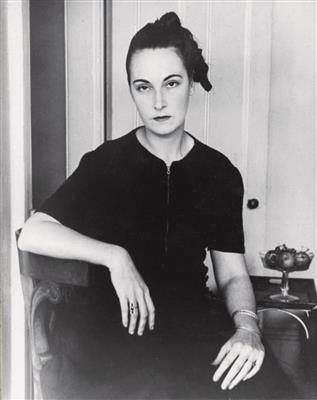
Biography
Born in Havana in 1915[3], Herrera studied architecture at the Universidad de la Habana in 1938[3], and she later credited this training as the moment "an extraordinary world opened up: the world of straight lines." She moved to New York in 1939 after marrying Jesse Loewenthal, studied at the Art Students League from 1943 to 1947, then spent five years in Paris (1948-1953[3]), where she socialised with Simone de Beauvoir and Jean-Paul Sartre and refined her approach to hard-edge, non-objective colour. Female gallerist Rose Fried explicitly declined to exhibit her work because she was a woman. She returned to New York in 1953 and spent the following fifty years largely unseen by the institutional art world.
Her working method was methodical: pencil sketches on graph paper, transferred to vellum, then scaled up. Her assistant would map lines in tape on canvas before painting. She pursued what she called "the simplest of pictorial resolutions" and discarded completed works in the search for greater reduction. Blanco y Verde (begun 1959[3], completed 1971) is her most discussed canvas: horizontal lines suggesting a horizon, a strong diagonal, white and green in sharp, measured proportion.
After 2004[3], recognition arrived quickly: a Whitney Museum retrospective in 2016 (when she was a hundred years old), a Lisson Gallery show in London the same year, and a posthumously opened mural commission at the Blanton Museum of Art in Austin, Verde, que te quiero verde (2023). She was elected Honorary Royal Academician in 2019. She died in New York in February 2022[3], aged 106.
Timeline
- 1915Born in Havana.
- 1938Studied architecture at the Universidad de la Habana.
- 1939Moved to New York after marrying Jesse Loewenthal.
- 1943Studied at the Art Students League until 1947.
- 1948Moved to Paris, where she socialised with Simone de Beauvoir and Jean-Paul Sartre.
- 1953Returned to New York.
- 1959Began work on "Blanco y Verde", completing it in 1971.
- 2004Sold her first painting at 89, after Tony Bechara recommended her to Federico Sève.
- 2016A Whitney Museum retrospective of her work was held, aged 100. A Lisson Gallery show in London also took place.
- 2019Elected Honorary Royal Academician.
- 2022Died in New York in February, aged 106.
Notable Works
Tap to view larger.
Next stop
Abstract Expressionism →
Explore the artists and ideas of Abstract Expressionism.
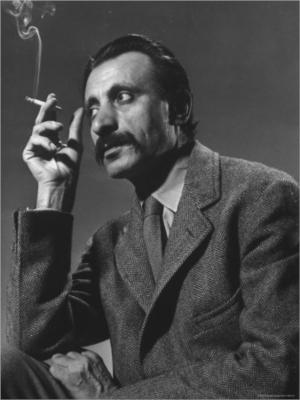
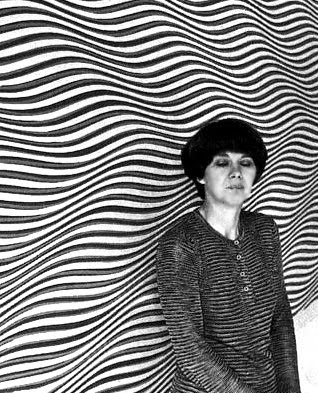
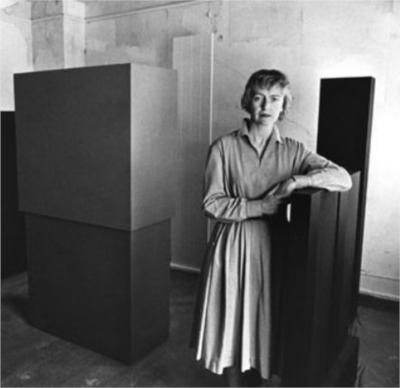
Related Artists


Frequently Asked Questions
What is Carmen Herrera known for?
Carmen Herrera is known for her geometric abstractions and hard-edge, non-objective colour work. Her canvas Blanco y Verde (begun 1959[3], completed 1971), with horizontal lines suggesting a horizon, a strong diagonal, and white and green in sharp, measured proportion, is her most discussed.What is Carmen Herrera's most famous work?
It is difficult to name a single 'most famous work' by Carmen Herrera, as her notability arose later in her career. However, a review of catalogues and exhibition lists suggests several recurring themes and titles. Many of her works involve geometric forms and hard edges. Colour is a dominant element; many titles include colours, such as *Red Yellow Blue* (1963[3]), *Orange Panel* (1980) and *Yellow Black* (1968). Herrera also explored the interplay between colours and forms in series like *Line, Form and Color* (1951). She often created multiple versions of similar compositions, such as her various 'Curve' paintings from the 1970s and 1980s. While these titles appear repeatedly, determining a single, definitive 'most famous work' requires more art-historical context.What should I know about Carmen Herrera's prints?
Carmen Herrera is best known for paintings, but she has also produced original prints, including screenprints and lithographs. These are produced by hand by the artist, and each print is considered an original because the artwork is created directly on the plate, woodblock, etching stone, or screen. Herrera's prints have been made using varied processes: woodblocks for relief printing; metal plates for etching; limestone or metal plates for lithography; and screens of synthetic fibres in wood frames for screenprints. Like many artists, Herrera has worked with specialist fine-art print workshops. These workshops are filled with equipment and supplies, including drawing materials, greasy liquids and crayons, masking materials, delineative tools, greases, gums, waxes, and dangerous acids used in etching. They also contain cans of ink, driers and other additives, and reams of different papers. Examples of her prints include "Somewhere to Light", a 1966[3] colour screenprint in an edition of 225, printed by Knickerbocker Machine and Foundry, and published by Tanglewood Press; and "Circles of Confusion I", a 1965-66 colour lithograph in an edition of 12, printed and published by Universal Limited Art Editions.What style or movement did Carmen Herrera belong to?
Carmen Herrera is associated with geometric abstraction[3] and minimalism. Her mature style, developed in the late 1940s and early 1950s, features precisely rendered geometric forms and a restricted colour palette. While Herrera's work shares some affinities with abstract expressionism, particularly in its non-representational nature, her emphasis on clean lines and hard edges distinguishes her from the more gestural and emotionally charged style of abstract expressionist painters such as Jackson Pollock and Willem de Kooning. Instead, her art aligns more closely with the minimalist aesthetic that emerged in the 1960s. Minimalism, characterised by its reduction of form to basic geometric shapes and its emphasis on the physical properties of the artwork, is exemplified in Herrera's paintings and prints. Although she began working in this mode well before the minimalist movement gained widespread recognition, her contributions are now seen as important to the development of that style.What techniques or materials did Carmen Herrera use?
Carmen Herrera, a Cuban[3]-American artist, is best known for her geometric abstract paintings and sculptures. Her mature style, developed in the late 1940s, is characterised by simplicity and precision. Herrera primarily worked with acrylic paint on canvas. She favoured hard-edged forms and a limited colour palette, often using only two colours in a single work. This minimalist approach allowed her to explore the relationship between line, colour, and form. Before her painting career took off, Herrera also experimented with wood constructions. After taking a woodworking class in the 1940s, she began creating three-dimensional objects that mirrored the geometric forms in her paintings. These early sculptures prefigured her later, larger-scale public art installations. Although Herrera's style remained consistent throughout her career, she continually refined her techniques. She sought to achieve perfect lines and smooth surfaces in her paintings, often using tape to mask off areas and create sharp edges. This dedication to precision is a defining characteristic of her work.What was Carmen Herrera known for?
Carmen Herrera (born 1915[3]) is known for her geometric abstract paintings and sculptures. Her mature style is characterised by simple, hard-edged forms and a limited range of colours. Herrera's work aligns with Concrete Art, an abstract movement that began around 1930[3]. Concrete Art, promoted by Theo van Doesburg, argued that art should be completely abstract and without reference to the visible world. Later, Max Bill formed another Concrete Art group in Switzerland. Concrete Art groups also appeared in France, Italy, Argentina, Uruguay and Cuba. Critics often associate Herrera with Minimalism, because of the spareness of her work. Others place her within Abstract Expressionism[3], a post-war American movement that included women artists such as Lee Krasner and Helen Frankenthaler. Abstract Expressionists created bold works using materials expressively, often dispensing with preparatory drawings.When did Carmen Herrera live and work?
Carmen Herrera was born in 1915[3] in Havana, Cuba. Herrera began her art training relatively late, studying architecture at the Universidad de la Habana in the 1930s, then later at the Art Students League in New York City from 1945[3] to 1947. In 1948, she moved to Paris, where she associated with members of the Salon des Réalités Nouvelles. During this period, she developed her hard-edged, geometric style. Herrera lived and worked in New York City from the mid-1950s until her death in 2022[3]. Her first solo show in New York was in 1965 at the Kootz Gallery. Herrera continued to produce work well into her 100s, achieving wider recognition late in her career.Where can I see Carmen Herrera's work?
Carmen Herrera's artworks can be viewed in several museum collections. In New York, her work is held at the Metropolitan Museum of Art, the Museum of Modern Art, and the Solomon R. Guggenheim Museum. Other US museums include the Art Institute of Chicago, the Cincinnati Art Museum, the Cleveland Museum of Art, the Herbert F. Johnson Museum of Art (Ithaca, New York), and the Carnegie Museum of Art (Pittsburgh). Her art is also held in European collections. These include the Kunstmuseums of Bern, Luzern, St Gallen, Winterthur, and Zurich; the Aargauer Kunsthaus (Aarau, Switzerland); the Museo de Arte Moderno (Barcelona); the Staatliche Museen SPK, Kupferstichkabinett (Berlin); the Museum of Fine Art (Budapest); the Musee d'Art et d'Histoire (Genf); the Moderna Museet (Malmö, Sweden); and the Nasjonalgalleriet (Oslo).Where was Carmen Herrera from?
Carmen Herrera was born in Havana, Cuba, in 1915[3]. Her parents were both involved in journalism. She began studying art early in life, taking private lessons in Havana. Herrera's formal education in art began at the Escuela San Alejandro, also in Havana, in the 1930s. In 1939[3], Herrera moved to Paris, where she continued her artistic studies. She studied architecture at the Universidad de la Habana in the late 1930s, but her education was interrupted by her marriage. After her time in Paris, she moved to New York in the 1950s, where she became associated with abstract expressionism and geometric abstraction[3]. Herrera lived and worked in New York City for most of her career, and she became a US citizen. Although she spent significant time outside Cuba, her early life and education in Havana were formative to her artistic development. Herrera died in Manhattan in 2022[3], at the age of 106.Who did Carmen Herrera influence?
It is difficult to isolate specific influences in art. The art world became pluralistic, so no single artist dominates. However, Carmen Herrera's hard-edged geometric abstraction[3] has some stylistic similarities with work by Josef Albers, Ellsworth Kelly, and Barnett Newman. Herrera's use of simplified forms and colour planes may reflect the influence of European modernists such as Piet Mondrian and the De Stijl movement. Herrera explored the relationships between colour, form, and space in her paintings and sculptures. Some critics saw the influence of Henri Matisse on American artists from the 1940s through the 1970s. They suggested that artists like Motherwell, Diebenkorn, Stella, and Wesselman derived ideas from Matisse. These ideas included all-over composition, use of colour to define space, abstraction from nature in paper cut-outs, making the decorative powerful, and using black as colour and light.Who influenced Carmen Herrera?
Carmen Herrera cited a range of artists as influences. In college, she analysed Analytic Cubism, including Braque and Picasso, and early Kandinsky and Miró. She also studied Matisse, particularly his use of colour, and Mondrian. Herrera examined the structure within their paintings. Her studies included works by Léger, Renaissance and Quattrocento artists, Old Masters, American artists, and African art. By 1950[3]-51, she considered Pollock, de Kooning and Rothko, all part of the New York School, as mentors. She digested the influence of Pollock, Gorky and de Kooning. She saw Gorky's exhibition at the Whitney in 1951, and was impressed by his work. Herrera also saw Pollock's 1940s works, as well as his later enamel paintings. Herrera also felt a friendly competition with Hans Hofmann, and was close to David Smith. She visited the homes and studios of Gottlieb, Stamos, Reinhardt, and Baziotes. In the later 1950s and early 1960s, she was moved by Louis's Veils and Unfurleds, and Noland's targets and chevrons.Who was Carmen Herrera?
Carmen Herrera (born 1915[3]; died 2022[3]) was a Cuban[3]-American abstract, minimalist visual artist. Herrera was born in Havana. Although she began painting in the 1930s, her work only gained wider recognition much later in her life. Herrera studied art in Paris during the late 1940s, where she was associated with artists of the Salon des Réalités Nouvelles. Characterised by geometric forms and a limited range of colours, Herrera's paintings explore spatial relationships and line. After moving to New York in the 1950s, she further refined her artistic style, producing many of her important works. Herrera continued to create art well into her 100s, solidifying her position in the history of modern art.
Sources
Editorial draws on the following primary and tertiary references for Carmen Herrera.
- [1] museum Victoria and Albert Museum Used for: museum holdings.
- [2] wikidata Wikidata: Q522662 Used for: identifiers.
- [3] wikipedia Wikipedia: Carmen Herrera Used for: biography, birth dates, death dates, identifiers, movement attribution, nationality.
- [4] book Dorling Kindersley, Artists: Inspiring Stories of the World's Most Creative Minds Used for: biography, stylistic analysis.
- [5] book Beard, Lee, 1973- author, Butler, Adam, author; Van Cleave, Claire, author; Fortenberry, Diane, author; Stirling, Susan, author, Beard, Lee, 1973- author, Butler, Adam, author; Van Cleave, Claire, author; Fortenberry, Diane, author; Stirling, Susan, author - The Art Book_ New Edition, Mini Format Used for: biography.
- [6] book guggenheim-twopri00weis Used for: biography.
Editorial overseen by Solis Prints. Sources verified 2026-10-07. Click a source for details, or hover over [N] in the page above to preview.
Editorial standardsMethodologyCorrectionsAI disclosureAbout the editorial team