



Abraham Storck
- marine art
The fleet assembled in Amsterdam harbour in 1697[3] was not a military operation but a state visit: Tsar Peter the Great, on his tour of Western Europe, arrived to study Dutch[3] shipbuilding at first hand. Abraham Storck was there to paint it. The resulting composition, depicting a harbour alive with ceremony and cannon smoke, is among the most specific documents of that encounter, capturing one of the defining meetings between Russian ambition and Dutch maritime expertise.
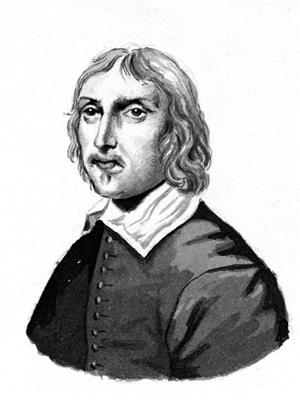
Biography
Storck was baptised in Amsterdam on 17 April 1644[3], the youngest of three painter sons of Jan Jansz Storck, who had emigrated from Wesel. He registered with the Amsterdam Guild of Saint Luke in 1688[3], though he had been operating a prolific workshop since around 1666. His brothers Johannes and Jacobus both painted, and Abraham travelled to Germany with Jacobus in 1670.
His output covered the full range of Dutch[3] marine painting: battle scenes and storm-wrecked ships, calm harbour views, whaling operations, and fantastical Mediterranean ports that northern European buyers found so appetising. The winter scenes he produced, influenced by Jan Abrahamsz Beerstraaten, show a different register entirely, his frozen canals sharing space with the ordinary social life of Amsterdam. He married a widow, Neeltje Pieters van Meyservelt, in 1694[3], aged 49.
Works by Storck are held at the National Maritime Museum in Greenwich and the National Gallery in London. He was buried in Amsterdam on 8 April 1708[3].
Timeline
- 1644Baptised in Amsterdam on April 17th.
- 1666Began operating a prolific workshop.
- 1670Travelled to Germany with his brother Jacobus.
- 1688Registered with the Amsterdam Guild of Saint Luke.
- 1694Married Neeltje Pieters van Meyservelt.
- 1697Painted Tsar Peter the Great's visit to Amsterdam.
- 1708Buried in Amsterdam on April 8th.
Notable Works
Tap to view larger.
Where to See Abraham Storck
2 museums worldwide.
-
1 works
Musée des Beaux-Arts d'Angers
Angers, France
Tue–Sun 10:00–18:00, closed Mondays
-
1 works
Weston Park
Weston-under-Lizard, United Kingdom
Varies by season; The Rose Paterson Art Gallery is open daily 11:00–16:00 · £13.00 adults (Park & Gardens), £19.50 (House, Park and Garden)


Next stop
Browse the movements →
Every movement in the collection, from the Renaissance to Pop art.
Related Artists





Frequently Asked Questions
What is Abraham Storck known for?
Abraham Storck is known for his Dutch[3] marine paintings, which included battle scenes, storm-wrecked ships, calm harbour views, and whaling operations. He also painted fantastical Mediterranean ports and winter scenes of frozen canals with Amsterdam social life.What should I know about Abraham Storck's prints?
Abraham Storck (1644[3]-after 1708[3]) was part of a thriving Dutch[3] art market. In Amsterdam, artists and collectors bought and sold paper art; this included drawings, engravings, and woodcuts. Wealthier collectors often had large folios of Italian, German, and Netherlandish drawings, plus smaller books containing prints by artists such as Dürer and Lucas van Leyden. Rembrandt was an avid collector, visiting print shops and auctions to acquire paper art. Joachim von Sandrart, who lived in Amsterdam from 1637 to 1645[3], collected on a grand scale, later selling his collection, which included a substantial amount of paper art, for a considerable sum. These collections often included works by major Renaissance and Baroque artists, reflecting the collector's status and interests.What style or movement did Abraham Storck belong to?
Abraham Storck (1644[3]-after 1708[3]) was a Dutch[3] painter known for his maritime scenes, cityscapes, and Italianate harbour views. He worked during the later part of the Dutch Golden Age, a period that saw the development of distinct regional styles and artistic specialisations. While it is difficult to assign Storck to one specific movement, his work shares characteristics with the Dutch Baroque style, particularly in its attention to detail and realistic depiction of light and atmosphere. His cityscapes, with their careful rendering of architecture and bustling activity, align with the broader interest in genre painting that was prevalent in the Netherlands at the time. Storck's Italianate harbour scenes also reflect a wider European trend of artists drawing inspiration from classical antiquity and the Italian landscape. These works often blend realistic observation with an idealised vision of the Mediterranean. He was not directly associated with the Academic style that emerged in the later 17th century; his approach remained rooted in the observational tradition of Dutch painting.What techniques or materials did Abraham Storck use?
Abraham Storck was a Dutch[3] Golden Age painter known for marine painting, and cityscapes. Although sources do not describe Storck's specific techniques in detail, some period practices can be outlined. During the 15th and 16th centuries, glassmakers used "Hüttenglas" (hut glass), a flat glass smelted in a pot furnace and coloured with metal oxides. By 1500, the smelting process had improved, resulting in more homogenous, pure, and transparent glass. Glass artists used coloured glass pieces for ground colour, washes for muting values, and opaque contours for drawing. Etching and stippling techniques were employed to create highlights and model forms. A painting practice involved beginning with a glaze and ending with an opaque contour. Examination of paintings from the era reveals the use of brushes to apply paint in varying thicknesses, with lighter areas often built up with more impasto. Shadows and dark backgrounds were typically rendered thinly. The ground layer, often a yellowish grey, was visible in many places.What was Abraham Storck known for?
Abraham Storck (1644[3]-after 1708[3]) was a Dutch[3] painter known for maritime scenes, Italianate harbour views, and depictions of naval battles. He also painted some genre works. Storck's marine paintings often feature numerous ships and detailed staffage. These elements add interest and narrative to the compositions. He frequently depicted ships at anchor or sailing on calm waters, often near harbours or coastal cities. His attention to detail in the rigging and construction of ships is notable. Storck painted imaginary scenes of Mediterranean ports, reflecting a broader interest in Italianate settings among Dutch artists of the period. These views, populated with merchants and exotic figures, catered to the tastes of Amsterdam collectors. He received commissions from the Amsterdam Admiralty. These included depictions of the Battle of Kijkduin during the Third Anglo-Dutch War in 1673[3]. Storck also documented ceremonial occasions, such as the arrival of Peter the Great in Amsterdam in 1697. These works provide historical records of significant events.Where can I see Abraham Storck's work?
It is difficult to say precisely where one might find Abraham Storck's work. However, a number of major museums hold collections of Dutch[3] Golden Age painting, and may hold examples of his work. These include the Metropolitan Museum of Art in New York, the Los Angeles County Museum of Art, and the Minneapolis Institute of Arts. Other American museums that may hold works by Storck are the Charles Hosmer Morse Museum of American Art in Winter Park, Florida; the Museum of Modern Art in New York; the Royal Ontario Museum in Toronto; the Virginia Museum of Fine Arts in Richmond; and the Wolfsonian at Florida International University in Miami Beach. In the United Kingdom, one might try the Brighton Museum & Art Gallery, the Geffrye Museum in London, the Manchester Art Gallery, the National Museums of Scotland Royal Museum in Edinburgh, and the Victoria & Albert Museum in London.Who did Abraham Storck influence?
Abraham Storck (1644[3]-after 1708[3]) is remembered as a painter of marine subjects, cityscapes, and Italianate harbour scenes. It is difficult to identify specific artists who were directly influenced by Storck. However, we can consider his place within the artistic traditions of his time. Storck belonged to a family of painters; his father, Jan Jansz Storck (1603-1673[3]), was also a painter, as was his brother, Jacob Storck (1641-1688[3]). Abraham Storck's style shares similarities with other Dutch[3] Golden Age marine painters. These include artists such as Willem van de Velde the Elder, Willem van de Velde the Younger, and Ludolf Backhuizen. Their detailed depictions of ships, naval battles, and harbour views established conventions that influenced subsequent generations of marine painters. Storck's Italianate harbour scenes, often populated with merchants and figures in exotic dress, reflect a broader interest in the Mediterranean world among Dutch artists of the period. These works may have had some effect on later painters who explored similar themes, but concrete connections remain uncertain. His legacy is more about his contribution to the established genre of marine painting than about a clearly defined group of followers.Who was Abraham Storck?
Abraham Storck (1644[3]-after 1708[3]) was a Dutch[3] painter, known for maritime scenes. He signed his works "A. Storck," and was the brother of the painters Jacobus Storck and Johannes Storck. Storck was born in Amsterdam. He probably received his training from his father, the painter Jan Jansz Storck (circa 1603-1673[3]). His earliest known works are from the 1660s. Storck painted Dutch ships at sea, naval battles, imaginary Mediterranean harbour scenes, and city views. He often included many small figures in his compositions, carefully delineated. His style is similar to that of Willem van de Velde the Younger (1633-1707[3]). However, Storck's colour palette is often warmer. He is known to have painted some winter scenes, though these are less common. Storck's patrons included wealthy Amsterdam merchants and city officials. His paintings were popular during his lifetime and continue to be collected. Examples of his work are held in the collections of the Rijksmuseum, Amsterdam; the National Maritime Museum, Greenwich; and the Musée du Louvre, Paris.Why are Abraham Storck's works important today?
Abraham Storck (1644[3]-after 1708[3]) was a Dutch[3] painter known for maritime scenes, cityscapes, and Italianate landscapes. His works offer insights into Dutch Golden Age commerce and naval power. Storck often depicted ships at sea, naval battles, and harbour views. These paintings are valued for their detail and accuracy in representing vessels and maritime activity. His images provide information about shipbuilding, nautical technology, and maritime culture of the period. Storck's cityscapes, particularly those of Amsterdam, offer a glimpse into the urban environment of the Netherlands during its economic height. He also produced paintings of ceremonial entries and naval reviews. Storck's artistic style combines realism with elements of Italianate art. This approach makes his paintings aesthetically pleasing and historically informative. Museums and collectors prize his works for their artistic quality and documentary value. They appeal to those interested in maritime history, Dutch art, and the cultural heritage of the Netherlands.What was Abraham Storck's art style?
Abraham Storck's winter scenes were influenced by Jan Abrahamsz Beerstraaten.How did Abraham Storck die?
Abraham Storck died in 1708[3] at the age of 64.
Sources
Editorial draws on the following primary and tertiary references for Abraham Storck.
- [1] museum Weston Park Used for: museum holdings.
- [2] museum Musée des Beaux-Arts d'Angers Used for: museum holdings.
- [3] wikipedia Wikipedia: Abraham Storck Used for: biography, birth dates, death dates, identifiers, movement attribution, nationality.
- [4] book Metropolitan Museum Of Art, Metropolitan Museum Of Art - Dutch Painting, the Golden Age_ an Exhibition of Dutch Pictures of the Seventeenth Century, under the High Patronage of Her Majesty the Queen of the Netherlands - Metropolitan Museum of Art, Toledo Museum of Art, Art Used for: biography.
- [5] book National Gallery of Art, National Gallery of Art - Painting in the Dutch Golden Age - A Profile of the Seventeenth Century Used for: biography.
- [6] museum Abraham Storck (1644 - 1708) Used for: biography.
- [7] museum Storck, Abraham (Dutch painter and draftsman, 1644-1708) Used for: biography.
- [8] museum Abraham Storck, Whaling Grounds in the Arctic Ocean, Abraham Storck, 1654 - 1708 Used for: notable works.
Editorial overseen by Solis Prints. Sources verified 2026-09-30. Click a source for details, or hover over [N] in the page above to preview.
Editorial standardsMethodologyCorrectionsAI disclosureAbout the editorial team