



About Eduardo Arroyo
Museums4
Countries3
Largest reported holdingMuseo Nacional Centro de Arte Reina Sofía, Madrid · 12 recorded works
Loading map…
Where to see Eduardo Arroyo
Collection holdings are reported here; current display varies. Check with each museum before visiting.
-
12 recorded works
Museo Nacional Centro de Arte Reina Sofía
Madrid, Spain
-
1 recorded work
Institut Valencià d'Art Modern
Valencia, Spain


-
1 recorded work
Musée d'art moderne de Paris
Paris, France
Also here (6)
-
1 recorded work
Centraal Museum
Utrecht, Netherlands


Frequently Asked Questions
Where can I see Eduardo Arroyo's work?
Eduardo Arroyo's artworks have been featured in numerous group and solo exhibitions internationally. In 1964[1], his paintings were part of the Pintura Española Contemporánea exhibition at the World's Fair in New York. A significant solo exhibition occurred at the Museo Español de Arte Contemporáneo, Madrid, in May 1970. Arroyo also represented Spain at the XXXV Biennale Internazionale d'Arte in Venice during the summer and autumn of 1970. His work was showcased in Jonge Spaanse Kunst at the Museum voor Schone Kunsten, Ghent, in 1971. Later exhibitions included the XIII Bienal de Sao Paulo in 1975 and Exposicion de Pintura Española at museums in Japan in 1976. His art can be found in collections such as the Instituto Valenciano de Arte Moderno (IVAM) in Valencia and the Wilfried and Yannick Cooreman Collection in Puurs, Belgium. Studies from his studio in Madrid were displayed in 1997.What should I know about Eduardo Arroyo's prints?
Eduardo Arroyo's prints, like those of other artists, exist within a specific market and set of conventions. The value of a print is connected to factors such as the artist's reputation, the image's popularity, and the materials used. Original prints are often sold in limited editions, commanding higher prices than posters. The number of prints in an edition may be limited by the physical constraints of the plate or block, or by the publisher to increase value. The artist typically decides the size of the edition. Each print in a limited edition is numbered (for example, 12/25, where 25 is the total edition size and 12 is the print number). The artist usually signs and numbers the prints in pencil. Some artists create a separate set of artist's proofs, marked "AP". The Professional Art Dealers Association of Canada defines an original print as an image conceived and executed solely as a print, usually in a numbered edition, and signed by the artist. Each print is individually inked and pulled from the matrix.Why are Eduardo Arroyo's works important today?
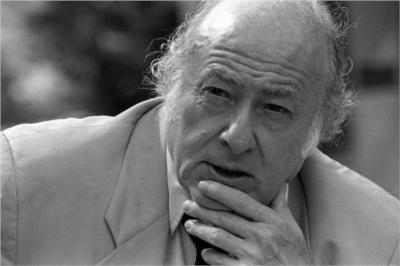
Eduardo Arroyo (1937[1]-2018[1]) was a Spanish[1] painter, sculptor, and stage designer associated with the Figurative Art movement. His work often incorporates literary and political themes. Arroyo's art remains relevant because it engages with critical issues of identity and representation. His approach, like that of Severo Sarduy, involves a structuralist perspective. This means viewing the world through language, broadly defined, rather than seeking some inner truth. Arroyo’s images, like Sarduy's texts, address personal and national identity. Arroyo’s practice of juxtaposing seemingly unrelated elements creates new meanings. This echoes Sarduy's concept of "retombée", where connections emerge between objects or ideas across time. This method allows for a reinterpretation of the Baroque style in an ahistorical way, finding inspiration in diverse sources. Arroyo's art offers a fragmented view of the human condition. His figures, often isolated, reflect a sense of alienation in a technological world. By using photography and plastic, he captures the emotional charge of his subjects.Who did Eduardo Arroyo influence?
Eduardo Arroyo belonged to the Estampa Popular group. This collective of artists, active in the late 1950s and early 1960s, were not based on a single style. Instead, they were artists of various formal persuasions who joined together to produce prints that would be conceptually and economically accessible to all. Inspired by German Expressionism and the art of the Mexican Revolution, they produced inexpensive woodcuts and linocuts in large numbers. They wished to subvert the idea that fine arts were unique, expensive, arcane, and reserved for the educated classes. Although Estampa Popular was not particularly successful, as its exhibitions were limited to the traditional fine-arts circuit, the experience was fruitful for many artists. They became aware of the resources of popular or familiar imagery, as well as the impact that a simplified visual syntax could obtain. Much of this experience translated into the new vernacular of nueva figuración, whose professed aims of clear, direct communication were identical.Who influenced Eduardo Arroyo?
Eduardo Arroyo's artistic development involved several influences. Soto found inspiration in artists who explored movement and structure. He admired Mondrian's work, particularly the attempt to introduce movement, but felt Mondrian had already resolved those issues himself with *Broadway Boogie Woogie*. Soto also acknowledged the importance of László Moholy-Nagy's work, though he considered it incomplete due to Moholy-Nagy's early death. Alexander Calder, Marcel Duchamp, and Naum Gabo also inspired Soto. He sought to build on their ideas and answer the questions they had posed, developing his own artistic direction while respecting their guidance. Carmen Calvo, another Spanish[1] artist, studied the work of Paul Cezanne and Henri Matisse during a two-month stay in Paris in 1971[1]. She also became acquainted with Egyptian art at the Louvre. These elements served as sources of inspiration for her later works.What is Eduardo Arroyo's most famous work?
It is difficult to name one single work as Eduardo Arroyo's most famous. He worked in a variety of media, including painting, printmaking, sculpture, and stage design, and his career resists easy categorisation. Arroyo came to prominence as a figurative painter during a period when abstract art was dominant. His work often incorporates literary and political themes, and he is associated with the Pop Art[1] movement, although he maintained a critical distance from it. Some of his best-known paintings include portraits and history paintings that engage with Spanish[1] identity and culture. He also created many works inspired by literature, such as his series based on the writings of Ramón Gómez de la Serna. Arroyo's prints and multiples have also reached a wide audience. Any assessment of his "most famous work" would depend on the criteria used: critical acclaim, popularity, or representation of his overall artistic vision.What style or movement did Eduardo Arroyo belong to?
Eduardo Arroyo is associated with nueva figuración (new figuration), a Spanish[1] art movement that emerged in the 1960s. Reacting against informalism, nueva figuración sought to create art that was direct in both content and language. Arroyo, along with artists like Canogar and Genovés, formed a group known as critical realists within this movement. These artists critiqued the capitalist world, particularly within Spain, by using familiar symbols, myths, objects, and incidents. They addressed political situations and consumer society, focusing on national problems while resisting promotion by the regime. Nueva figuración artists aimed to make their work accessible, contrasting with the abstract language and bourgeois audience of the avant-garde. Arroyo's work, such as Search in St. Sebastian (1967[1]), reflects this approach.What was Eduardo Arroyo known for?
Eduardo Arroyo (born in Madrid, 1937[1]; died 2018[1]) was a Spanish[1] painter and printmaker associated with the Nueva Figuración movement. This artistic trend shared aims with Pop Art[1]: clear, direct communication using popular or familiar imagery. Arroyo's work often incorporated avant-garde elements, but moved away from the formalist concerns of modernism. Nueva Figuración artists sought to connect with a wider audience by reintroducing signs, symbols, metaphors, allusions, and figural imagery into their art. These artists embraced representation and grounded their work in consumer culture and mass media, making it more accessible. One example of Arroyo's work is "Search in St. Sebastian" (1967[1]). His art, along with that of Equipo Cronica and Luis Gordillo, demonstrates how artists used simplified visual syntax and familiar imagery to communicate with clarity.
Sources
Where to See guide aggregates verified holdings of Eduardo Arroyo's works across the following collections.
- [1] wikipedia Wikipedia: Eduardo Arroyo Used for: biography.
- [2] book guggenheim-latinamericanpai00catl Used for: biography.
- [3] book guggenheim-newimagesfromspa00ro Used for: biography, stylistic analysis.
- [4] book guggenheim-twopri00weis Used for: biography.
- [5] book Camnitzer, Luis(Author), Joe R. and Teresa Lozano Long Series in Latin American and Latino Art and Culture : Conceptualism in Latin American Art : Didactics of Liberation Used for: biography, stylistic analysis.
- [6] book Patrick Frank, Readings in Latin American Modern Art Used for: biography.
- [7] book Rolando Pérez, Severo Sarduy and the Neo-Baroque Image of Thought in the Visual Arts (Purdue Studies in Romance Literatures, 53) Used for: stylistic analysis.
Editorial overseen by Solis Prints. Sources verified 2026-10-14. Click a source for details, or hover over [N] in the page above to preview.
Editorial standardsMethodologyCorrectionsAI disclosureAbout the editorial team