



About David Bailly
- Dutch Golden Age painting
Dutch[1] Golden Age painter credited with establishing the vanitas still life genre, working in Leiden and training the Steenwijck nephews.
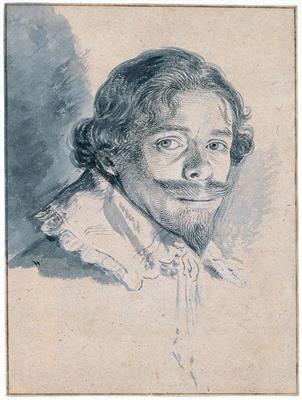
Where to see David Bailly
Collection holdings are reported here; current display varies. Check with each museum before visiting.
-
3 recorded works
Rijksmuseum
Amsterdam, Netherlands
-
2 recorded works
Fine Arts Museums of San Francisco
San Francisco, United States


-
1 recorded work
Hermitage Museum
Saint Petersburg, Russia

Own a piece of it
David Bailly prints
Hand-finished archival prints from David Bailly's body of work.

Can't travel? Bring David Bailly home.
See all David Bailly prints →Frequently Asked Questions
Where can I see David Bailly's work?
To view works by David Bailly, consider visiting museums with significant collections of Dutch[1] Golden Age paintings. Although specific holdings can vary, several institutions are known to display works by artists of this period. These include the Metropolitan Museum of Art in New York, the Los Angeles County Museum of Art (LACMA), and the National Gallery of Scotland in Edinburgh. In London, the British Museum and the Victoria & Albert Museum may also have relevant works on display or in their study collections. Other museums with collections of Dutch art that may include Bailly are the Staatliche Museen zu Berlin, the Gemäldegalerie Alte Meister in Dresden, the Galleria degli Uffizi in Florence, and the Kunsthistorisches Museum in Vienna. Checking the online catalogues of these museums, or contacting them directly, will provide the most up-to-date information about which works are currently on view.What should I know about David Bailly's prints?
David Bailly was a still-life painter and portraitist, active during the Dutch[1] Golden Age. Though he was not a prolific printmaker, prints were made after his paintings by other artists. Bailly was born in Leiden in 1584[1] and died there in 1657[1]. One print associated with Bailly is a chiaroscuro woodcut from four blocks, David Plays the Harp Before Saul, engraved by Joos Gietleughen in 1555. The dimensions are 336 x 482 mm. It is thought that Joos Gietleughen was also the initial publisher. Other prints formerly attributed to Bailly, such as Meals of Christ (c. 1555), are now attributed to Crispijn van den Broeck. These include Christ at the Table of Simon the Pharisee, The Marriage at Cana, The Last Supper, and Christ at Emmaus. Christ Washing the Feet of the Apostles (c. 1555) has also been attributed to both Frans Floris and Crispijn van den Broeck; it measures 316 x 512 mm.Why are David Bailly's works important today?
David Bailly was a Dutch[1] Golden Age painter known for his still-life and portrait work. Born in Leiden in 1584[1], he later instructed his nephew, Harmen Steenwijck, who also became a still-life painter. Bailly's influence extended to Jan Lievens; both artists were active in Leiden's artistic scene. He died in 1657[1]. Bailly's paintings often incorporated vanitas symbols, alluding to the transience of life and the inevitability of death. These elements included skulls, extinguished candles, and wilting flowers. His self-portraits sometimes included similar symbolic objects. These paintings provide insight into the cultural and philosophical concerns of the 17th century. His work is appreciated for its technical skill and symbolic depth, offering a glimpse into the mindset of the Dutch Golden Age.What techniques or materials did David Bailly use?
David Bailly, a Dutch[1] Golden Age painter, is known for his still-life paintings and portraits. Oil paint was his primary medium, allowing for detailed rendering and subtle gradations of tone. Like many artists of his time, Bailly would have prepared his paints by hand, grinding pigments with oil to achieve the desired consistency and colour. Common pigments included earth tones, lead white, and blacks, with the occasional use of more expensive colours like ultramarine. The support for his paintings was typically canvas or wooden panels, prepared with a ground layer to create a smooth surface. Bailly's technique involved layering paint, building up forms and details gradually. Glazes, thin transparent layers of paint, were likely employed to add depth and luminosity to shadows and colours. Brushwork in Bailly's paintings is typically smooth and controlled, contributing to the overall sense of realism.Who did David Bailly influence?
It is difficult to identify specific artists who were directly influenced by David Bailly. Scholarship has instead focused on his own artistic formation and the influences apparent in his work. Gerard David, active in Bruges during the late 15th and early 16th centuries, carried on the traditions of earlier Flemish painters like Van Eyck and Memling. David's workshop was a dominant force in Bruges until the mid-16th century. His style is characterised by detailed textures, brilliant colours achieved through layered paint application, and symbolic forms. His paintings often show a calm dignity achieved through cool colours and soft modelling. Jan Gossaert, a contemporary of David, also worked in the Netherlands. He travelled to Italy in 1508 and was deeply impressed by the Italian Renaissance. Gossaert's paintings combine Italian monumentality with Netherlandish technique.Who influenced David Bailly?
David Bailly's artistic development occurred in the context of the late Mannerist and early Baroque periods. He was born in Leiden in 1584[1] and died there in 1657[1]. Carel van Mander, in his *Schilderboeck*, codified artistic theory in the Netherlands, and his ideas held influence. However, Bailly's primary influence was his uncle, the still-life painter Pieter Isaacsz (1569-1625[1]). Isaacsz, who spent considerable time in Italy, transmitted Italian artistic ideas to his nephew. It is likely that Bailly was also exposed to the work of other Leiden artists, such as Jan Lievens and possibly a young Rembrandt. These painters shared an interest in realism and dramatic lighting effects. Bailly's work also shows the impact of Haarlem Mannerism, particularly in his use of complex compositions and refined detail. His portraits and vanitas paintings demonstrate a synthesis of these diverse influences.What is David Bailly's most famous work?
David Bailly was a Dutch[1] Golden Age painter, known mainly for portraits and still lifes. Though no single work overshadows his entire output, several pieces demonstrate his skill and the themes he explored. One notable painting is his self-portrait, a vanitas still life, from 1651[1]. This work is a meditation on mortality and the transience of life, common themes in Dutch art of the period. Bailly's portraits also provide insight into the lives of Dutch citizens during the 17th century. These portraits, along with his still lifes, establish Bailly as a significant figure in Dutch art. He also trained his stepsons, Pieter and Harmen Steenwijck, who both became well-regarded still life painters.What was David Bailly known for?
David Bailly (1584[1]-1657[1]) was a Dutch[1] Golden Age painter. He is best known for his still life and portrait work. Bailly was born in Leiden, and he spent time training in Amsterdam and possibly Hamburg. He returned to Leiden in 1613[1], joining the Guild of Saint Luke and remaining there for the rest of his career. His paintings often contain vanitas symbolism. These objects, such as skulls, candles, and books, allude to the transience of life and the certainty of death. Bailly's 1651 self-portrait, *Vanitas Still Life with Portrait of the Artist*, is a good example of this. It shows the artist holding a portrait of himself from his youth, surrounded by objects with symbolic meaning. Bailly also taught painting. His pupils included his nephews Harmen and Pieter Steenwijck, as well as Jan van den Tempel. His influence can be seen in their work, particularly in their use of vanitas themes. Bailly's paintings are now held in several European museum collections.
Sources
Where to See guide aggregates verified holdings of David Bailly's works across the following collections.
- [1] wikipedia Wikipedia: David Bailly Used for: biography.
- [2] book Roberts, Helene E., Encyclopedia of Comparative Iconography: Themes Depicted in Works of Art Used for: stylistic analysis.
- [3] book Allison Lee Palmer, Historical Dictionary of Neoclassical Art and Architecture Used for: biography, stylistic analysis.
- [4] book Masterpieces of western art : a history of art in 900 individual studies from the Gothic to the present day Used for: biography, stylistic analysis.
- [5] book Metropolitan Museum Of Art, Metropolitan Museum Of Art - Dutch Painting, the Golden Age_ an Exhibition of Dutch Pictures of the Seventeenth Century, under the High Patronage of Her Majesty the Queen of the Netherlands - Metropolitan Museum of Art, Toledo Museum of Art, Art Used for: biography.
- [6] book Beckett, Wendy, Sister Wendy's odyssey : a journey of artistic discovery Used for: biography.
Editorial overseen by Solis Prints. Sources verified 2026-10-14. Click a source for details, or hover over [N] in the page above to preview.
Editorial standardsMethodologyCorrectionsAI disclosureAbout the editorial team