



About Cesare Biseo
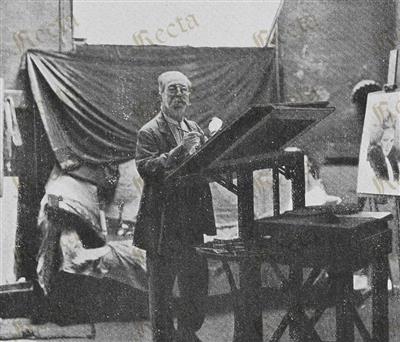
Museums2
Countries1
Largest reported holdingNational Gallery of Art, Washington D.C. · 2 recorded works
Loading map…
Where to see Cesare Biseo
Collection holdings are reported here; current display varies. Check with each museum before visiting.
-
2 recorded works
National Gallery of Art
Washington D.C., United States
-
1 recorded work
Smithsonian American Art Museum
Washington D.C., United States


Frequently Asked Questions
Where can I see Cesare Biseo's work?
Cesare Biseo (1843[1]-1909[1]) was an Italian[1] painter and watercolourist, known for Orientalist subjects. Viewing his work today requires a bit of travel, as his paintings are held in collections across Europe and the Middle East. In Italy, the Galleria Nazionale d'Arte Moderna e Contemporanea in Rome holds at least one example of his work. The Revoltella Museum in Trieste also has paintings by Biseo in its collection. Further afield, the Dahesh Museum of Art in New York City possesses several of Biseo's Orientalist paintings. Public sales records suggest that other works are in private collections internationally. Auction catalogues from Sotheby's and Christie's are useful resources for locating works that come up for sale. These sales sometimes include works that are otherwise not on public view. While not a substitute for seeing original works, online databases such as Artnet and the invaluable Art UK provide images and information about some of Biseo's paintings. These resources can help you identify works and their current locations, or at least provide a sense of his style and subject matter before planning a museum visit.What should I know about Cesare Biseo's prints?
Cesare Biseo (1843[1]-1909[1]) was an Italian[1] painter and watercolourist. He is known for Orientalist subjects, and also for his work as a decorator and designer. Biseo began his artistic training at the Accademia di San Luca in Rome. Later, he became a professor at the same institution. His travels to Egypt and the Middle East provided inspiration for many of his works. These pieces often depict scenes of daily life, architecture, and landscapes from these regions. While Biseo was primarily a painter, his designs were also applied to other media, including book illustration. He created illustrations and vignettes for publications. His prints reflect his broader artistic interests, combining detailed observation with a sense of atmosphere.Why are Cesare Biseo's works important today?
Cesare Biseo (1843[1]-1922) was an Italian[1] painter and watercolourist. While not a figure on the scale of a Renaissance court artist, understanding the context of art patronage helps to frame the importance of any artist's work. During the early Renaissance, figures like Sigismondo Pandolfo Malatesta commissioned works that presented them in a specific light. Basinio of Parma's poem, the *Hesperis*, portrayed Sigismondo as a classical hero, saving Italy through prowess and pagan virtue. Similarly, Roberto Valturio's treatise presented Sigismondo as a commander on par with Alexander the Great or Caesar. These works, inspired by classical Greek literature, were distributed to rulers like Cosimo de' Medici and Francesco Sforza. Even Alexander the Great became a figurehead in papal rhetoric after the Fall of Constantinople in 1453. Baldassare Castiglione later presented Alexander as a model of virtuous behaviour for courtiers. Examining the motivations and context surrounding art production, whether in the Renaissance or the 19th century, allows for a deeper analysis.Who was Cesare Biseo?
Cesare Biseo was a Roman painter born in 1843[1]. He is known for painting scenes from Egypt, Morocco, and the Ottoman world, often based on direct observation from his travels.What techniques or materials did Cesare Biseo use?
Cesare Biseo was an Italian[1] painter and watercolourist, active during the 19th century. While specific details about his techniques are scarce, we can infer some aspects from the period and his artistic output. Biseo is known for his detailed Orientalist scenes and Italian views, suggesting a mastery of perspective and precision in his work. As a watercolourist, he would have employed techniques such as washes, layering, and dry brushing to achieve varied effects of light and texture. Watercolour paints at the time consisted of pigments ground with a binder, such as gum arabic, and applied to paper. For his oil paintings, Biseo likely used traditional methods of the time, including preparing canvases with gesso, and applying paint in layers. The smooth surfaces observed in some paintings suggest the use of soft brushes and a fluid oil medium, possibly thinned with turpentine. Linseed oil, which dried relatively quickly, was a common choice. He may have also employed glazing techniques to build up colour and luminosity.Who did Cesare Biseo influence?
It is difficult to assess the specific artistic influence of Cesare Biseo, as historical sources do not directly address this question. However, one can discuss the broader artistic context of the periods and movements that influenced artists in general. For example, Caravaggio influenced many artists. These included Dutch painters Hendrick ter Brugghen, Gerrit van Honthorst, Dirck van Baburen, and Rembrandt van Rijn; French painters Simon Vouet, Valentin de Boulogne, and Georges de La Tour; and Spanish painters Francisco Ribalta, Jusepe de Ribera, and Diego Velázquez. Their work is inconceivable without his example, even if in Rome the wild enthusiasm for his art by the younger painters eventually gave way to classicism and the High Baroque.Who influenced Cesare Biseo?
It is difficult to summarise the influences on an artist, but some figures recur in histories of Futurism, and may have affected Cesare Biseo's artistic development. Umberto Boccioni (1882[1]-1916[1]) was an influential theorist and practitioner of Futurist painting, and his ideas about motion and dynamism may have resonated with Biseo. Carlo Carra (1881-1966) was another important Futurist painter, associated with Pittura Metafisica. Giacomo Balla (1871-1958) was a leading figure in the Futurist movement, exploring themes of speed and technology. Fortunato Depero (1892-1960) was a versatile artist who contributed to Futurism through painting, sculpture, and graphic design. Gino Severini (1883-1966) explored connections between Futurism and Cubism. These artists, among others, shaped the artistic environment in which Biseo worked.What is Cesare Biseo's most famous work?
It is difficult to identify one single "most famous" work by Cesare Biseo, as his artistic output spanned various subjects and styles. Biseo (1843[1]-1909[1]) was an Italian[1] painter known for his orientalist scenes, genre paintings, and costume studies. He travelled extensively in the Middle East, and these journeys provided inspiration for much of his art. While he produced many notable pieces, none has achieved undisputed, world-wide recognition as his "most famous". His paintings are characterised by attention to detail, depictions of light, and an interest in the everyday life of the people he encountered. Biseo's works offer a glimpse into the cultures and customs of the Middle East during the late 19th century.
Sources
Where to See guide aggregates verified holdings of Cesare Biseo's works across the following collections.
- [1] wikipedia Wikipedia: Cesare Biseo Used for: biography.
- [2] book Masterpieces of western art : a history of art in 900 individual studies from the Gothic to the present day Used for: biography.
- [3] book Post-impressionism : cross-currents in European painting Used for: biography.
- [4] book Post-impressionism : cross-currents in European painting Used for: biography.
- [5] book Wiles, Bertha Harris, 1896-, The fountains of Florentine sculptors and their followers from Donatello to Bernini Used for: biography, stylistic analysis.
- [6] book 1892-1968, Panofsky, Erwin,, Tomb sculpture: four lectures on its changing aspects from ancient Egypt to Bernini Used for: biography, stylistic analysis.
Editorial overseen by Solis Prints. Sources verified 2026-10-14. Click a source for details, or hover over [N] in the page above to preview.
Editorial standardsMethodologyCorrectionsAI disclosureAbout the editorial team