



About Bartolomeo Pinelli
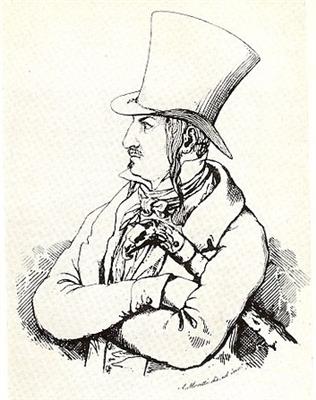
Museums3
Countries2
Largest reported holdingNational Gallery of Art, Washington D.C. · 10 recorded works
Loading map…
Where to see Bartolomeo Pinelli
Collection holdings are reported here; current display varies. Check with each museum before visiting.
-
10 recorded works
National Gallery of Art
Washington D.C., United States
-
5 recorded works
Vanderbilt Museum of Art
Nashville, United States

-
1 recorded work
Rijksmuseum
Amsterdam, Netherlands

Own a piece of it
Bartolomeo Pinelli prints
Hand-finished archival prints from Bartolomeo Pinelli's body of work.
 Vine-dresser Going to Town with the Children - Bartolomeo Pinelli
From £37.00
Vine-dresser Going to Town with the Children - Bartolomeo Pinelli
From £37.00
 Female from Procida - Bartolomeo Pinelli
From £28.00
Female from Procida - Bartolomeo Pinelli
From £28.00
 Gruppo di Frati Francescani - Bartolomeo Pinelli
From £28.00
Gruppo di Frati Francescani - Bartolomeo Pinelli
From £28.00
 Costumes from Rocca di Papa - Bartolomeo Pinelli
From £28.00
Costumes from Rocca di Papa - Bartolomeo Pinelli
From £28.00
 Donna di Aversa - Bartolomeo Pinelli
From £28.00
Donna di Aversa - Bartolomeo Pinelli
From £28.00
 Hermit and Woman from Frascati - Bartolomeo Pinelli
From £28.00
Hermit and Woman from Frascati - Bartolomeo Pinelli
From £28.00
 Woman from the Province of Salerno - Bartolomeo Pinelli
From £28.00
Woman from the Province of Salerno - Bartolomeo Pinelli
From £28.00
 Acquavitaro (Brandy and Spirits Seller) - Bartolomeo Pinelli
From £28.00
Acquavitaro (Brandy and Spirits Seller) - Bartolomeo Pinelli
From £28.00
Can't travel? Bring Bartolomeo Pinelli home.
See all Bartolomeo Pinelli prints →Frequently Asked Questions
Where can I see Bartolomeo Pinelli's work?
Bartolomeo Pinelli's works can be viewed in numerous collections. These include the Art Gallery of Ontario, Toronto; the Staatliche Museen zu Berlin; East Berlin; and the National Gallery of Canada, Ottawa. Further afield, examples are held at the J. Paul Getty Museum in Los Angeles; the Metropolitan Museum of Art, New York; and the National Gallery of Art, Washington, D.C. Other locations include the Ashmolean Museum, Oxford; The British Library, London; and the Victoria and Albert Museum, London. Examples can also be seen at the Philadelphia Museum of Art; the Pierpont Morgan Library, New York; and the University of Michigan Museum of Art, Ann Arbor. Some works are held in private collections in Europe and Texas.What should I know about Bartolomeo Pinelli's prints?
Bartolomeo Pinelli (1781[1]-1835[1]) was a prolific Italian[1] printmaker and draughtsman, active mainly in Rome. He is best known for his etchings and engravings depicting Roman life, customs, and historical events. Pinelli created numerous series of prints, often focusing on specific themes such as Roman costumes, historical figures, or literary subjects. His prints offer a window into early 19th-century Rome, portraying both the city's ancient monuments and the everyday existence of its inhabitants. Many of Pinelli's prints were produced for the tourist market. During the "Grand Tour" era, visitors to Rome sought souvenirs and mementos of their travels. Pinelli's prints, with their accessible style and picturesque subject matter, became popular keepsakes. They provided travellers with visual records of the sites they had visited and the people they had encountered. Pinelli's prints were reasonably priced, and could be purchased individually or in collections. They were collected and published in book form. Some tourists pasted them into their travel journals; others drew copies of them.Why are Bartolomeo Pinelli's works important today?
Bartolomeo Pinelli (1781[1]-1835[1]) was an Italian[1] artist, primarily a printmaker, who worked in Rome. He is best known for his illustrations of Roman life, customs, and historical events. Pinelli's prints offer valuable insights into early 19th-century Rome. They document the costumes, architecture, and social activities of the period. His works provide a visual record of a city undergoing transformation, capturing both its ancient heritage and its modern developments. Art historians and cultural scholars find Pinelli's work useful for understanding the popular culture and social dynamics of his time. His prints circulated widely, influencing perceptions of Rome both within Italy and abroad. They offer a perspective on how Romans saw themselves and how they wished to be seen by others. Pinelli’s art also provides information about the reception and interpretation of classical antiquity during the Neoclassical era. His illustrations often incorporate classical motifs and themes, reflecting the contemporary interest in ancient history and mythology.What techniques or materials did Bartolomeo Pinelli use?
Bartolomeo Pinelli (1781[1]-1835[1]) was a prolific Italian[1] artist known for his prints and drawings depicting Roman life, historical events, and mythological subjects. While specific details about Pinelli's studio practice are scarce, an understanding of contemporary artistic techniques offers insight. Printmaking, his primary medium, involved creating an image on a matrix, such as a copper plate, and then transferring it to paper. He would have employed etching, engraving, or a combination of both. Etching uses acid to bite lines into the plate, while engraving involves directly incising lines with a tool called a burin. For drawings and preparatory sketches, Pinelli likely used materials common at the time: paper, pencils, charcoal, pen and ink, and watercolour washes. The precise character of these drawings would vary depending on their purpose, from quick preliminary sketches to more finished presentation pieces. The surfaces of terracotta sculptures retain textures from fingers and tools used to model, smooth, and finish them. Presentation modelli are more smoothed and finished than bozzetti, with less evidence of their creation remaining visible. However, even smoothing leaves specific marks from fingers, cloth, and brushes.Who did Bartolomeo Pinelli influence?
Bartolomeo Pinelli's work had an impact on a number of later artists. Andrea Appiani's painting *Vicereine Auguste Amalie in Court Dress*, 1806[1], shows Pinelli's influence; as does Pelagio Palagi's *Newton’s Discovery of the Refraction of Light* (1827). Palagi's painting, in particular, demonstrates a move toward Romanticism, with its narrative undertones and theatrical presentation of Newton's discovery. The scene is presented almost as a genre painting, showing Palagi's interest in psychological interpretation. This interest was shared by other Italian[1] painters in the following years, such as Giovanni Fattori and Domenico Morelli. This trend continued until the rise of the Machiaioli, the Realists, who brought a new energy to Italian painting. Francesco Hayez, who was celebrated during his lifetime, also played a formative role in Italian painting throughout the 19th century.Who influenced Bartolomeo Pinelli?
It is difficult to assess Pinelli's influences from the material provided. However, some context can be established. During the Baroque era, artists often drew inspiration from earlier masters and artistic theories. Giovanni Bellori, a major figure in art theory, promoted Neoplatonism. This theory suggested artists should improve upon nature by creating idealised depictions, drawing from the most aesthetically pleasing elements. Bellori cited Annibale Carracci as a restorer of art, following ideas expressed earlier by Giovanni Battista Agucchi. Gian Lorenzo Bernini, a leading sculptor and architect, was trained by his father, Pietro Bernini, a Mannerist sculptor. Bernini studied ancient statues and paintings at the Vatican, particularly the works of Michelangelo, Raphael, and Giulio Romano. He also examined ancient works in the Borghese collection. Bartolomeo Manfredi, a painter, trained in Cremona, Brescia, and Milan. He then went to Rome, where he studied with Cristoforo Roncalli before becoming an assistant to Caravaggio.What is Bartolomeo Pinelli's most famous work?
It is difficult to name one single work as Bartolomeo Pinelli's most famous. Pinelli was a prolific printmaker, painter, and ceramicist, producing thousands of works, many of which were disseminated as widely available prints. Pinelli is best known for his drawings and prints depicting Roman and Italian[1] life, customs, costumes, and historical events. He created numerous series of prints illustrating classical literature, such as Virgil's Aeneid, as well as works of modern Italian poets. These prints, often produced in large quantities, helped to spread Pinelli's reputation and made his art accessible to a broad audience. He also produced a number of prints documenting the costumes of different regions in Italy. Due to the breadth of his artistic output, pinpointing one definitive 'most famous work' is challenging.What style or movement did Bartolomeo Pinelli belong to?
Bartolomeo Pinelli (1781[1]-1835[1]) was an Italian[1] artist working in Rome. He produced many prints and drawings depicting Roman history, customs, and folklore. Pinelli's career places him outside the main stylistic periods. The Baroque period, characterised by dynamic movement and energy, had faded by the late 18th century. Similarly, the Rococo, known for its lightness and grace, was also largely over. Neoclassicism was the dominant style during Pinelli's time. It emphasised a return to classical forms and themes, coherence, and correct proportions, in reaction to the Baroque. Pinelli's work does show some influence from the earlier Baroque style, particularly in the movement and energy of his compositions. However, his subject matter, focusing on Roman life and history, aligns him more closely with the Neoclassical interest in the classical world. He also produced many prints depicting scenes of Roman daily life, aligning him with the genre traditions of his era. Pinelli's style is perhaps best described as a blend of Neoclassical and Romantic elements with a touch of Baroque energy.
Sources
Where to See guide aggregates verified holdings of Bartolomeo Pinelli's works across the following collections.
- [1] wikipedia Wikipedia: Bartolomeo Pinelli Used for: biography.
- [2] book Jennifer Montagu;, Gold, Silver, and Bronze Used for: biography.
- [3] book Lilian H. Zirpolo, Historical Dictionary of Baroque Art and Architecture Used for: biography, stylistic analysis.
- [4] book Palmer, Allison Lee, Historical Dictionary of Neoclassical Art and Architecture Used for: biography.
- [5] book Milam, Jennifer Dawn, Historical Dictionary of Rococo Art Used for: biography, stylistic analysis.
Editorial overseen by Solis Prints. Sources verified 2026-10-14. Click a source for details, or hover over [N] in the page above to preview.
Editorial standardsMethodologyCorrectionsAI disclosureAbout the editorial team