



About Agnes Lawrence Pelton
German · 1881–1961
- landscape painting
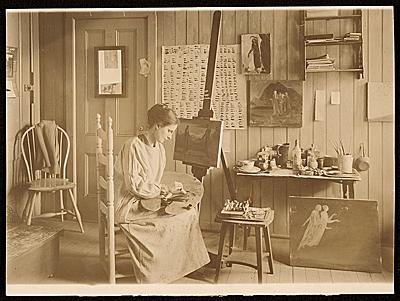
American mystic and abstract painter who co-founded the Transcendental Painting Group in 1938[1], celebrated in a 2020 Whitney retrospective.
Museums5
Countries1
Largest reported holdingMuseum of Fine Arts Boston, Boston · 2 recorded works
Loading map…
Where to see Agnes Lawrence Pelton
Collection holdings are reported here; current display varies. Check with each museum before visiting.
-
2 recorded works
Museum of Fine Arts Boston
Boston, United States
-
2 recorded works
Whitney Museum of American Art
New York City, United States


-
2 recorded works
Crystal Bridges Museum of American Art
Bentonville, United States
-
1 recorded work
New York Historical
New York City, United States
-
1 recorded work
Fine Arts Museums of San Francisco
San Francisco, United States


Frequently Asked Questions
Where can I see Agnes Lawrence Pelton's work?
Agnes Lawrence Pelton's work can be viewed in several museums. These include the Los Angeles County Museum of Art (LACMA), at 5905 Wilshire Boulevard, Los Angeles; the Metropolitan Museum of Art, 1000 Fifth Avenue, New York; and the Minneapolis Institute of Arts, 2400 Third Avenue South, Minneapolis. You can also find her work at the Museum of Modern Art, 11 West 53rd Street in New York, and the Royal Ontario Museum, 100 Queens Park, Toronto. Other locations include the Virginia Museum of Fine Arts, 200 N. Boulevard, Richmond; the Wolfsonian at Florida International University, 1001 Washington Avenue, Miami Beach; and the Charles Hosmer Morse Museum of American Art, 445 North Park Avenue, Winter Park, Florida. In the UK, Pelton's art may be viewed at the Brighton Museum & Art Gallery, Royal Pavilion Gardens, Brighton; the Geffrye Museum, Kingsland Road, London; the Manchester Art Gallery, Mosley Street, Manchester; the National Museums of Scotland, Royal Museum, Chambers Street, Edinburgh; and the Victoria & Albert Museum in London.What should I know about Agnes Lawrence Pelton's prints?
Agnes Lawrence Pelton (1881[1]-1961[1]) was an American modernist painter associated with Transcendental Painting. While Pelton is best known for her oil paintings, prints of her work offer another way to engage with her spiritual and abstract imagery. Pelton's original works are relatively scarce, so prints provide wider access to her artistic vision. These prints allow appreciation of her colour palettes and compositions, even if the texture of the original paintings is absent. When considering prints of Pelton's art, examine the printmaking technique used. Some may be reproductions of her paintings using offset lithography, while others might employ higher-quality giclée printing, which captures greater detail and colour accuracy. The paper stock also influences the print's appearance and longevity; archival quality paper ensures the colours remain true over time. Details about the print's production can usually be found on the retailer's website or in the item description.Why are Agnes Lawrence Pelton's works important today?
Agnes Lawrence Pelton (1881[1]-1961[1]) is known for her portraits, floral still lifes, desert scenes, and abstract paintings. Her works are of interest because they reflect an engagement with mysticism and the occult. Pelton studied at the Pratt Institute in Brooklyn from 1895[1] to 1900, and later with William L. Lathrop and Hamilton Easter Field. She taught at her mother’s music school and opened an art studio in New York in 1918. During the 1920s, she travelled frequently. In 1928, she relocated to California, settling in Cathedral City in 1932. Pelton's paintings often explored metaphysical themes. She kept a diary that showed her knowledge of religious, philosophical, scientific, and metaphysical literature. She painted outdoors in the early morning or at twilight, capturing reflections in forms and colours. Her still lifes contain arrangements of objects reflecting her interest in reflection, dreams, and spirituality. For example, Even Song (1934) uses colours and flowing lines to suggest dreams. Water flows from a vase, symbolising birth, as Venus glows above. Pelton also wrote a poem to accompany the painting.What techniques or materials did Agnes Lawrence Pelton use?
Information regarding Agnes Lawrence Pelton's specific techniques and materials is limited; however, a broader look at similar artists and periods can provide some context. Some artists in the late 19th and early 20th centuries combined photography with painting. M. L. Winter of Vienna, for example, produced enlarged photographs on linen, and gelatin-silver emulsion-coated linen became commercially available. Artists would then apply oils, watercolours, or pastels over these photographic images, sometimes using preparatory layers of gelatin or shellac. Other artists, such as William Blake, favoured tempera or distemper, using mediums like rabbit-skin or carpenter's glue. Blake aimed for colour purity, relying on line drawing and avoiding opaque forms common in oil painting. His materials included pigments such as ultramarine, ochres, madder, black, Prussian blue, gamboge, and vermilion. During this time, some artists also experimented with emulsion-coated canvas and ready-to-use emulsions. Lynton Wells, for instance, used canvas manufactured by Argenta, applying oils, acrylics, aniline dyes, pastels, and charcoal, often mimicking elements in the photographic portion of the image.Who did Agnes Lawrence Pelton influence?
Agnes Lawrence Pelton (1881[1]-1961[1]) was associated with the Transcendental Painting Group, founded in New Mexico in 1938[1]. The group, which included Emil Bisttram and Raymond Jonson, sought to create non-objective art that explored spirituality and inner consciousness. The group was short-lived; it disbanded in 1941 after the United States declared war. Although Pelton's work has similarities to that of Arthur Dove and Georgia O'Keeffe, it is difficult to identify specific individuals who were directly influenced by her. Richard Tuttle, an American sculptor, has been compared to Agnes Martin; one reviewer said his drawings looked "as if Agnes Martin drawings had gone a little haywire". Martin's work, in turn, is sometimes linked to that of Agnes Pelton, because all three artists explored spiritual themes in abstract forms. Pelton's paintings, like Martin's mature style, share an interest in geometric forms, subtle colour, and quiet contemplation.Who influenced Agnes Lawrence Pelton?
Agnes Lawrence Pelton (1881[1]-1961[1]) studied at the Pratt Institute in Brooklyn, New York, from 1895[1] to 1900. There, she studied with Arthur W. Dow. Later, in 1907, she studied privately with William L. Lathrop, and with Hamilton Easter Field in 1910-11. Pelton was born in Stuttgart, Germany, and immigrated to the United States in 1888 with her mother. Her mother operated the Pelton School of Music in Brooklyn, where Agnes also taught. She established an art studio in New York in 1918. Her interests included portraiture, floral still lifes, desert scenes, and abstract painting. From 1917 onward, she maintained an interest in mysticism and the occult. In 1928, she relocated to California, and in 1932, settled in Cathedral City.What style or movement did Agnes Lawrence Pelton belong to?
Agnes Lawrence Pelton (1881[1]-1961[1]) is associated with several styles. She painted portraits, floral still lifes, desert scenes, and abstract works. After a move to California in 1928[1], Pelton settled in Cathedral City in 1932. There, she created abstract, mystical still lifes that reflected her interest in reflection, dreams, and spirituality. These paintings have been compared to the abstractions of Arthur Dove and Georgia O'Keeffe. Like them, Pelton's mystical canvases evolved from a nature-oriented art. Pelton kept a diary that revealed her familiarity with religious, philosophical, scientific, and metaphysical writings. She often painted outdoors in the soft light of early morning or at twilight, recording reflections in forms and colours. Some consider her work a personal strain of still life, reflecting Southern California's theosophy and utopian cults. In 1938, Lawren Harris co-founded the Transcendental Painting Group in New Mexico; this organisation advocated a spiritual form of abstraction.What was Agnes Lawrence Pelton known for?
Agnes Lawrence Pelton (1881[1]-1961[1]) was an American artist known for her portraits, floral still lifes, desert scenes, and abstract paintings. Born in Stuttgart, Germany, she immigrated to the United States in 1888[1] with her mother. Pelton studied at the Pratt Institute in Brooklyn, New York, from 1895 to 1900, and later with William L. Lathrop and Hamilton Easter Field. She taught at her mother’s music school and established an art studio in New York in 1918. Pelton became interested in mysticism and the occult in 1917, an interest that continued throughout her life. She travelled frequently in the 1920s before moving to California in 1928; she settled in Cathedral City in 1932. There, for fifteen years, she painted her abstract, mystical visions, filling her still lifes with arrangements of objects that reflected her interest in reflection, dreams, and spirituality. Pelton's canvases evolved from a nature-oriented art with non-sacred associations. She kept a diary that revealed her familiarity with religious and philosophical literature, the sciences, and metaphysical writings on the stars and the universe.
Sources
Where to See guide aggregates verified holdings of Agnes Lawrence Pelton's works across the following collections.
- [1] wikipedia Wikipedia: Agnes Lawrence Pelton Used for: biography.
- [2] book Landauer, Susan, The not-so-still life : a century of California painting and sculpture Used for: biography.
- [3] book Charlene Spretnak (auth.), The Spiritual Dynamic in Modern Art _ Art History Reconsidered, 1800 to the Present Used for: biography.
Editorial overseen by Solis Prints. Sources verified 2026-10-14. Click a source for details, or hover over [N] in the page above to preview.
Editorial standardsMethodologyCorrectionsAI disclosureAbout the editorial team