

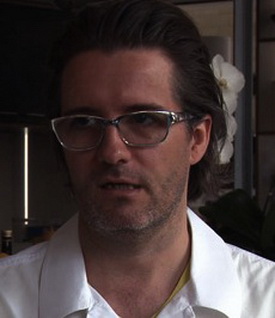
Olafur Eliasson
- Contemporary
- Installation
Olafur Eliasson, the Danish-Icelandic artist, often constructs experiences rather than static objects. His art frequently uses natural elements such as light, water, and fog to alter perception. Born in Copenhagen in 1967, Eliasson's connection to Iceland, where he spent many summers, informs his engagement with the natural world and its raw forces. He encourages viewers to become active participants, observing their own responses to his carefully engineered environments.
Biography
Before training at the Royal Danish Academy of Fine Arts from 1989 to 1995, Eliasson was a breakdancer. This early experience with movement and spatial awareness subtly shapes his artistic practice. His Berlin studio, Studio Olafur Eliasson, operates more like a research laboratory than a traditional art studio. It employs a diverse team of craftspeople, architects, scientists, and cooks, reflecting a collaborative approach to art making.
Many of Eliasson's projects are large in scale and public in nature. For "The weather project" (2003) at Tate Modern in London, he installed a massive artificial sun and mist, transforming the Turbine Hall into an ethereal, communal space. Another notable work, "The New York City Waterfalls" (2008), saw four artificial waterfalls erected along Manhattan and Brooklyn shorelines, temporarily changing the urban skyline. These works invite collective contemplation on scale, environment, and shared experience.
Eliasson consistently explores how we perceive and interact with our surroundings. His practice extends beyond gallery walls, engaging with urban spaces and architectural projects. He continues to examine themes of light, space, and the human sensory system, creating art that prompts direct, personal encounters.
Timeline
- 1967Born in Copenhagen, Denmark
- 1989Began training at the Royal Danish Academy of Fine Arts
- 1995Completed training at the Royal Danish Academy of Fine Arts
- 2003Created "The weather project" at Tate Modern, London
- 2008Created "The New York City Waterfalls"
Notable Works
Tap to view larger.
Next stop
Contemporary →
Explore the artists and ideas of Contemporary.
Related Artists

_%E2%80%93_LOC.jpg)

Frequently Asked Questions
What is Olafur Eliasson known for?
Olafur Eliasson is known for constructing experiences using natural elements like light, water, and fog to alter perception. One example is "The weather project", a large-scale optical illusion installed in the Turbine Hall of London’s Tate Modern, featuring a large solar disc.What is Olafur Eliasson's most famous work?
Olafur Eliasson, born in Copenhagen in 1967, is known for installation-based artworks that explore perception and natural phenomena. He often employs simple, pragmatic mechanical actions, using elements such as light, water, and fog. His most famous work is *The Weather Project*, installed in the Turbine Hall of London’s Tate Modern in 2003. This large-scale optical illusion featured a semi-circular arrangement of monochromatic lights and hundreds of mirrors, creating the effect of a large solar disc. An atmospheric mist was pumped into the hall, adding to the effect. The installation was inspired by the idea that urban dwellers' direct experiences of nature are limited. Eliasson established a studio in Berlin in 1995, acting as a laboratory for spatial research. His work often incorporates both organic and synthetic materials, existing in a space between artifice and nature. He has also produced photographs of natural occurrences, such as icebergs and rock formations, often displayed in grid arrangements.What should I know about Olafur Eliasson's prints?
Olafur Eliasson, born in Copenhagen in 1967, is known for photographs, sculptures, and installation works. His art explores human perception of natural phenomena, often using simple means to achieve sublime effects. Eliasson's photographic practice often involves documenting natural occurrences, such as icebergs and rock formations, primarily in Iceland. These serial images are presented in grid arrangements, inviting viewers to compare changes over time. He is interested in both human and geological timescales, for example, ice melting and glaciers moving. Eliasson positions the representation of nature as a catalyst for systematic study, rather than passive contemplation. Eliasson's installations often employ ephemeral elements such as water, light, wind, and fog. Some works incorporate tangible natural materials like trees and moss. These installations are often better understood as events or experiments, rather than conventional sculptures. For example, *The weather project* (2003) at Tate Modern used lights, mirrors, and mist to create a large-scale optical illusion of a solar disc. Eliasson lives in Berlin and works internationally. He achieved prominence in the mid-1990s.What style or movement did Olafur Eliasson belong to?
Olafur Eliasson, born in Copenhagen in 1967, works with photography, sculpture, and large-scale installations. His practice resists easy categorisation within a single movement. Some critics link Eliasson to the Light and Space movement, noting similarities to artists like Robert Irwin, Maria Nordman, and James Turrell. These Californian artists also experimented with light and perception. However, Eliasson's approach differs; his installations are often direct and comprehensible, contrasting with the optical illusions and ambiguities sometimes employed by his predecessors. Eliasson's work explores human perception and experience of natural phenomena. He uses simple mechanical actions and natural materials such as water, light, and wind to create sublime effects. His installations often incorporate elements of science and technology, reflecting an interest in how these factors mediate our understanding of the world. Eliasson established a Berlin studio in 1995, operating it as a laboratory for spatial research, staffed by architects, artists, technicians, and art historians.What techniques or materials did Olafur Eliasson use?
Olafur Eliasson employs a range of materials and techniques, often focusing on ephemeral elements. His installations frequently incorporate water (in liquid and frozen forms), light, wind, fire, heat, fog, and magnetic waves. He sometimes uses tangible natural materials such as trees, thorns, moss, and grass. Eliasson's work often involves optical illusions and sensory experiences. For example, *The Weather Project* (2003) at Tate Modern used a semi-circular arrangement of monochromatic lights and hundreds of mirrors to create the effect of a large solar disc. Atmospheric mist was pumped into the space to enhance the effect. Eliasson often uses low-tech, readily available components. Hoses, electric lights, extension cords, water pumps, and scaffolding are visibly incorporated into his installations. He makes no attempt to conceal the apparatus that produces the effect. His intention is to allow viewers to "sense ourselves sensing" the environment.What was Olafur Eliasson known for?
Olafur Eliasson, born in Copenhagen in 1967, is known for installation-based artworks that explore human perception of natural phenomena. He uses simple, pragmatic, mechanical actions with organic and synthetic materials. His art exists in a border space between magic and artifice. Eliasson's installations often employ ephemeral elements such as water, light, wind, and fog. He also uses tangible natural materials such as trees and moss. These installations are better understood as events or experiments than conventional sculptures. In 2003, Eliasson created *The Weather Project* at the Tate Modern. This large-scale optical illusion featured a semi-circular arrangement of monochromatic lights and mirrors, creating a sun-like effect. Mist was pumped into the room to enhance the atmospheric quality. The work was inspired by the idea that urban dwellers have few direct encounters with nature. Eliasson established a Berlin studio in 1995. It functions as a laboratory for spatial research, employing architects, artists, technicians, and art historians.When did Olafur Eliasson live and work?
Olafur Eliasson was born in Copenhagen in 1967. He spent a significant part of his childhood in Iceland. In 1993, he moved to Berlin, where he currently lives and works. Eliasson established a studio in Berlin in 1995; it functions as a laboratory for spatial research, employing architects, artists, technicians, and art historians. Eliasson first achieved international recognition in the mid-1990s. His work includes photographs, sculptures, and installation-based works. His installations often use ephemeral elements such as light, water, wind, and fog. Examples of his work include *Your sun machine* (1997) and *Your strange certainty still kept* (1996). In 2003, he created *The Weather Project*, a large-scale optical illusion in the Turbine Hall of London’s Tate Modern.Where can I see Olafur Eliasson's work?
Olafur Eliasson, born in Copenhagen in 1967, is a Danish-Icelandic artist who lives and works in Berlin. He gained international prominence in the mid-1990s for photographs, sculptures, and installation-based works. Eliasson's installations often employ ephemeral elements such as water, light, wind, and fog. His work explores human perception and experience of natural phenomena. He has created indoor and outdoor installations using both natural and synthetic materials. His Berlin studio, established in 1995, functions as a laboratory for spatial research, involving architects, artists, technicians, and art historians. Examples of Eliasson's work include *The Weather Project*, a large-scale optical illusion installed in the Turbine Hall of London’s Tate Modern in 2003. This installation featured a semi-circular arrangement of lights and mirrors, creating a sun-like effect. Other exhibitions include *Olafur Eliasson* at the Musée d'Art Moderne de la Ville de Paris (2002), *The Mediated Motion* at the Kunsthaus Bregenz, Austria (2001), and *The Curious Garden* at the Irish Museum of Modern Art, Dublin (2000). His work has also been featured in group exhibitions such as the Venice Biennale and Skulptur Projekte in Münster.Where was Olafur Eliasson from?
Olafur Eliasson was born in Copenhagen in 1967. Although born in Denmark, Eliasson is of Icelandic descent; he spent a significant part of his childhood in Iceland. As an adult, he has often returned. Eliasson currently lives and works in Berlin. Eliasson has stated that his Scandinavian identity was not an issue until he moved to Germany in 1993. It was then that he realised his origins did make a difference. He considers himself Scandinavian or Northern European, but downplays the idea that there is anything mystical about coming from Iceland. Eliasson's studio, established in Berlin in 1995, functions as a laboratory for spatial research, employing architects, artists, technicians, and art historians.Who did Olafur Eliasson influence?
Olafur Eliasson's art explores perception and natural phenomena. His practice has links to the history of art, especially the California 'light and space' artists Robert Irwin, Maria Nordman, and James Turrell. Eliasson's installations share some concerns with these predecessors, but important generational differences exist. Turrell, for instance, used light to create trompe l'oeil Minimalism, producing spatial ambiguities and optical illusions. Eliasson, by contrast, favours simple, direct, and immediately comprehensible works. An example is his *Your sun machine* (1997), where he cut a hole in a gallery ceiling to allow sunlight to enter. Eliasson's Berlin studio, established in 1995, functions as a laboratory for spatial research, involving architects, artists, technicians, and art historians. His work uses organic and synthetic materials, existing between magic and artifice. Eliasson aims to create a more concentrated and intense experience of wonder by exposing mediating factors and staging nature on the level of 'hyper-representation'.Who influenced Olafur Eliasson?
Olafur Eliasson, born in Copenhagen in 1967, is an artist known for installation-based works using light, water, and other ephemeral elements. While Eliasson acknowledges a relationship to the Nordic landscape tradition, he resists oversimplified interpretations of his work based on his Icelandic heritage. He spent a significant part of his childhood in Iceland, but he feels critics overstate its importance. Eliasson's formal concerns connect to the history of art, particularly the California "light and space" artists Robert Irwin, Maria Nordman, and James Turrell. Irwin's architectural installations using translucent scrims and Nordman's experiments with sunlight resonate with Eliasson's practice. However, unlike some of his predecessors such as Turrell, who used light to create optical illusions, Eliasson's works are simple and direct. Eliasson established a studio in Berlin in 1995, employing architects, artists, technicians, and art historians for spatial research. Some critics have noted similarities between Eliasson's photographs and the paintings of Friedrich and Dahl. Eliasson finds Romanticism and mysticism "interesting", but is wary of cultural associations around them.Who was Olafur Eliasson?
Olafur Eliasson, born in Copenhagen in 1967, is a Danish-Icelandic artist known for installation-based artworks. He spent a significant part of his childhood in Iceland and currently lives and works in Berlin. Eliasson's work often incorporates ephemeral elements such as light, water, and atmospheric effects to explore human perception and experience of natural phenomena. He established a studio in Berlin in 1995, which functions as a laboratory for spatial research, employing architects, artists, technicians, and art historians. Eliasson first gained international recognition in the mid-1990s. His practice includes photography and sculpture, but he is best known for installations. Examples include *The Weather Project* (2003) at Tate Modern, which used lights, mirrors, and mist to create a large-scale optical illusion of a solar disc, and *Your Strange Certainty Still Kept* (1996), which featured water drops suspended in mid-air using strobe lighting. Eliasson has had solo exhibitions at the Musée d'Art Moderne de la Ville de Paris, Kunsthaus Bregenz, and Moderna Galerija in Ljubljana, among others.
Sources
Editorial draws on the following primary and tertiary references for Olafur Eliasson.
- [1] museum Victoria and Albert Museum Used for: museum holdings.
- [2] book Beard, Lee, 1973- author, Butler, Adam, author; Van Cleave, Claire, author; Fortenberry, Diane, author; Stirling, Susan, author, Beard, Lee, 1973- author, Butler, Adam, author; Van Cleave, Claire, author; Fortenberry, Diane, author; Stirling, Susan, author - The Art Book_ New Edition, Mini Format Used for: biography, stylistic analysis.
- [3] book guggenheim-hugo00newy Used for: biography, stylistic analysis.
- [4] book Cheetham, Mark A., Landscape Into Eco Art Used for: biography, stylistic analysis.
Editorial overseen by Solis Prints. Sources verified 2026-10-08. Click a source for details, or hover over [N] in the page above to preview.
Editorial standardsMethodologyCorrectionsAI disclosureAbout the editorial team