



Anselm Kiefer
- Neo-Expressionism
- Contemporary
Anselm Kiefer began his artistic career with a series of photographs known as the "Occupations" (Besetzungen) in the late 1960s. He photographed himself in various European locations, including France, Switzerland, and Italy, performing the Nazi salute while wearing his father's Wehrmacht uniform. This provocative act, documented and later presented in a book, directly confronted Germany's recent past and its suppressed history.
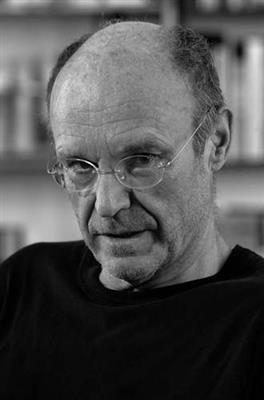
Biography
Born in Donaueschingen, Germany, in March 1945, just weeks before the end of the Second World War, Kiefer's upbringing was marked by the ruins and collective silence surrounding the war's atrocities. He studied law and Romance languages before turning to art, training with Peter Dreher and Joseph Beuys. His early paintings often depicted desolate, monumental architectural spaces and historical figures, exploring themes of national identity, myth, and the destructive power of ideology.
Kiefer is known for his large-scale works and his experimental approach to materials. He often incorporates unexpected elements such as lead, straw, ash, earth, and dried plants into his paintings and sculptures. These materials add physical weight and symbolic layers, transforming the surface into a complex, almost archaeological terrain. His practice frequently draws upon German mythology, ancient history, and poetic references, creating dense visual narratives.
In the early 1990s, Kiefer moved to Barjac, France, establishing a vast studio complex where he continued to expand his ambitious projects. Here, he developed large installations and built structures, allowing his work to interact directly with the environment. His art continues to grapple with difficult subjects, examining cycles of destruction and creation, memory, and the human condition.
Timeline
- 1945Born in Donaueschingen, Germany in March.
- 1960Studied law and Romance languages before art.
- 1960Trained with Peter Dreher.
- 1960Trained with Joseph Beuys.
- 1960Began 'Occupations' photo series.
- 1990Moved to Barjac, France, established studio.
Notable Works
Tap to view larger.
Next stop
Browse the movements →
Every movement in the collection, from the Renaissance to Pop art.
Related Artists
.jpg)
_%E2%80%93_LOC.jpg)


Frequently Asked Questions
What is Anselm Kiefer known for?
Anselm Kiefer is known for his large-scale works and experimental use of materials, such as lead, straw, ash, earth, and dried plants. His art explores themes of national identity, myth, and the destructive power of ideology.What is Anselm Kiefer's most famous work?
Anselm Kiefer's body of work is concerned with German history, myths, and collective memory. It is difficult to name one single "most famous" work. One significant piece is *Song of the Wayland* (1982). This large-scale painting combines oil, emulsion, straw, photography, and a lead wing on canvas. The title alludes to the myth of Wayland the blacksmith, who, after being crippled by a king, enacts a violent revenge before escaping with self-forged wings. Kiefer links this parable to the destruction of German culture during the Third Reich and the Holocaust. Another important work is the *Occupations* series (1969), a series of photographs where Kiefer is seen striking the "Sieg Heil" pose in various locations. These images confront aesthetic taboos and resurrect repressed icons of the past. His paintings often incorporate materials like sand, straw, and lead, building up thick, textured surfaces. Kiefer has stated that "painting = burning", and fire is a recurring motif in his art, representing critical and cathartic powers.What should I know about Anselm Kiefer's prints?
Anselm Kiefer's prints, like his paintings, explore themes of German history, myth, and culture. Born in 1945, Kiefer began his career confronting Germany's past, including the Holocaust and the Nazi era. His prints often incorporate photographs, woodcuts, watercolour, gouache, and other media. Kiefer's works on paper are not preparatory sketches for larger paintings. Instead, they are finished pieces, sometimes related to his paintings as intermediary studies. He uses them to assess a painting's completeness by creating smaller versions. In the 1970s and early 1980s, Kiefer created many drawings referencing German culture, history, literature, and music. These works sometimes evoke the propaganda of the Third Reich. His prints often display a mordant humour, using caricature and irony. The smaller format allows him to represent significant themes without pretension. Some of Kiefer's prints involve juxtaposing different sheets of paper or adding smaller sheets to larger ones, prompting viewers to consider the artwork's subject. His prints offer a unique perspective on his artistic vision, blending commentary and humour in a more accessible format than his large-scale paintings.What style or movement did Anselm Kiefer belong to?
Anselm Kiefer's art resists simple categorisation, though he is often associated with Neo-Expressionism. This movement emerged in the late 1970s and early 1980s as a reaction against the minimalism and conceptual art of the preceding decades. Neo-Expressionist artists revived figurative painting, often employing emotive and symbolic content. Kiefer's work shares some characteristics with Neo-Expressionism, such as its emphasis on subjective experience and its use of bold, gestural brushwork. However, his art also incorporates elements of other styles and movements. He draws on historical and mythological themes, often engaging with German history and identity. His use of materials, such as lead, straw, and ash, further distinguishes his practice. These materials carry symbolic weight and contribute to the tactile quality of his works. While Kiefer is linked to Neo-Expressionism through certain aesthetic and thematic concerns, his unique approach to materials and his engagement with history set him apart. His art remains difficult to classify neatly within a single movement.What techniques or materials did Anselm Kiefer use?
Anselm Kiefer employs a wide variety of materials and techniques in his practice. His works often incorporate oil paint, emulsion, and shellac. He is known to build up surfaces with thick paint, sometimes burning or cutting into them. Kiefer also uses photographs, often overpainting them with acrylic. Some are photographs he has taken himself; others are sourced from magazines or postcards. In addition, Kiefer assembles large-scale works on paper from individual woodcuts, which he then overpaints. Other materials found in Kiefer's art include lead, sand, straw, dried flowers, ferns, wood, and paper. He also creates "books" from photographs or woodcuts. Some works include molten lead affixed to the surface. The artist has described his paintings as "works of the scorched earth", stating that "painting = burning".What was Anselm Kiefer known for?
Anselm Kiefer is known for paintings, sculptures and installations that grapple with German history and identity, especially the legacy of the Second World War and the Holocaust. Born in Germany in 1945, Kiefer came of age during a period of national self-reflection. His early work involved controversial performances; for example, Occupations (1969) featured Kiefer giving the Nazi salute in various locations. These actions were intended to confront Germany's past, although some critics questioned his motives. Kiefer's paintings often incorporate materials such as straw, ash, clay, lead, and shellac. These unconventional media contribute to the tactile and symbolic nature of his art. His large-scale canvases frequently feature themes of destruction, regeneration, and the relationship between history and myth. Works like Margarethe (1981) and Nuremberg (1982) demonstrate his engagement with specific historical and literary references. He also makes artist's books, woodcuts, and other works on paper.When did Anselm Kiefer live and work?
Anselm Kiefer was born in Donaueschingen, Germany, in 1945, near the close of the Second World War. He began his art education in the mid-1960s, first studying under Peter Dreher in Freiburg from 1966 to 1968. He then studied with Antes at the Akademie der Bildenden Künste in Karlsruhe in 1969, and with Joseph Beuys at the Kunstakademie in Düsseldorf from 1970 to 1972. These studies followed a brief period where he studied law and French. In 1971, Kiefer moved to Buchen, Odenwald, where he converted an old stone schoolhouse into his home and studio. He has maintained a studio in Hornbach as well. The artist currently lives and works in Buchen.Where can I see Anselm Kiefer's work?
Anselm Kiefer's art appears in many public collections worldwide. Several museums hold substantial selections of his paintings, sculptures, and works on paper. In Germany, significant holdings exist at the Kunstsammlung Nordrhein-Westfalen (Düsseldorf), the Pinakothek der Moderne (Munich), and the Hamburger Kunsthalle (Hamburg). These museums offer a broad view of Kiefer's artistic development. Outside Germany, major collections include the Metropolitan Museum of Art and the Museum of Modern Art (both in New York). The Tate Modern in London also possesses a group of his pieces. These international collections allow audiences to view Kiefer's work within a global context. Additionally, the Hall Art Foundation (Reading, Vermont, USA) has a large collection. It is viewable by appointment. Visiting these institutions provides opportunities to study the scale and materiality that characterise Kiefer's output.Where was Anselm Kiefer from?
Anselm Kiefer was born in 1945 in Donaueschingen. At that time, Donaueschingen was within the French Occupation Zone of what remained of Germany after the Second World War. Between 1963 and 1968, Kiefer travelled to France, Holland, Italy, and Sweden. He began studying law and French at the University of Freiburg in 1965 but abandoned these studies after three semesters to study painting under Peter Dreher in Freiburg. From 1970 to 1972, he studied painting under Joseph Beuys at the Kunstakademie, Dusseldorf. In 1971, Kiefer moved to Buchen (Odenwald), where he converted an old stone schoolhouse into a home and studio. In 1984, he travelled to Israel. He fiercely guards his privacy and does not allow the publication of his portrait photograph in exhibition catalogues.Who did Anselm Kiefer influence?
Anselm Kiefer's work resonated with a number of artists. He studied under Joseph Beuys at the Düsseldorf Art Academy. Kiefer's art shares Beuys's interest in symbolic objects and the incorporation of real materials, such as straw, into paintings. Like Beuys, Kiefer imbued his works with a ritualistic quality. Kiefer's work, particularly his early pieces, explored themes related to German history and identity, often provoking strong reactions. In 1969, he photographed himself wearing a Nazi uniform and giving the Nazi salute in various locations. His large canvases sometimes featured imagery associated with Nazi architecture and concentration camps. His willingness to confront difficult aspects of the past influenced later generations of artists who grapple with historical and political themes in their work. Martin Kippenberger was also part of the cultural scene of Berlin.Who influenced Anselm Kiefer?
Anselm Kiefer studied with Joseph Beuys at the Düsseldorf Academy. Beuys's influence appears in Kiefer's use of materials such as tar, straw, rusty iron, and lead. Kiefer's large-scale paintings, with their accumulation of detail, also owe a debt to Jackson Pollock. Kiefer's work engages with German history, Jewish history, alchemy, the Kabbalah, and the Holocaust. He references the story of Exodus, Napoleon's occupation of Germany, and the neo-classical style of Nazism. Paul Celan's poem "Death Fugue", written in a concentration camp, also had an impact. Kiefer's series of works from 1973 focus on Richard Wagner's operas, particularly *Der Ring des Nibelungen* and *Parsifal*. Like Wagner, Kiefer draws inspiration from myths in the *Edda*, a collection of ancient Icelandic literature and a source for German mythology.Who was Anselm Kiefer?
Anselm Kiefer, born in Donaueschingen in 1945, is a German artist who studied painting under Peter Dreher in Freiburg (1966-1968), and later under Antes at the Akademie der Bildenden Künste, Karlsruhe. He concluded his studies under Joseph Beuys at the Kunstakademie, Dusseldorf (1970-1972). In 1971, Kiefer moved to Buchen (Odenwald), converting a stone schoolhouse into his home and studio. His early work involved combining words and images, with words functioning as figures within the composition, referencing war songs, poems, myths and geography. Richard Wagner's operas, particularly *Der Ring des Nibelungen* and *Parsifal*, became a focus in 1973, drawing on Icelandic literature and German mythology. Kiefer's techniques evolved to incorporate enlarged photographs as picture surfaces. He built up surfaces with thick paint, sometimes cutting or burning them, referring to these as 'works of the scorched earth'. He used materials such as lead, sand, oil, shellac, wood and paper, later adding dried flowers, straw and ferns. Kiefer received the Hans Thoma Prize in 1983 and travelled to Israel in 1984.
Sources
Editorial draws on the following primary and tertiary references for Anselm Kiefer.
- [1] book Rosenthal, Nan, Anselm Kiefer : works on paper in the Metropolitan Museum of Art Used for: biography.
- [2] book Beard, Lee, 1973- author, Butler, Adam, author; Van Cleave, Claire, author; Fortenberry, Diane, author; Stirling, Susan, author, Beard, Lee, 1973- author, Butler, Adam, author; Van Cleave, Claire, author; Fortenberry, Diane, author; Stirling, Susan, author - The Art Book_ New Edition, Mini Format Used for: biography.
- [3] book guggenheim-refigur00kren Used for: biography.
Editorial overseen by Solis Prints. Sources verified 2026-09-22. Click a source for details, or hover over [N] in the page above to preview.
Editorial standardsMethodologyCorrectionsAI disclosureAbout the editorial team