

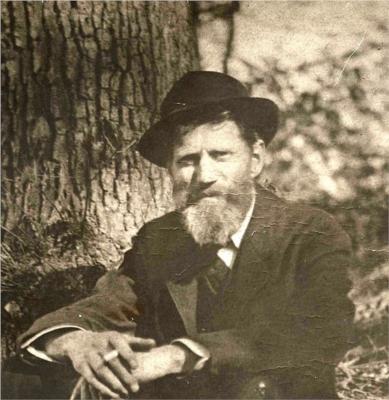
Emil Carlsen
- still life
- landscape painting
Emil Carlsen arrived in Chicago in 1872[2] with architectural training from Copenhagen's Royal Academy and no fixed plans for painting. Within a few years he had become one of America's most admired still life[2] painters, his work compared so frequently to that of Chardin that the comparison became unavoidable: when Carlsen visited Paris in 1875, he reportedly spent weeks studying the French master's canvases before ever picking up a brush himself.
Biography
Born in Copenhagen on 19 October 1848, Carlsen emigrated in his early twenties and taught himself to paint largely through close looking. He became the first drawing and painting instructor at the Chicago Academy of Design, then moved to San Francisco to direct the California School of Design from 1887[2] to 1889. By the time he settled on the East Coast, he had developed the muted tonal harmonies and luminous glazes that define his best work: copper vessels, fish, game, and ceramic bowls arranged with an almost architectural deliberateness.
His friendships with John Twachtman and Julian Alden Weir placed him within the core of American Impressionism, though Carlsen remained somewhat apart from their plein-air enthusiasm. He preferred the controlled light of his studio, and the quality of his surfaces, built up across many glazed layers, rewards close inspection in a way that outdoor work rarely does.
Recognition came steadily: a Gold Medal at the 1904[2] Louisiana Purchase Exposition in St Louis, a Medal of Honor at the Panama-Pacific International Exposition in 1915. His son Dines, born in 1901, also became a painter of note. Carlsen taught at the National Academy of Design, the Art Students League, and the Pennsylvania Academy of Fine Arts.
He died in New York on 2 January 1932[2]. His still lifes are held by the Metropolitan Museum of Art, the Art Institute of Chicago, the Smithsonian, and the Dallas Museum of Art.
Timeline
- 1872Arrived in Chicago, having trained in architecture at Copenhagen's Royal Academy.
- 1875Visited Paris and studied the paintings of Chardin.
- 1887Became director of the California School of Design in San Francisco.
- 1889Left his position as director of the California School of Design.
- 1901His son Dines Carlsen was born. He also became a painter.
- 1904Received a Gold Medal at the Louisiana Purchase Exposition in St Louis.
- 1915Received a Medal of Honor at the Panama-Pacific International Exposition.
- 1932Died in New York on 2 January.
Notable Works
Tap to view larger.
Where to See Emil Carlsen
1 museum worldwide.
-
2 works
National Gallery of Art
Washington D.C., United States
Mon–Sat 10:00–17:00, Sun 11:00–18:00 · Free

Next stop
Browse the movements →
Every movement in the collection, from the Renaissance to Pop art.
Related Artists
Frequently Asked Questions
What is Emil Carlsen known for?
Emil Carlsen is known as one of America's most admired still life[2] painters. His work was frequently compared to that of Chardin. He developed muted tonal harmonies and luminous glazes, which he used to depict copper vessels, fish, game, and ceramic bowls.Who was Emil Carlsen?
Emil Carlsen was an American still life[2] painter who was often compared to Chardin. He emigrated from Copenhagen in his early twenties and taught himself to paint through observation. He also taught at the Chicago Academy of Design, the California School of Design, the National Academy of Design, the Art Students League, and the Pennsylvania Academy of Fine Arts.What was Emil Carlsen's art style?
His friendships with John Twachtman and Julian Alden Weir placed Emil Carlsen within the core of American Impressionism. However, he remained somewhat apart from their plein-air enthusiasm, preferring the controlled light of his studio. He built up surfaces across many glazed layers.How did Emil Carlsen die?
Emil Carlsen died in 1932[2] at the age of 79.
Sources
Editorial draws on the following primary and tertiary references for Emil Carlsen.
- [1] museum National Gallery of Art Used for: museum holdings.
- [2] wikipedia Wikipedia: Emil Carlsen Used for: biography, birth dates, death dates, identifiers, movement attribution, nationality.
- [3] book Brodskaya Nathalia, Brodskaya Nathalia - Symbolism Used for: biography.
- [4] book guggenheim-guhe00solo Used for: biography.
- [5] book Landauer, Susan, The not-so-still life : a century of California painting and sculpture Used for: biography.
Editorial overseen by Solis Prints. Sources verified 2026-09-22. Click a source for details, or hover over [N] in the page above to preview.
Editorial standardsMethodologyCorrectionsAI disclosureAbout the editorial team