



Adriaen van de Velde
- landscape painting
In a family of marine painters, Adriaen van de Velde went his own direction. His father Willem the Elder and his brother Willem the Younger were both celebrated for ships and sea battles. Adriaen, baptised in Amsterdam on 30 November 1636[2], trained instead with the Haarlem landscape painter Jan Wynants, then absorbed the animal painting of Paulus Potter and Philip Wouwerman. By his twenties he was supplying figures and cattle to the landscapes of almost every major Amsterdam painter: Wynants, Meindert Hobbema, Jacob van Ruisdael, and Jan van der Heyden all used his staffage.
Biography
His own paintings centred on pastoral scenes with herdsmen and livestock, Italianate beach and dune views, forest settings, and occasional mythological compositions. His early work followed Potter's tight technique and cool northern light; his mature style shifted toward warmer hues associated with Dutch[2] painters who had absorbed the Italian tradition, particularly Karel Dujardin, Nicolaes Berchem, and Jan Asselijn. The twenty etchings he produced from 1653[2] onward, depicting cattle in landscapes, were already prized by collectors during his lifetime.
He converted to Catholicism after marrying Maria Pieters Oudekerck in 1657[2]. The finances were perpetually difficult; his wife ran a linen business to supplement the household income, and when Adriaen died in Amsterdam on 21 January 1672[2], aged thirty-five, his debts exceeded the proceeds of his posthumous sale. In those thirty-five years he had managed to establish a collaborative practice running through the centre of Amsterdam's landscape market, train four pupils including Dirck van Bergen and Jacob Coning, and produce a body of pastoral work that scholars consistently group with Aelbert Cuyp and Paulus Potter as defining the Dutch[2] animal painting tradition.
Timeline
- 1636Born in Amsterdam, baptised November 30th.
- 1653Began producing etchings of cattle in landscapes.
- 1657Married Maria Pieters Oudekerck and converted to Catholicism.
- 1672Died in Amsterdam on January 21st at age 35.
Notable Works
Tap to view larger.
Where to See Adriaen van de Velde
2 museums worldwide.
-
1 works
Chequers
Wycombe, United Kingdom
-
1 works
Nottingham Museums
Nottingham, United Kingdom

Next stop
Browse the movements →
Every movement in the collection, from the Renaissance to Pop art.
Adriaen van de Velde prints
Hand-finished archival prints from Adriaen van de Velde's body of work.
 Cow Lying Down - Adriaen van de Velde
From £37.00
Cow Lying Down - Adriaen van de Velde
From £37.00
 Het ponteveer (The Ferry) - Adriaen van de Velde
From £37.00
Het ponteveer (The Ferry) - Adriaen van de Velde
From £37.00
 Family in a Wooded Landscape - Adriaen van de Velde
From £37.00
Family in a Wooded Landscape - Adriaen van de Velde
From £37.00
 Portrait of a Couple with Two Children and a Nurse in a Landscape - Adriaen van de Velde
From £37.00
Portrait of a Couple with Two Children and a Nurse in a Landscape - Adriaen van de Velde
From £37.00
 Cowherd and Bull - Adriaen van de Velde
From £37.00
Cowherd and Bull - Adriaen van de Velde
From £37.00
 Cows on a Meadow - Adriaen van de Velde
From £28.00
Cows on a Meadow - Adriaen van de Velde
From £28.00
Related Artists
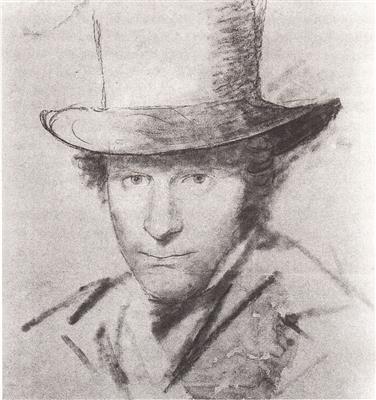
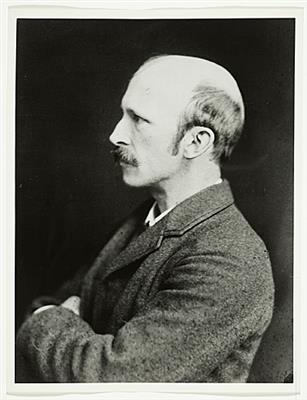
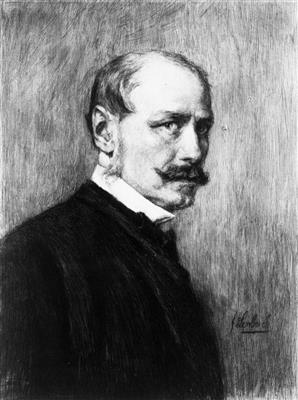
Take Adriaen van de Velde home.
See all Adriaen van de Velde prints →Frequently Asked Questions
What is Adriaen van de Velde known for?
Adriaen van de Velde is recognised for his pastoral scenes featuring herdsmen and livestock, Italianate beach and dune views, forest settings, and occasional mythological compositions. He also produced twenty etchings depicting cattle in landscapes, which were highly valued by collectors during his lifetime.What is Adriaen van de Velde's most famous work?
Adriaen van de Velde (1633-1707[2]) was a Dutch[2] painter known for both marine paintings and landscapes. His brother was Willem van de Velde, who specialised in marine painting. Adriaen, however, also painted wooded landscapes, often including animals. One of van de Velde's noted skills was his ability to depict the summertime atmosphere over woods, water, and meadows. He also produced winter scenes featuring sled riders and skaters. While it is difficult to name a single "most famous" work, River Landscape with Horses and Sheep is one example of his style. He also painted sea battles, though his marine paintings more often depicted ships at anchor. These paintings are notable for their detail, from the ships' hulls to their sails. One such painting captures a ship firing a salute, with the smoke and steam creating an atmospheric effect. A French poet described the painting as creating the impression that "nature itself had paused for a moment".What should I know about Adriaen van de Velde's prints?
Adriaen van de Velde (1636[2]-1672[2]) was a Dutch[2] Golden Age painter, draughtsman and printmaker. He is best known for his pastoral scenes with animals and figures. Although he produced paintings throughout his career, his etchings are a significant part of his artistic output. Van de Velde created around 36 etchings, mostly featuring animals; these are characterised by their delicate lines and attention to detail. His prints often depict scenes of cows, sheep, and other farm animals in open fields. He also made prints of horses, sometimes in battle scenes. These animal studies reflect the influence of Paulus Potter, a slightly older artist known for similar subjects. His prints were popular during his lifetime and have remained so with collectors. Van de Velde's skill in capturing the textures and forms of animals, combined with his ability to create atmospheric effects, made his prints highly desirable. They circulated widely and influenced other artists working in the pastoral genre. Later printmakers copied his compositions, further extending his reach.What style or movement did Adriaen van de Velde belong to?
Adriaen van de Velde belonged to the Dutch[2] Golden Age, a period broadly concurrent with the Baroque era in Europe. His father, Esaias van de Velde, was a figure in the Haarlem school. This national school focused on the local environment: villages, dunes, woods and canals. Genre paintings of the time prioritised colouristic appearance over specific objects. Esaias's paintings maintained a connection to earlier Flemish peasant paintings, where the depiction of the countryside became increasingly important. He painted hunting scenes, knightly tournaments, folk festivals, ice skating scenes and annual fairs. One might describe the sober, unpretentious pictures of van de Velde and Molijn as being evocative of the damp coastal lowlands.What techniques or materials did Adriaen van de Velde use?
Adriaen van de Velde (1636[2]-1672[2]) was a Dutch[2] Golden Age painter, draughtsman and printmaker. He is best known for his pastoral scenes with animals and figures. Van de Velde's painting technique involved careful observation and detailed execution. He often made preparatory drawings in black chalk, sometimes with touches of colour. These drawings served as studies for his paintings, allowing him to work out compositions and refine details before applying paint to the canvas. In terms of materials, Van de Velde primarily used oil paints on canvas or panel. His palette was relatively restrained, favouring earth tones and muted colours to create a sense of naturalism and atmosphere. He was skilled at rendering textures, such as the soft wool of sheep or the smooth bark of trees, through careful brushwork and layering of paint. He also produced etchings; these demonstrate his skill in translating his painterly style into a linear medium. His prints often feature the same pastoral subjects as his paintings, and they were widely collected during his lifetime.What was Adriaen van de Velde known for?
Adriaen van de Velde (1636[2]-1672[2]) was a Dutch[2] Golden Age painter, draughtsman, and printmaker. He is best known for his depictions of animals and figures within pastoral settings. Van de Velde was born in Amsterdam, the son of Willem van de Velde the Elder and brother of Willem van de Velde the Younger, both marine painters. He likely received his initial training from his father. Sources suggest he then studied with Jan Wijnants, a painter of wooded views, and potentially with Philips Wouwerman, known for his paintings of horses and battle scenes. His skills lay particularly in rendering figures and animals. He was often asked to add these elements to the paintings of other artists, including Jacob van Ruisdael, Meindert Hobbema, Jan van der Heyden, and Philips Koninck. These collaborations demonstrate the high regard for his abilities. His independent works typically feature open fields with grazing animals, often cows, sheep, and goats, attended by herdsmen or milkmaids. These paintings are characterised by a careful attention to detail and a tranquil atmosphere. Van de Velde died young, at the age of 36, but left behind a substantial body of work.When did Adriaen van de Velde live and work?
Adriaen van de Velde (the Younger) was born in 1633 and died in 1707. He was known for marine pieces, specifically portraits of ships. While he also created historical paintings depicting sea battles, his marine works stand out for their unique structure. His paintings often feature ships at anchor, a subject he rendered with remarkable detail. Van de Velde's understanding of ships was evident in his realistic depictions, from the hull to the sails. The arrangement of these meticulously rendered vessels is reminiscent of a still-life composition. One painting was described by the French poet Paul Claudel as capturing a moment where 'nature itself had paused', with the sea appearing to listen attentively to the sound of a ship firing a salute.Where can I see Adriaen van de Velde's work?
Adriaen van de Velde (1636[2]-1672[2]) was a Dutch[2] painter and draughtsman. Examples of his work can be found in numerous museums. These include the Mauritshuis in The Hague; the Hamburger Kunsthalle in Hamburg; and the Sinebrychoff Art Museum in Helsinki. Other locations include the Staatliche Kunstsammlungen in Kassel; and the Hermitage Museum in St Petersburg. Further afield, van de Velde's paintings and drawings can be viewed at the Staatliche Museen in Berlin; the Herzog Anton Ulrich-Museum in Braunschweig; and the Gemiildegalerie Alte Meister in Dresden. One may also find his works at the National Gallery of Scotland in Edinburgh; the Galleria degli Uffizi in Florence; and the Stadel Museum in Frankfurt am Main. Other places to view his work are the National Museums in Liverpool; the British Library, the British Museum, the National Gallery, the National Portrait Gallery, Tate, UCL Art Collections, and the Victoria and Albert Museum (all in London); the J. Paul Getty Museum in Los Angeles; and the Museo Thyssen-Bornemisza in Madrid.Where was Adriaen van de Velde from?
Adriaen van de Velde's father, Esaias van de Velde, was a significant figure in the Haarlem school. This artistic movement focused on depicting the local surroundings, such as villages, dunes, woods, meadows, and canals. Genre paintings from this school prioritised colouristic appearance over the importance of objects. Esaias's paintings often featured hunting scenes, knightly tournaments, folk feasts, ice-skating scenes, and annual fairs. Images by Visscher and Van de Velde depict Huis ter Kleef possibly as the earliest showing the structure in ruins. The ruins of Brederode Castle, also near Haarlem and destroyed during the Revolt, became a popular subject for artists around this time as well, beginning as early as 1600 with Goltzius’s drawing (Rijksmuseum, Amsterdam, inv. no. RP-T-1879-A-67).Who did Adriaen van de Velde influence?
The van de Velde family made an impact on marine painting. Depictions of sea battles by the van de Veldes were highly prized, satisfying the need for important subjects with contemporary relevance. Critical theory in the eighteenth century looked down on simple imitation of nature; nevertheless, Dutch[2] painting had an enormous influence. Even outside the Dutch Republic, townscape painters were surprisingly influential; their link to the Venetian *veduta* of the late seventeenth and eighteenth centuries seems clear. Esaias van de Velde, in Haarlem, was a figure of the national school that found subject matter in the surroundings: villages, dunes, woods, meadows and canals. In genre paintings they developed power and diversity in which the objects mattered little, but the colouristic appearance meant all. Esaias van de Velde painted hunting scenes and knightly tournaments, folk feasts, pleasures on the ice, annual fairs and other images.Who influenced Adriaen van de Velde?
Adriaen van de Velde came from an artistic family. His father, Willem van de Velde the Elder, was a marine painter, and his brother, Willem van de Velde the Younger, also became a well-regarded artist. Beyond his immediate family, Esaias van de Velde was an important figure. He was central to a school in Haarlem that concentrated on the local environment. This school focused on villages, dunes, woods, meadows and canals. In their genre paintings, the objects themselves were less important than their colour. Esaias painted hunting scenes, knightly tournaments, folk feasts, ice-skating scenes and annual fairs. It is worth noting that Dutch[2] painters Jan van Goyen and Aelbert Cuyp were important influences on later artists.Who was Adriaen van de Velde?
Adriaen van de Velde (1636[2]-1672[2]) was a Dutch[2] Golden Age painter, draughtsman, and printmaker. He was the son of Willem van de Velde the Elder and brother of Willem van de Velde the Younger, both marine painters. Baptised in Amsterdam on 30 November 1636[2], Van de Velde was a student of Jan Wijnants, and later of Philips Wouwerman. Early in his career, he painted mainly winter scenes. He is known for the small, carefully-observed figures and animals he added to the paintings of other artists, including Wijnants, Jacob van Ruisdael, Adriaen van Ostade, Philips Koninck, and Meindert Hobbema. His independent works often feature open fields with cattle or sheep, beach scenes, and wooded landscapes. Van de Velde's paintings are characterised by their delicate treatment of light and atmosphere, and his skill in rendering animal anatomy. He produced a number of etchings, mainly of animals, which are highly regarded. Van de Velde died in Amsterdam in 1672, at the age of 35.
Sources
Editorial draws on the following primary and tertiary references for Adriaen van de Velde.
- [1] academic Encyclopaedia Britannica, Adriaen van de Velde | Baroque, Landscapes, Seascapes - Britannica Used for: biography.
- [2] wikipedia Wikipedia: Adriaen van de Velde Used for: biography, birth dates, death dates, identifiers, movement attribution, nationality.
- [3] book Victoria Charles, Baroque Art Used for: biography.
- [4] book Masterpieces of western art : a history of art in 900 individual studies from the Gothic to the present day Used for: biography.
- [5] museum Adriaen van de Velde (1636 - 1672) | National Gallery, London Used for: biography.
Editorial overseen by Solis Prints. Sources verified 2026-09-22. Click a source for details, or hover over [N] in the page above to preview.
Editorial standardsMethodologyCorrectionsAI disclosureAbout the editorial team