



Dosso Dossi
- Italian Renaissance
- School of Ferrara
Giovanni di Niccolò de Luteri, who signed nothing and is known to posterity only by the nickname Dosso Dossi, was court painter to the Este family of Ferrara from around 1514[1] until his death in 1542[1]. He was, in the most literal sense, a painter of enchantments: his canvases are populated by magicians, gods at leisure, and landscapes lit by a sourceless amber glow that owes everything to his training in the Venetian tradition of Giorgione and the young Titian.
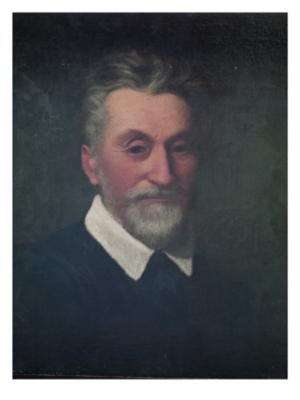
Biography
Born around 1489 or 1490[1] near Mantua, Dossi likely trained under Lorenzo Costa before gravitating toward Venice and then settling in Ferrara, where the Este court under Alfonso I d'Este was one of the most sophisticated in Italy. He served Alfonso, Lucrezia Borgia, and later Ercole II, often working alongside his brother Battista on mythological and decorative frescoes. The collaboration was productive but Dosso's individual hand is unmistakable: his figures inhabit their landscapes with a restlessness that critics from Sydney Freedberg onward have described as a kind of studied carelessness, or sprezzatura.
His most celebrated work, Circe and Her Lovers in a Landscape (c.1525[1]), exemplifies the cryptic allegorical mode he favoured. Jupiter Painting Butterflies, Mercury and Virtue, in which Jupiter literally decorates wings while Mercury removes Virtue from the scene, remains one of the more eccentric readings of classical mythology produced by any Renaissance painter. The Portrait of Alfonso I d'Este (after 1528) at the Galleria Estense in Modena, derived from a lost Titian, shows his range extended to sober portraiture as well.
Dossi died in Ferrara in 1542[1]. He is the most distinctive voice of the Ferrarese school and a bridge between Venetian High Renaissance luminosity and the Northern Italian taste for fantastical subject matter.
Timeline
- 1490Born Giovanni di Niccolò de Luteri near Mantua.
- 1514Became court painter to the Este family of Ferrara.
- 1525Painted "Circe and Her Lovers in a Landscape".
- 1528Painted "Portrait of Alfonso I d'Este", after a lost Titian.
- 1542Died in Ferrara at 52.
Notable Works
Tap to view larger.
Next stop
Browse the movements →
Every movement in the collection, from the Renaissance to Pop art.
Related Artists


Frequently Asked Questions
What is Dosso Dossi known for?
Dosso Dossi is known as a painter of enchantments. His canvases feature magicians, gods at leisure, and landscapes lit by a sourceless amber glow, influenced by his training in the Venetian tradition.What is Dosso Dossi's most famous work?
Dosso Dossi (Giovanni Luteri) was court painter for the Este family in Ferrara. He painted mythologies, portraits, and decorative frescos. His style shows the influence of Venetian art and Correggio. He lived from approximately 1490[1] to 1542[1]. One of Dossi's well-known works is *Circe and Her Lovers in a Landscape*, circa 1525[1]. The painting depicts the enchantress Circe with men transformed into animals. The artwork has been described as magical, with a touch of cruelty. Some interpret the picture as expressing sadness and desire. Another notable work is his portrait of Alfonso I d’Este, Duke of Ferrara. Gleaming armour and battalions of troops reinforce the Duke's image as a great military leader. The portrait, after 1528, is an oil on canvas. The style of the portrait is derived from a portrait of Alfonso by Titian. Dossi was commissioned to add features of the gods to Titian's *The Feast of the Gods*.What should I know about Dosso Dossi's prints?
Dosso Dossi, born Giovanni de Luteri in Ferrara around 1486, was an Italian Renaissance[1] painter. He is not particularly known for printmaking. He primarily produced paintings, many of which are large-scale mythological scenes and altarpieces. While Dossi's paintings are well documented, prints connected to him are scarce. It is more accurate to consider him as a painter who may have influenced printmakers, rather than a printmaker himself. Any prints related to Dossi would likely be reproductions of his paintings, created by other artists. These reproductions would aim to circulate his compositions to a wider audience. If you encounter a print attributed to Dosso Dossi, examine it carefully. Verify its provenance and compare it to known paintings and drawings by the artist. Check if it is a later reproduction. Major museums and art databases are useful resources for confirming attributions. Be aware that misattributions are common, especially with older prints.What style or movement did Dosso Dossi belong to?
Dosso Dossi (Giovanni Luteri) was an Italian painter from Ferrara, active around 1490[1] to 1542[1]. He served as court painter for the Este family, producing mythologies, portraits, and decorative frescos. Alfonso I d’Este, Duke of Ferrara, employed Dossi, but was never able to secure Raphael or Michelangelo. Dossi's style shows the influence of Venetian art and Correggio. His portraiture is similar to work by Titian. He later painted mysterious, exotic scenes with glowing light. One example is *Circe and Her Lovers in a Landscape*. Some believe Lucrezia Borgia inspired this work. She presided over a lively court as wife of the Duke of Ferrara and was a patron to a number of artists, including Dossi.What techniques or materials did Dosso Dossi use?
Dosso Dossi's artistic practice involved a combination of established methods and personal experimentation. He is known for his handling of colour and light, often creating atmospheric effects in his paintings. Dossi employed oil paint, a common medium during the Renaissance, allowing for layering and blending. Some scholars suggest he may have been influenced by Venetian painting techniques, which emphasised colourism. However, records of his specific studio practices are scarce. Analysis of his paintings reveals an interest in surface texture. He sometimes used thick impasto, building up layers of paint to create a tactile quality. This is particularly evident in details such as drapery or foliage. Dossi's drawings, often preparatory studies for larger works, show his skill in draughtsmanship. These drawings, executed in chalk or ink, demonstrate his careful planning of compositions and figures. While the exact recipes for his paints and varnishes remain unknown, scientific analysis continues to shed light on the materials he used.What was Dosso Dossi known for?
Dosso Dossi (c. 1486-1542[1]) was an Italian Renaissance[1] painter who worked primarily in Ferrara. He is best known for his mythological and allegorical scenes, and for his distinctive, often eccentric, style. Dossi, along with his brother Battista, ran a workshop that produced paintings for the Este court. His style is characterised by its use of colour, imaginative compositions, and interest in representing nature. He blended influences from Venetian painting, particularly Giorgione and Titian, with elements of Mannerism and the Ferrara School. Some of his well-known works include "Allegory of Fortune" (Getty Center, Los Angeles), which shows a female figure surrounded by symbols of chance and destiny, and "Melissa" (Galleria Borghese, Rome), a depiction of the sorceress from Ariosto's "Orlando Furioso". These paintings display Dossi's interest in literary themes and his ability to create atmospheric, dreamlike settings. He also painted religious subjects and portraits, although these are less common in his output. Dossi's work is admired for its originality and its contribution to the development of painting in northern Italy.When did Dosso Dossi live and work?
Dosso Dossi (Giovanni de Luteri) was an Italian Renaissance[1] painter. He lived from approximately 1486 to 1542[1]. His career centred on Ferrara, Italy. He worked for the Este court, beginning around 1514[1]. Dosso’s brother Battista Dossi also worked as a painter; the two collaborated on many projects. Dosso’s early style shows the influence of Venetian painting, particularly Giorgione and Titian. Later in his career, he adopted elements of Central Italian art, such as the work of Raphael and Michelangelo. Dosso is known for his mythological and allegorical scenes, often featuring unusual colour combinations and fantastical elements. His paintings include "Allegory of Fortune" (c. 1530), "Melissa" (c. 1518-1520[1]), and "Saint John the Evangelist on Patmos" (c. 1540). These works demonstrate his distinctive style, blending Venetian colourism with Central Italian compositional ideas. Dosso’s art represents a unique moment in Italian Renaissance painting.Where can I see Dosso Dossi's work?
Dosso Dossi's paintings are held in collections across Europe and the United States. Many are in Italy, particularly in galleries that once belonged to the Dukes of Ferrara, for whom he worked. The Galleria Borghese, in Rome, has Dossi's painting *Melissa* (circa 1516[1]-1518[1]), depicting the sorceress from Ariosto's *Orlando Furioso*. The Galleria Doria Pamphilj, also in Rome, holds his *Allegory of Fortune*. In Ferrara itself, the Pinacoteca Nazionale features several of his works. These include paintings detached from the walls and ceilings of the Castello del Buonconsiglio, in Trent. These paintings include mythological scenes, such as *Pan and the Nymphs*. Other Italian museums with paintings by Dossi include the Uffizi Gallery, in Florence; the Pinacoteca di Brera, in Milan; and the Museo di Capodimonte, in Naples. Outside Italy, the Gemäldegalerie, in Berlin, has his *Jupiter, Mercury and Virtue* (circa 1523-24). The Kunsthistorisches Museum, in Vienna, has *Hercules at the Crossroads* (circa 1544). In the United States, the Metropolitan Museum of Art, in New York, holds Dossi's *Allegory of Hercules* (circa 1535).Where was Dosso Dossi from?
Dosso Dossi's precise place of birth is uncertain. It is thought he was born in or near Ferrara, Italy. Some sources suggest the village of Tramuschio, near Mantua, as his birthplace; others favour Mirandola. These towns were part of the Duchy of Ferrara during his lifetime. His birth year is also debated, but it is usually placed around 1486. Details of his early life and training are scarce. It is assumed he trained locally, perhaps with Lorenzo Costa or in Venice, before entering the service of the Este court in Ferrara. Ferrara was a significant centre for the arts and humanist learning during the Renaissance. Dosso and his brother, Battista, worked extensively for Duke Alfonso I d'Este. Dosso remained associated with Ferrara throughout his career, and he died there in 1542[1].Who did Dosso Dossi influence?
Dosso Dossi's influence is most apparent in the work of later Ferrarese painters. His style, characterised by its atmospheric effects and colouristic experimentation, affected artists working in the region during the 16th century. One notable example is Giovanni Battista Benvenuti, called l'Ortolano. Although l'Ortolano's style is also linked to early 16th-century Bolognese classicism, the influence of Dosso's approach to colour and light is evident in his paintings. Another artist who absorbed elements of Dosso's style was Garofalo (Benvenuto Tisi). Garofalo, who had already synthesised elements from Lorenzo Costa and Raphael, incorporated Dosso's painterly handling and interest in representing nature. Dosso's impact can be seen in Garofalo's later mythological subjects. Dosso's studio practice also played a role in disseminating his style. His brother, Battista Dossi, collaborated with him on many commissions and continued to produce work in a similar vein after Dosso's death. This ensured that Dosso's artistic vision remained present in Ferrarese art for several decades.Who was Dosso Dossi?
Dosso Dossi (Giovanni Luteri, born circa 1490[1], died 1542[1]) was an Italian painter from Ferrara. He served as court painter for the Este family, alongside his brother Battista Dossi, producing mythologies, portraits, and decorative frescos. Dosso's style shows the influence of Venetian art and Correggio. He later painted mysterious, exotic scenes with glowing light. Alfonso d’Este, Duke of Ferrara, employed Dossi as his principal court painter. Alfonso was a military leader and a patron of the arts who sought to rival the Pope in commissioning work from leading artists. Although Alfonso was never able to secure Raphael or Michelangelo, he did commission Titian to paint him; Dossi's portrait style is derived from Titian's. When Titian used the wrong text in his painting, Alfonso ordered Dossi to add divine attributes and adjust the garments of the nymphs. Dossi’s painting *Circe and Her Lovers in a Landscape* (circa 1525[1]) is a magical work that some believe was inspired by Lucrezia Borgia.Why are Dosso Dossi's works important today?
Dosso Dossi, born Giovanni de Luteri (c. 1489-1542[1]), was a painter working in Ferrara, Italy. He is important for his distinctive style, which blended Venetian colourism with the influence of northern European art. Dosso's importance lies in his unique artistic vision. He moved away from the strict classicism of the High Renaissance. Instead, he explored more imaginative and fantastical themes. His paintings often feature mythological subjects, rendered with a sense of whimsy and atmospheric effects. He used colour to create mood and drama. This approach set him apart from his contemporaries in Rome and Florence. His work provides insight into the cultural milieu of the Ferrarese court. Ferrara was a centre of artistic innovation during the Renaissance. Dosso's paintings reflect the court's interest in humanist learning, mythology, and spectacle. His influence can be seen in the work of later artists who embraced similar styles. He left a body of work that continues to fascinate art historians and enthusiasts today.
Sources
Editorial draws on the following primary and tertiary references for Dosso Dossi.
- [1] wikipedia Wikipedia: Dosso Dossi Used for: biography, birth dates, death dates, identifiers, movement attribution, nationality.
- [2] book Beard, Lee, 1973- author, Butler, Adam, author; Van Cleave, Claire, author; Fortenberry, Diane, author; Stirling, Susan, author, Beard, Lee, 1973- author, Butler, Adam, author; Van Cleave, Claire, author; Fortenberry, Diane, author; Stirling, Susan, author - The Art Book_ New Edition, Mini Format Used for: biography, stylistic analysis.
- [3] book Beckett, Wendy, The story of painting Used for: biography, stylistic analysis.
Editorial overseen by Solis Prints. Sources verified 2026-09-19. Click a source for details, or hover over [N] in the page above to preview.
Editorial standardsMethodologyCorrectionsAI disclosureAbout the editorial team