



Andrea del Castagno
- Italian Renaissance
At around 17, Andrea del Castagno received his first major commission: to paint portraits of men hanged in effigy for conspiring against the Medici. The work earned him a nickname that followed him for the rest of his short life: "Andreino degli impiccati" (Andrea of the hanged men). Nothing better illustrates the intensity that defined his brief career.
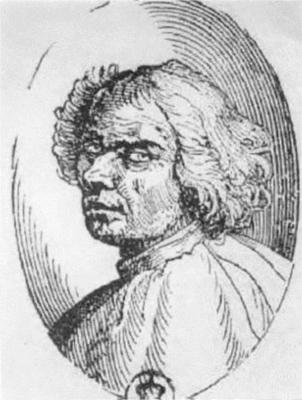
Biography
Born around 1421[1] in the village of Castagno, he trained in Florence and emerged as one of the most physically powerful painters of the Early Renaissance. Where his contemporaries softened the human form, Castagno carved it: his figures are muscular, sharply lit, and sculptural in their conception. The Last Supper (c. 1447) in the refectory of Sant'Apollonia is among his finest achievements. Judas sits alone on the near side of the table in the medieval tradition, but the composition's real drama lies in the marble panels above the central group: five panels are subdued, while three above Judas, Christ, and St Peter are veined with "garish and explosive" patterns, as if a bolt of lightning were descending on the traitor's head.
His Uomini Famosi cycle (c. 1450) for the Villa Pandolfini at Legnaia, now in the Uffizi, displays the full ambition of his approach: larger-than-life figures of mercenary generals, poets, and mythological queens project forward from painted architecture, their physicality anticipating Michelangelo's Sistine ceiling by half a century. The Young David (c. 1450-1457[1], National Gallery of Art, Washington, 45.5 x 30.75 in., tempera on leather) was painted on a parade shield and survives as an exceptional rarity, since such objects were never made to last.
The story long told of Castagno murdering his colleague Domenico Veneziano out of professional jealousy is false: Veneziano outlived him. In 1457[1], at around 36, Castagno died of plague.
Timeline
- 1421Born in Castagno.
- 1438Received his first major commission, at around 17, to paint portraits of men hanged in effigy for conspiring against the Medici. This earned him the nickname "Andreino degli impiccati".
- 1447Completed "The Last Supper" in the refectory of Sant'Apollonia.
- 1450Created the "Uomini Famosi" cycle for the Villa Pandolfini at Legnaia; it is now in the Uffizi.
- 1450Painted "Young David", now held at the National Gallery of Art, Washington.
- 1457Died of plague, at around 36.
Notable Works
Tap to view larger.
Next stop
Browse the movements →
Every movement in the collection, from the Renaissance to Pop art.
Related Artists

Frequently Asked Questions
What is Andrea del Castagno known for?
Andrea del Castagno is known for his physically powerful paintings. His figures are muscular, sharply lit, and sculptural.What is Andrea del Castagno's most famous work?
Andrea del Castagno's most famous work is The Last Supper, a fresco painted around 1447. It is the best-preserved of a series of frescos he created for the refectory (dining hall) of the convent of Sant' Apollonia in Florence. The fresco depicts the biblical scene of Holy Thursday. Jesus dines with his apostles and reveals that he will be betrayed. Castagno sets the scene within a panelled alcove, framed by classical pilasters and antique decorative elements. He employs perspective to create a stage-like space. Strong contrasts of light and shadow define the figures seated around the table. Judas is seated alone on the near side, a convention of medieval depictions. The symmetry of the architecture, with colourful inlays, orders the figures. This symmetry is disrupted by the marble panelling behind the table. Above the heads of St Peter, Judas, and Jesus, the marble veining is unusually patterned, resembling a bolt of lightning descending on Judas' head. This directs attention to these figures. Such scenes were common in Florentine refectories, providing examples for the monks or nuns as they dined.What should I know about Andrea del Castagno's prints?
Andrea del Castagno was born in Castagno around 1421[1] and died in Florence in 1457[1]. He is known for his focus on the human form, and for strong, powerful figures. Some sources once falsely claimed that he brutally murdered his teacher. Prints of Castagno's work are often details from his frescos. He completed a series of frescos of famous men in the Villa Pandolfini, Legnaia, around 1450. One example is *Farinata degli Uberti*, now in the Galleria degli Uffizi, Florence. He painted a *Resurrection* fresco and a *Trinity and St Jerome* fresco. Castagno also worked in tempera on panel and on treated cloth. *The Young David* (c. 1450-7), in the National Gallery of Art, Washington, DC, is tempera on leather mounted on panel. It was made as a shield to be carried in festive processions. Few such decorations from fifteenth-century Italy survive.What style or movement did Andrea del Castagno belong to?
Andrea del Castagno, who died in Florence in 1457[1], is usually categorised as an Early Renaissance artist. He worked in Florence, and his art shares characteristics with other Florentine artists of the period. Castagno is known for his strong, powerful figures. One can see this in *The Young David*, painted on a leather shield. The painting embodies the qualities of power and strength valued by Florentines at the time. He also painted a fresco cycle of *Uomini famosi* (Famous Men) around 1450 for the Villa Pandolfini, near Florence. These larger-than-life figures included historical, mythological, and artistic personalities, reflecting early humanism. His *Last Supper* fresco in the convent of St Apollonia, Florence, displays the Renaissance shift towards focusing on humanity. The faces of the Apostles powerfully express their thoughts. Although Castagno's figures can seem static, his later work, *Youthful David*, is full of drama and action.What techniques or materials did Andrea del Castagno use?
Andrea del Castagno worked primarily in fresco, a technique of painting on wet plaster. This required careful planning and swift execution, as the artist had to complete a section of the painting, known as a giornata, before the plaster dried. Preparatory drawings, called sinopie, have been found beneath Castagno's frescoes; these under-drawings reveal his working process. He employed cartoons, full-scale drawings, to transfer his compositions onto the wall. The outlines were marked using a technique called spolvero, dusting charcoal through holes pricked in the cartoon. Castagno's style is characterised by strong, sculptural figures. He paid less attention to nature, concentrating on the human form. One of his unusual works is *The Young David*, painted in tempera on a leather shield. Such shields were made for festive processions in Florence.What was Andrea del Castagno known for?
Andrea del Castagno, who died in Florence in 1457[1], is known for his strong, powerful figures and his sculptural approach to painting. He concentrated on the human form, with little interest in nature or setting. Around 1447, Castagno painted his most famous fresco, The Last Supper, in the refectory of a convent. The scene is set in a paneled alcove with classical pilasters. Castagno used perspective to create a stage-like space, and strong contrasts of light and dark define the figures. The symmetry of the architecture imposes order on the figures, but there is little communication between them. Around 1450, Castagno executed a fresco cycle of Uomini famosi (Famous Men) in the Villa Pandolfini in Legnaia, near Florence. These larger-than-life figures include historical, mythological, and artistic personalities such as Niccolo Acciaiuoli, Dante, Petrarch, and the Cumaean Sibyl. The theme dates back to Petrarch, but it took on a particular relevance during the Early Renaissance, celebrating great individuals. He also painted The Young David around 1450. It is painted on a leather shield, intended to be carried through the streets of Florence during festive processions.When did Andrea del Castagno live and work?
Andrea del Castagno was born in Castagno around 1421[1] and died in Florence in 1457[1]. He was active as a painter in Florence during the early to mid-15th century. Castagno was commissioned to provide imagery for the Benedictine convent of Sant’ Apollonia. Around 1447, he painted *The Resurrection* and two Passion scenes for the convent's refectory. These frescos were discovered in 1890, underneath whitewash. The detachment of the damaged frescos in 1953 disclosed well-preserved sinopie (underdrawings). His *Farinata degli Uberti*, a fresco dating from about 1450, is now held in the Galleria degli Uffizi in Florence. He is known for his strong, powerful figures. He focused on the human form, paying little attention to either nature or setting. He painted *The Young David* around 1450 to 1457 on a leather shield. It is now in the National Gallery of Art, Washington, D.C.Where can I see Andrea del Castagno's work?
Andrea del Castagno was born in Castagno around 1421[1] and died in Florence in 1457[1]. He is known for his focus on the human form and his powerful figures. One of Castagno's works, *The Young David*, can be seen at the National Gallery of Art in Washington, DC. This piece, executed in tempera on leather mounted on panel, depicts David with the head of Goliath. It embodies the strength and spirit valued by Florentines, who identified with David's triumph over the giant. These types of festive decorations were common in fifteenth-century Italy. While some sources once falsely claimed that Castagno murdered his teacher, it is now known that this is untrue.Where was Andrea del Castagno from?
Andrea del Castagno was born in Castagno, near Monte Falterona, around 1421[1]. He died in Florence in 1457[1]. Active primarily in Florence, Castagno secured commissions from important religious institutions. Like Fra Angelico, he was hired to decorate Florentine convents with appropriate imagery. For example, he completed work at the Benedictine convent of Sant’Apollonia. Around 1450, Castagno executed a fresco cycle of *Uomini famosi* (Famous Men and Women) in a room at the Villa Pandolfini in Legnaia, near Florence. These larger-than-life figures represent a mix of historical, mythological, and artistic personalities, aligning with early humanist thought. The series included the mercenary leaders Niccolo Acciaiuoli, Farinata, and Pippo Spano, poets Dante, Petrarch, and Boccaccio, the Cumaean Sibyl, and queens Esther and Tomyris. The theme dates back to Petrarch in the early 14th century.Who did Andrea del Castagno influence?
Andrea del Castagno (c. 1421[1]-1457[1]) was part of a group of Florentine artists, including Paolo Uccello and Domenico Veneziano, who experimented with new techniques. Castagno, in particular, explored anatomy and how to represent mass and distance through light and shadow. Masaccio's innovations in chiaroscuro influenced these artists, who spent the better part of the 15th century mastering it. Castagno's frescoes, such as the cycle of "Famous Men and Women" (c. 1450) in the Villa Pandolfini, demonstrate his interest in painted sculpture. These larger-than-life figures, drawn from history, mythology, and art, embody early humanist ideals. The figures project forward, blurring the line between the pictorial and real. His work prefigures Michelangelo's Sistine Chapel ceiling, where painted sculpture found an even more convincing form. Other artists from the period include Botticelli, Donatello, Ghiberti, Ghirlandaio, and Signorelli.Who influenced Andrea del Castagno?
Andrea del Castagno (c. 1421[1]-1457[1]) was a Florentine painter whose work displays the artistic values admired at the time: power and strength. He is known for his concentration on the human form, sometimes to the exclusion of background details. His paintings, particularly his frescos, show a sculptural approach. Castagno painted a cycle of frescos of famous men and women around 1450 for the Villa Pandolfini in Legnaia, near Florence. These figures, larger than life, included leaders, poets, and mythological figures, reflecting early humanist thought. The theme of celebrating great individuals can be traced back to Petrarch in the early 14th century. Some scholars note the figures appear to project forward, crossing the boundary between the pictorial and real space. Masaccio, and Donatello, one of the greatest sculptors in the history of Italian art, also influenced Castagno.Who was Andrea del Castagno?
Andrea del Castagno was an Italian painter working during the early Renaissance. Born around 1421[1] in Castagno, near Florence, he died in Florence in 1457[1]. Castagno is known for his powerful figures and his interest in perspective. He was commissioned to produce a series of frescos for the Benedictine convent of Sant' Apollonia in Florence. His *Last Supper*, painted in the refectory (dining hall), demonstrates his absorption with creating the illusion of three-dimensional space. The lavishly painted space suggests this, but closer inspection reveals inconsistencies. He painted *The Young David*, an image of David with the head of Goliath, on a leather shield. These shields were made to be carried through the streets of Florence during festive processions. He also painted *Farinata degli Uberti*, a fresco now located in the Galleria degli Uffizi in Florence.
Sources
Editorial draws on the following primary and tertiary references for Andrea del Castagno.
- [1] wikipedia Wikipedia: Andrea del Castagno Used for: biography, birth dates, death dates, identifiers, movement attribution, nationality.
- [2] book Beard, Lee, 1973- author, Butler, Adam, author; Van Cleave, Claire, author; Fortenberry, Diane, author; Stirling, Susan, author, Beard, Lee, 1973- author, Butler, Adam, author; Van Cleave, Claire, author; Fortenberry, Diane, author; Stirling, Susan, author - The Art Book_ New Edition, Mini Format Used for: biography, stylistic analysis.
- [3] book Penelope J.E. Davies, Walter B. Denny, Frima Fox Hofrichter, Joseph Jacobs, Ann S. Roberts, David L. Simon, Janson's History of Art_ The Western Tradition (8th Edition) Used for: biography.
- [4] book Masterpieces of western art : a history of art in 900 individual studies from the Gothic to the present day Used for: biography, stylistic analysis.
- [5] book Meiss, Millard, The great age of fresco; discoveries, recoveries, and survivals Used for: biography, stylistic analysis.
Editorial overseen by Solis Prints. Sources verified 2026-09-19. Click a source for details, or hover over [N] in the page above to preview.
Editorial standardsMethodologyCorrectionsAI disclosureAbout the editorial team