



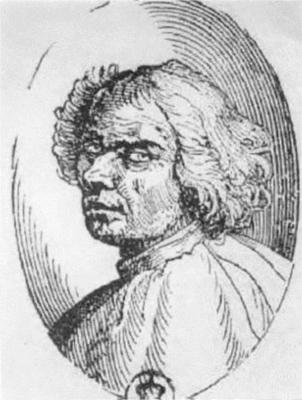
Domenico Ghirlandaio
- Italian Renaissance
The most consequential act of Domenico Ghirlandaio's career may have been hiring a thirteen-year-old boy. Around 1488, the young Michelangelo Buonarroti entered his Florentine workshop, learning the fresco techniques he would later deploy on the Sistine ceiling. Ghirlandaio, who died in 1494[2], never knew quite what he had set in motion.
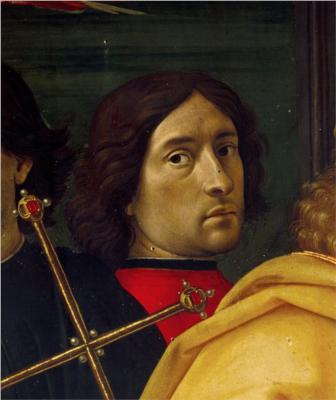
Biography
Born Domenico di Tommaso Bigordi in Florence in 1449[2], he acquired the nickname 'Ghirlandaio' (garland-maker) from his goldsmith father, celebrated for fashioning the ornamental metal garlands worn by fashionable Florentine women. After training under the painter Alessio Baldovinetti, probably with further tuition under Andrea del Verrocchio, he established one of Florence's most commercially successful workshops alongside his brothers.
In 1481, Pope Sixtus IV called him to Rome to contribute frescoes to the Sistine Chapel, where he worked alongside Botticelli, Perugino, and Cosimo Rosselli. His panels from the Life of St Peter brought him considerable prestige, and commissions from the Florentine banking aristocracy followed. The Tornabuoni Chapel in Santa Maria Novella, completed around 1490, is his masterpiece: two complete fresco cycles depicting the lives of the Virgin and St John the Baptist, filled with lifelike portraits of the Tornabuoni family and their circle.
Ghirlandaio's style was conservative by the standards of his generation: he preferred fresco and tempera over oils, drew heavily on Masaccio, and had an eye for the flattering portraiture that kept wealthy patrons satisfied. He died in 1494[2] at forty-four, leaving an enduring legacy not only in his own fresco cycles but in the career of the pupil who outlived him by more than seven decades.
Timeline
- 1449Born Domenico di Tommaso Bigordi in Florence. He was the son of a goldsmith.
- 1481Called to Rome by Pope Sixtus IV to paint frescoes in the Sistine Chapel alongside Botticelli, Perugino, and Cosimo Rosselli.
- 1481Painted panels from the Life of St Peter in the Sistine Chapel, Rome.
- 1488Michelangelo Buonarroti, at 13, entered Ghirlandaio's Florentine workshop as an apprentice.
- 1490Completed the Tornabuoni Chapel in Santa Maria Novella, Florence, featuring fresco cycles depicting the lives of the Virgin and St John the Baptist.
- 1494Died in 1494 at 44, leaving behind fresco cycles and having trained Michelangelo.
Notable Works
Tap to view larger.
Where to See Domenico Ghirlandaio
1 museum worldwide.
-
 2 works
The Huntington Library, Art Museum, and Botanical Gardens
San Marino, United States
Next stop
Browse the movements →
Every movement in the collection, from the Renaissance to Pop art.
Domenico Ghirlandaio prints
Hand-finished archival prints from Domenico Ghirlandaio's body of work.
 The Adoration of the Magi - Domenico Ghirlandaio
From £37.00
The Adoration of the Magi - Domenico Ghirlandaio
From £37.00
 Portrait of Francesco Sassetti and his Son Teodoro - Domenico Ghirlandaio
From £37.00
Portrait of Francesco Sassetti and his Son Teodoro - Domenico Ghirlandaio
From £37.00
 Angel Appearing to Zacharias - Domenico Ghirlandaio
From £28.00
Angel Appearing to Zacharias - Domenico Ghirlandaio
From £28.00
 St. John the Baptist in the Desert - Domenico Ghirlandaio
From £28.00
St. John the Baptist in the Desert - Domenico Ghirlandaio
From £28.00
 Portrait of the Donor Nera Corsi Sassetti - Domenico Ghirlandaio
From £28.00
Portrait of the Donor Nera Corsi Sassetti - Domenico Ghirlandaio
From £28.00
 Adoration of the Shepherds - Domenico Ghirlandaio
From £28.00
Adoration of the Shepherds - Domenico Ghirlandaio
From £28.00
Related Artists
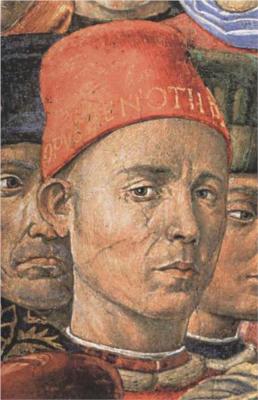
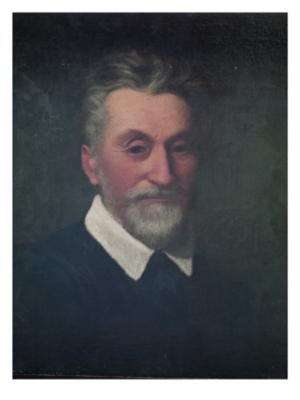
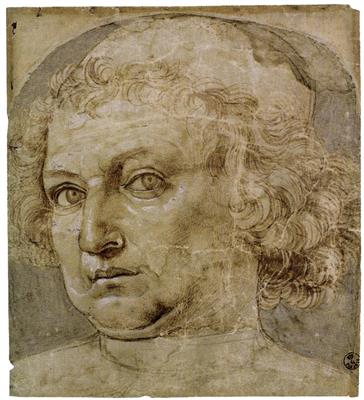


Take Domenico Ghirlandaio home.
See all Domenico Ghirlandaio prints →Frequently Asked Questions
What is Domenico Ghirlandaio known for?
Domenico Ghirlandaio was a successful Florentine painter. He is known for his lifelike scenes, such as the Visitation, which depicts Mary visiting her cousin Elizabeth.What should I know about Domenico Ghirlandaio's prints?
Domenico Ghirlandaio (1449[2]-1494[2]) was a Florentine master painter active during the time of Lorenzo de Medici. He initially trained as a goldsmith in his father's workshop. Later, Ghirlandaio apprenticed with Alesso Baldovinetti, a painter and mosaicist with a studio outside the Faenza gate. Ghirlandaio's earliest works include paintings for the Vespucci family chapel in the church of Ognissanti, Florence. Giorgio Vasari mentions a "Dead Christ" and a "Madonna della Misericordia", noting that Ghirlandaio included a likeness of Amerigo Vespucci in the latter. It is estimated that this commission was completed by 1472. In 1475, Ghirlandaio and his brother decorated the Vatican library, during the renovation initiated by Pope Sixtus IV, who had been elected in 1471. Ghirlandaio repainted the Capella Maggiore in Santa Maria Novella, replacing Andrea Orgagna's damaged work. Vasari praised its colours, skillful handling, and limited use of retouching. Ghirlandaio also painted a chapel for Giovanni Tornabuoni at his villa, Casa Macherelli, near Florence. Additionally, for the convent of II Palco fuori di Prato, Ghirlandaio painted a "Madonna Enthroned", commissioned on 20 August 1490, for which he received thirty-five gold florins.What style or movement did Domenico Ghirlandaio belong to?
Domenico Ghirlandaio (1449[2]-1494[2]) was a Florentine painter of the Early Renaissance. He is known for his descriptive frescoes and for training Michelangelo in fresco techniques. Ghirlandaio's nickname came from his goldsmith father, who made garland necklaces popular with Florentine women. His paintings embody the accomplishments of 15th-century Florentine art. These include clear spatial representation, statuesque figures, and logical relations among the figures and objects. Ghirlandaio consolidated existing techniques rather than developing new ones. He preferred fresco and tempera, rarely using oils. He was inspired by Masaccio and Flemish painters. His workshop was one of the most successful in Florence. His frescoes often included portraits of his patrons. For example, his cycle of frescoes at Santa Maria Novella includes members of the Tornabuoni family.What techniques or materials did Domenico Ghirlandaio use?
Domenico Ghirlandaio, a Florentine painter of the Early Renaissance, employed a range of techniques and materials common to his era. He is mainly known for his frescoes, large-scale paintings on plaster, often used for decorating church interiors. Ghirlandaio’s fresco technique involved applying pigments to wet plaster (intonaco), allowing the colours to bind chemically as the plaster dried. This method ensured the painting became an integral part of the wall. He also used the secco method, applying paint to dry plaster, which allowed for finer detail but was less durable. For panel paintings, Ghirlandaio typically used tempera, a fast-drying painting medium made from egg yolk, pigment, and water. This produced a matte finish and allowed for precise brushwork. Ghirlandaio prepared his panels with gesso, a white ground that provided a smooth surface for painting. He sometimes used oil glazes to add depth and luminosity to his tempera paintings. Drawings were a fundamental part of Ghirlandaio's practice. He used charcoal and chalk for preparatory sketches, working out compositions and figures before transferring them to the final painting surface.What was Domenico Ghirlandaio known for?
Domenico Ghirlandaio (1449[2]-1494[2]) was a Florentine painter of the Early Renaissance. He led a large and productive workshop; his brothers Davide and Benedetto, and his son Ridolfo, all collaborated with him. Michelangelo was apprenticed to Ghirlandaio for a year, but did not adopt his master's style. Ghirlandaio is known for his frescoes, particularly narrative cycles depicting the lives of saints or scenes from the Bible. His work is characterised by clear, well-organised compositions and realistic details. He often included portraits of contemporary Florentine citizens in his religious scenes; this practice provides valuable insights into the society and culture of Florence during the late 15th century. Major commissions include the fresco cycles in the Sassetti Chapel of Santa Trinita (1480-1485[2]) and the Tornabuoni Chapel in Santa Maria Novella (1485-1490). The Sassetti Chapel includes scenes from the life of St. Francis; the Tornabuoni Chapel depicts the lives of the Virgin Mary and St. John the Baptist. Ghirlandaio also produced panel paintings, altarpieces, and portraits; these demonstrate his skill in oil and tempera techniques. His art represents a high point of Florentine painting before the High Renaissance.When did Domenico Ghirlandaio live and work?
Domenico Ghirlandaio was born in Florence in 1449[2], during the age of Lorenzo de Medici, and died in 1494[2]. After initial training as a goldsmith in his father's workshop, he became apprenticed to Alesso Baldovinetti, a painter and mosaicist with a studio outside the Faenza gate. It is uncertain whether his earliest works were independent or as part of Baldovinetti's staff. His first presumed works were paintings for the Vespucci family chapel in the church of Ognissanti, Florence, possibly around 1472. These included a "Dead Christ" and a "Madonna della Misericordia". The first securely dated point in Ghirlandaio's career is 1475. In that year, he and his brother were decorating the Vatican library, as commissioned by Pope Sixtus IV. Later, Ghirlandaio received a commission from Francesco Tornabuoni to paint his chapel in Santa Maria sopra Minerva, Rome, with scenes from the lives of the Virgin and St John the Baptist. By 1482, he had returned to Florence, which became his base for several years. By 20 May 1483, Ghirlandaio received a commission to paint an altarpiece for the Palace chapel.Where was Domenico Ghirlandaio from?
Domenico Ghirlandaio was a Florentine painter of the early Italian[2] Renaissance. He was born Domenico di Tommaso di Currado di Doffo Bigordi in Florence, in 1449[2]. Giorgio Vasari, in his *Lives of the Artists*, wrote that Ghirlandaio was nicknamed for his skill in creating garlands for the fashionable young women of Florence; *ghirlanda* is Italian for "garland". Ghirlandaio headed a large and productive workshop in Florence. His brothers Davide and Benedetto Ghirlandaio were also painters and worked with him. His workshop trained many artists, including Michelangelo. Ghirlandaio's paintings are known for their clear, balanced compositions and realistic portraits of Florentine citizens. He died in Florence in 1494[2] and was buried in the church of Santa Maria Novella. His son Ridolfo Ghirlandaio also became a painter.Who did Domenico Ghirlandaio influence?
Domenico Ghirlandaio's work had an impact on later artists, though perhaps not always in a positive way. Domenico di Bartolomeo, active in Perugia, borrowed from Andrea del Sarto. Domenico's Madonna and Child figures show knowledge of del Sarto's Madonna of the Harpies (painted in 1517) and the Porta Pinti Madonna, a fresco from 1520 that is now lost. Domenico paid close attention to Mary's posture in del Sarto's fresco. A design for an Adoration of the Magi by del Sarto appears in several of Domenico's later works. These include a major altarpiece of 1537 to 1544, representing the Holy Family with Saints Francis and Anthony of Padua from the church of San Francesco al Prato, Perugia, for which he borrowed the Madonna and Child. Del Sarto's composition survives in a drawing at the Louvre and in a modello in the Uffizi, which John Shearman dated to around 1521 to 1522. Domenico used the modello for his later Adoration of the Magi, completed in 1545.Who influenced Domenico Ghirlandaio?
Domenico Ghirlandaio (1449[2]-1494[2]) was a Florentine painter known for his descriptive frescoes and for training Michelangelo in fresco techniques. Ghirlandaio's initial artistic training was with Alessio Baldovinetti (1425-99), where he studied painting and mosaic. It is also probable that he trained for a time with Andrea del Verrocchio (1435-88), who was a painter and sculptor. Ghirlandaio's style was somewhat conservative compared to some contemporaries. He favoured fresco and tempera, rather than oils. His work shows inspiration from Masaccio and also from Flemish painters. In 1481, Ghirlandaio received a commission to produce frescoes for the library of Pope Sixtus IV in Rome, and also for part of the Sistine Chapel. He ran a successful workshop in Florence with his younger brothers. Ghirlandaio's frescoes were popular, in part because they often contained portraits of his patrons.Who was Domenico Ghirlandaio?
Domenico Ghirlandaio (1449[2]-1494[2]) was a Florentine painter of the Early Renaissance. He led a large and productive workshop, training artists including his brothers Davide and Benedetto, his son Ridolfo, and, according to Giorgio Vasari, Michelangelo. Ghirlandaio developed a style that combined careful naturalism, portraiture, and compositional clarity. He is known for his frescoes, particularly those in the Sassetti Chapel of Santa Trinita (1480s) and the Tornabuoni Chapel in Santa Maria Novella (1485-1490[2]), both in Florence. These cycles depict scenes from the lives of Saint Francis and the Virgin Mary, respectively. They also include portraits of contemporary Florentine citizens. His paintings show an interest in classical antiquity, seen in the architectural backgrounds and decorative elements of his works. Ghirlandaio also produced altarpieces and panel paintings, such as the "Adoration of the Magi" (1485-1488) in the Uffizi Gallery. His work represents the artistic values of Florence during the time of Lorenzo de' Medici. He died in Florence in 1494 and was buried in Santa Maria Novella.Why are Domenico Ghirlandaio's works important today?
Domenico Ghirlandaio (1449[2]-1494[2]) was a Florentine painter of the Early Renaissance. He led a large workshop, and his paintings are important as records of life in Florence during that period. Ghirlandaio is known for his frescoes, particularly those in the Sassetti Chapel of Santa Trinita, and the Tornabuoni Chapel in Santa Maria Novella, both in Florence. These works depict scenes from the lives of St. Francis and the Virgin Mary, respectively. They also include portraits of contemporary Florentine citizens. For example, his "Confirmation of the Rule" shows a gathering of the Medici family and their associates. These portraits offer insights into the appearance and fashions of the Florentine elite. His attention to detail and realistic portrayal of people and settings make his paintings valuable historical documents. Ghirlandaio's influence can be seen in the work of his pupils, most notably Michelangelo. Although overshadowed by some of his contemporaries and students, Ghirlandaio's art provides a window into the social and cultural context of Renaissance Florence.What was Domenico Ghirlandaio's art style?
Domenico Ghirlandaio's style was conservative for his time. He favoured fresco and tempera over oils, drew inspiration from Masaccio, and possessed a talent for flattering portraiture, which pleased his wealthy patrons.
Sources
Editorial draws on the following primary and tertiary references for Domenico Ghirlandaio.
- [1] museum The Huntington Library, Art Museum, and Botanical Gardens Used for: museum holdings.
- [2] wikipedia Wikipedia: Domenico Ghirlandaio Used for: biography, birth dates, death dates, identifiers, movement attribution, nationality.
- [3] book Susie Hodge, Art Used for: biography, stylistic analysis.
- [4] book Beatrice Ruth Treiman, A Socio-Economic Study Ofthe Patronage Of Renaissance Painting, With Particular Reference To The Carees Of Giotto, Ghirlandaio And Leonardo Da Vinci (Domenico Ghirlandaio) Used for: biography.
- [5] book Beatrice Ruth Treiman, A Socio-Economic Study Ofthe Patronage Of Renaissance Painting, With Particular Reference To The Carees Of Giotto, Ghirlandaio And Leonardo Da Vinci (Domenico Ghirlandaio) Used for: biography.
Editorial overseen by Solis Prints. Sources verified 2026-09-19. Click a source for details, or hover over [N] in the page above to preview.
Editorial standardsMethodologyCorrectionsAI disclosureAbout the editorial team