



Dorrit Black
The founding of Australia's first Modernist gallery in 1931[1] was not the act of an institution but of a single painter from Adelaide. Dorrit Black opened the Modern Art Centre on Margaret Street, Sydney, after years of study in Europe had convinced her that Cubism and geometric abstraction were the future of serious painting. The gallery lasted only two years, but its ambition was clear: bring continental radicalism to a country still largely wedded to Impressionist landscape.
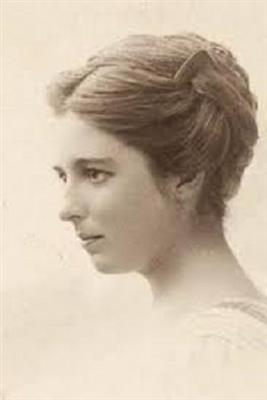
Biography
Black was born in Burnside, South Australia, on 23 December 1891[1], and trained first at the South Australian[1] School of Arts and Crafts before moving to Sydney's Julian Ashton Art School. The decisive shift came in London in 1927[1], where she studied colour linocut printmaking under Claude Flight at the Grosvenor School of Modern Art. The following year she moved to Paris and enrolled at André Lhote's Academy, absorbing the principles of Cubism before a brief spell with Albert Gleizes pushed her toward pure abstraction.
The results were immediate. Her 1930[1] painting The Bridge, a Cubist view of the Sydney Harbour Bridge under construction, with an almost jewelled palette of greens and ochres, stands as one of the most arresting Australian[1] works of its decade. Mirmande (1928), painted during her time in France, entered the Art Gallery of South Australia's collection in 1940.
Black was an Archibald Prize finalist in 1931[1] and her work entered collections including the National Gallery of Australia and the Victoria and Albert Museum in London. She died on 13 September 1951[1], aged 59, after a car accident in Adelaide. Her singular effort to import European Modernism into Australian[1] art practice placed her decades ahead of most of her contemporaries.
Timeline
- 1891Born in Burnside, South Australia on 23 December.
- 1927Studied colour linocut printmaking under Claude Flight at the Grosvenor School of Modern Art in London.
- 1928Enrolled at André Lhote's Academy in Paris to study Cubism.
- 1928Painted "Mirmande" in France.
- 1930Painted "The Bridge", a Cubist view of the Sydney Harbour Bridge.
- 1931Opened the Modern Art Centre in Sydney.
- 1931Was an Archibald Prize finalist.
- 1940Her painting "Mirmande" entered the Art Gallery of South Australia's collection.
- 1951Died in Adelaide on 13 September, aged 59, after a car accident.
Notable Works
Tap to view larger.
Next stop
Browse the movements →
Every movement in the collection, from the Renaissance to Pop art.
Related Artists

Frequently Asked Questions
What is Dorrit Black known for?
Dorrit Black is known for opening Australia's first Modernist gallery in 1931[1]. She is also known for bringing continental radicalism to a country still largely wedded to Impressionist painting.What should I know about Dorrit Black's prints?
Dorrit Black was a painter and printmaker who explored modernism in Australia. When assessing a print, it is important to know what constitutes an original print versus a reproduction. According to the Professional Art Dealers Association of Canada, an original print is conceived and executed solely as a print, usually in a numbered edition, and signed by the artist. Each print in the edition is an original, printed from a matrix created for that purpose. There is no single original print from which copies are made. The artist decides the number of prints in the edition. The numbering of prints has only recently become a standard convention. Early prints were not numbered or signed; in some cases, the artist might have signed the plate or stone itself, with no pencilled signature on each print. A reproduction is a copy of a work of art conceived by the artist in another medium (painting, watercolour, etc.).What style or movement did Dorrit Black belong to?
Dorrit Black (1891[1]-1951[1]) was an Australian[1] modernist painter and printmaker. She is associated with several styles, including Cubism, Futurism, and modernism. Black studied at the Julian Ashton Art School in Sydney, and later travelled to Europe to further her artistic education. In London, she studied at the Grosvenor School of Modern Art. There, she was taught by Claude Flight, who promoted the principles of rhythmic composition derived from Cubism and Futurism. These combined influences led her toward abstraction. Black's work often featured bold colours and geometric forms, characteristics that align with modernism. She experimented with linocuts, a printmaking technique that allowed for strong lines and simplification of form. Black's embrace of these modern styles set her apart from more traditional Australian artists of her time. She is regarded as a pioneer of modernism in Australia.What techniques or materials did Dorrit Black use?
The study of artistic techniques and materials is essential to understanding an artist's choices and completed work. Artists make choices that exist outside the limitations of their materials. Oil paint is a common medium, and artists often have preferred brushes and surfaces. Hog hair brushes are favoured for their springy resistance against the canvas, and well-worn, blunt brushes allow for expansive use of the paint. Surfaces include gessoed MDF, primed canvas stuck to MDF board, and primed canvas. The quality of the materials is important for colour saturation, permanence, and stability. Some artists prepare their own canvases to guarantee quality. Technical knowledge informs art history, and understanding the techniques and processes used by artists is necessary. The interface between the qualities of medium and technique, and the aesthetic decisions made by the artist, must be understood. This ensures that ways of thinking about art history remain engaged with the work itself.What was Dorrit Black known for?
Dorrit Black (1891[1]-1951[1]) was an Australian[1] artist known for her modernism. She explored various styles, including Cubism and Futurism, during her career. Black studied art in Sydney before travelling to Europe in the 1920s. There, she attended the Grosvenor School of Modern Art in London, where she studied under Claude Flight and learned about linocut printing techniques. She then went to Paris, where she studied at the Académie Moderne. Black returned to Australia in 1927[1] and introduced modern art ideas to the Sydney art scene. She founded the Modern Art Centre in Sydney in 1931, promoting avant-garde art. Her work often featured bold colours and geometric shapes. She produced paintings, prints, and drawings throughout her career.Where can I see Dorrit Black's work?
Dorrit Black's work can be viewed in several galleries and museums. In the United States, these include the Los Angeles County Museum of Art (LACMA) and the Metropolitan Museum of Art in New York. Other US locations are the Minneapolis Institute of Arts, the Museum of Modern Art in New York, the Charles Hosmer Morse Museum of American Art in Winter Park, Florida, the Virginia Museum of Fine Arts in Richmond, and the Wolfsonian at Florida International University in Miami Beach. In the United Kingdom, Black's art may be seen at the Victoria & Albert Museum in London, the Brighton Museum & Art Gallery, the Geffrye Museum in London, the Manchester Art Gallery, the National Museums of Scotland Royal Museum in Edinburgh, and the Towneley Hall Art Gallery in Burnley, Lancashire. Other museums that sometimes exhibit Art Deco works are the Rijksmuseum Kréller-Miller in the Netherlands and the Musée d’Art et d’Histoire in Geneva, Switzerland. Before visiting, it is advisable to check with the museum to confirm that the works are on display.Where was Dorrit Black from?
Dorrit Black was an Australian[1] artist. She was born in Adelaide, South Australia, in 1891[1]. She came from a family with artistic interests; her father, Alfred Barham Black, was an architect and surveyor. Black is considered a significant figure in the development of modern art in Australia. She studied art in Adelaide and Sydney before travelling to Europe for further training. In London, she studied at the Grosvenor School of Modern Art. She also spent time in Paris, where she studied at the Académie Moderne. These experiences exposed her to cubism and other modern styles, which had a considerable effect on her work. Black returned to Australia in the 1930s and played a role in promoting modern art ideas. She died in Adelaide in 1951[1].Who influenced Dorrit Black?
Dorrit Black's artistic development involved exposure to several modern artists and movements. Varvara Stepanova and Aleksandra Ekster, both Russian Constructivists, are listed as potential influences. These artists explored non-objective abstraction, using geometric forms and industrial materials. Black may have encountered their work through journals or exhibitions, or during her time studying abroad. Other artists connected to Black include Fernand Léger and Pablo Picasso, both central figures in Cubism. Cubism's emphasis on fragmented forms and multiple perspectives appears in Black's compositions. Black also seems to have been aware of the work of Piet Mondrian, known for his abstract paintings using primary colours and geometric grids. These connections suggest that Black engaged with a range of early 20th-century avant-garde movements.Why are Dorrit Black's works important today?
Dorrit Black (1891[1]-1951[1]) was an Australian[1] modernist painter and printmaker. She is significant for her role in introducing and promoting modern art movements in Australia during the early to mid-20th century. Black studied art in Sydney and London, and she was further influenced by European modernism, particularly Cubism and Futurism. Upon her return to Australia, she established the Modern Art Centre in Sydney in 1931[1]. This centre became a hub for avant-garde artists and exhibitions, challenging the prevailing conservative artistic tastes of the time. Her own artwork often featured bold geometric forms, dynamic compositions, and a semi-abstract style. Paintings such as "The Motor Show" (1935) demonstrate her engagement with industrial and urban themes. Black's printmaking also contributed to her artistic output, with linocuts displaying similar modernist characteristics. Although she faced resistance and criticism during her career, Black's contribution is now recognised. She helped pave the way for greater acceptance of modernism in Australian art. Her works offer insight into the development of Australian art and its relationship to international trends.What was Dorrit Black's art style?
Black's art style included Cubism and geometric abstraction. She studied colour linocut printmaking under Claude Flight, and absorbed the principles of Cubism at André Lhote's Academy.
Sources
Editorial draws on the following primary and tertiary references for Dorrit Black.
- [1] wikipedia Wikipedia: Dorrit Black Used for: biography, birth dates, death dates, identifiers, movement attribution, nationality.
- [2] book Dorling Kindersley, Artists: Inspiring Stories of the World's Most Creative Minds Used for: biography.
- [3] book Elizabeth Otto & Patrick Rössler, Bauhaus Women Used for: biography.
- [4] book guggenheim-secondenlargedca1937gugg Used for: biography.
- [5] book Post-impressionism : cross-currents in European painting Used for: biography.
- [6] book Post-impressionism : cross-currents in European painting Used for: biography.
Editorial overseen by Solis Prints. Sources verified 2026-09-22. Click a source for details, or hover over [N] in the page above to preview.
Editorial standardsMethodologyCorrectionsAI disclosureAbout the editorial team