



![Untitled [Betty with her Grandmother] by Daniel Richter](https://cdn.shopify.com/s/files/1/0833/9292/1935/files/artwork-daniel-richter-untitled-betty-with-her-grandmother.jpg?width=480)

![Untitled [Baby Carriage, Düsseldorf]; verso: Untitled [Düsseldorf Interior] by Daniel Richter](https://cdn.shopify.com/s/files/1/0833/9292/1935/files/artwork-daniel-richter-untitled-baby-carriage-d-sseldorf-verso-untitled-d-sseldo.jpg?width=480)


Daniel Richter
- contemporary art
Daniel Richter arrived at painting through a side door. Born in Eutin, Germany, on 18 December 1962[3], he spent his early adult years designing posters and record sleeves for Hamburg's punk and hardcore scene before enrolling at the Hochschule der bildenden Künste in Hamburg in 1991. There he studied under Werner Büttner and worked as an assistant to Albert Oehlen, absorbing the influence of German[3] Neo-Expressionism while developing a distinctly unsettled visual language.
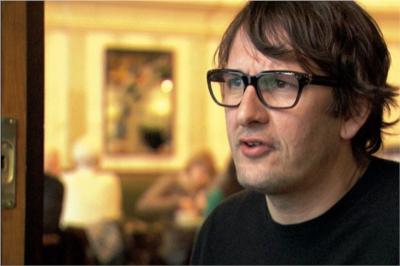
Biography
His first paintings were abstract: dense, chaotic fields of colour that seemed to compress graffiti, ornament, and raw energy into a single surface. Around 2002, figures began to emerge from the paint, often sourced from press photographs or history books and rendered in acid colours that strip any documentary neutrality from the image. The mood shifted, too, toward something darker and more politically charged. Large canvases depicted riots, processions, and ambiguous crowd scenes that refused easy allegory.
Richter's touchstones are Symbolist rather than Expressionist in the conventional sense: James Ensor's masked carnivals and Edvard Munch's psychological atmosphere are legible in his work, as are borrowings from pop culture and mass media. He has produced over a thousand paintings across his career and is regularly grouped with Peter Doig and Tal R as part of a generation that reclaimed figuration from its post-conceptual diminishment.
He has served as professor at the Akademie der bildenden Künste in Vienna and held exhibitions at major European institutions. His market has tracked his critical reputation: large oils regularly appear at auction and in the collections of contemporary art[3] museums across Germany and Scandinavia. He lives and works in Berlin.
Timeline
- 1962Born in Eutin, Germany on 18 December.
- 1991Enrolled at the Hochschule der bildenden Künste in Hamburg.
- 1991Studied under Werner Büttner at the Hochschule der bildenden Künste in Hamburg.
- 1991Worked as an assistant to Albert Oehlen.
- 2002Figures began to appear in his paintings, sourced from press photographs and history books.
- 2002The mood of his paintings shifted toward darker and more politically charged themes.
- 2024Lives and works in Berlin.
Notable Works
Tap to view larger.
Next stop
Browse the movements →
Every movement in the collection, from the Renaissance to Pop art.
Related Artists



Frequently Asked Questions
What is Daniel Richter known for?
Daniel Richter is known for his paintings, which initially were abstract fields of colour. Around 2002, figures began to appear in his work, often sourced from press photographs or history books and rendered in acid colours.What is Daniel Richter's most famous work?
While Daniel Richter has produced a substantial body of work, one of his better-known pieces is Bridal Train in a Spring Landscape, an oil on canvas from 1847. It measures 53 x 150 cm and is held in the Staatliche Gemaldegalerie, Dresden. Richter's paintings often transformed real-life events, such as weddings, children’s games, or the telling of fairy tales, into dreamlike recollections. Bridal Train presents a Utopian vision, with cheerful figures emerging from the shadows of the woods into sunlit meadows. Richter sought to evoke the viewer's inherent delight in observing children's merry play. His paintings of children are considered among the finest works of the German[3] Romantics. If their aim was to translate the Utopian, the distant, the ideal, or the dream into pictures, these carefree children represent the ultimate Utopia. The painting evokes positive emotions in the viewer, who will naturally feel intense pleasure at the sight of happy, playing children celebrating a wedding.What should I know about Daniel Richter's prints?
Daniel Richter, born in Eutin, Germany, in 1962[3], is known for large-scale paintings that combine abstraction and figuration. His prints often share these characteristics. Richter's early work in the 1990s was primarily abstract. He transitioned to representational imagery around 2000, incorporating historical and political themes into his compositions. This shift is visible in his printmaking, as well. Recurring motifs include crowds, conflicts, and fragmented figures. He often uses silkscreen, a process suited to producing bold colour and graphic shapes. Some prints relate directly to his paintings, acting as studies or variations on existing themes. Others are unique works exploring different aesthetic approaches. Richter's prints are held in numerous public collections, including the Museum of Modern Art, New York, and the Albertina, Vienna. His work engages with contemporary issues through a distinctive visual style.What style or movement did Daniel Richter belong to?
Daniel Richter's work defies easy categorisation, as he has explored a range of styles throughout his career. He is associated with the "new German[3] painting" movement, which emerged as a response to the perceived limitations of late modernism. This generation sought to re-evaluate painting's possibilities after abstraction. In the early 1960s, Richter, like Gerhard Richter, engaged with images from mass media, using grey tones and blurred effects. This approach aimed to incorporate the neutrality of media images into his paintings. He also drew inspiration from family snapshots and paint sample charts. Later, Richter created large-scale, neo-abstract paintings using bold acrylic colours. Although seemingly spontaneous, these works were carefully planned. Richter's art explores the relationship between images, reproduction, reality, and representation. His constant shifts in style and subject matter initially caused some confusion, but retrospective exhibitions have clarified his artistic concerns. His work tests the possibilities of painting as a meaningful medium, reflecting on contemporary art[3]'s various positions.What techniques or materials did Daniel Richter use?
Daniel Richter is known for large-scale paintings that combine abstraction and figuration. His early work involved purely abstract compositions. These paintings often featured bright colours and complex, overlapping forms. Richter's practice shifted in the early 2000s, when he began incorporating recognisable imagery into his work. This included figures, objects, and scenes drawn from a variety of sources, such as historical photographs and media images. These elements were often distorted or fragmented, creating a sense of unease. He typically works in oil paint on canvas. Richter's application of paint varies, ranging from thin washes to thick impasto. He often employs layering techniques, building up surfaces over time. This approach allows him to create depth and texture in his paintings. Richter's colour choices are also distinctive, often using unexpected combinations and contrasts. His work frequently explores themes related to politics, history, and social issues.What was Daniel Richter known for?
Daniel Richter is known for his engagement with image systems, and for an approach to painting that incorporates both abstract and representational elements. He often works in series, revisiting motifs repeatedly. In the early 1960s, Richter, like some American Pop artists, began creating works based on magazine imagery, rendered in grey tones with a slightly blurred effect. His interest lay in appropriating the pictorial language of mass media for artistic purposes. However, unlike his American contemporaries, Richter was less concerned with celebrity culture or sensationalism. Instead, he focused on the banality to which the media reduces images. He sought to transfer the neutrality and indifference of media images onto his oil paintings, sometimes including the original captions to maintain context. Richter also applied this principle to paintings based on other sources, such as family snapshots and paint sample charts. His work raises questions about the nature of images and their relationship to reality, particularly in the medium of oil paint.When did Daniel Richter live and work?
Daniel Richter was born in Waltersdorf, Oberlausitz, Germany, in 1932. He studied at the Kunstakademie in Dresden from 1953 to 1957. Later, from 1961 to 1963, he studied at the Kunstakademie in Düsseldorf. Richter began teaching art at a Düsseldorf high school in 1968 and was a professor at the Kunstakademie, Düsseldorf, from 1971. His initial solo exhibition took place at Galerie Friedrich und Dahlem, Munich, from 10 June to 10 July 1964. Subsequently, he represented West Germany at the Venice Biennale in 1972. In 1983, Richter relocated to Cologne, where he continues to live and work. He received the Arnold Bode Award of the City of Kassel in 1981, and the Oskar Kokoschka Prize in Vienna in 1985.Where can I see Daniel Richter's work?
It is difficult to say with certainty where specific works by Daniel Richter are on display. However, some museums with collections of modern German[3] art may hold his paintings. In Germany, these include the Brucke Museum and Nationalgalerie (both in Berlin), the Kunsthalle and Sammlung Bottcherstrasse (Bremen), the Ludwig Museum and Wallraf-Richartz Museum (Cologne), the Folkwang Museum (Essen), and the Kunsthalle (Hamburg). Other possibilities are the Niedersachsisches Landesmuseum (Hanover), Stadtische Kunsthalle (Mannheim), Bayerische Staatsgemaldesammlungen (Munich), and Von der Heydt Museum (Wuppertal). Outside Germany, museums with holdings of modern art include the Metropolitan Museum of Art and the Museum of Modern Art (both in New York), the Los Angeles County Museum of Art, the Minneapolis Institute of Arts, the Royal Ontario Museum (Toronto), and the Victoria & Albert Museum (London).Where was Daniel Richter from?
Daniel Richter was born in Waltersdorf/Oberlausitz, Germany. He later lived and worked in Cologne. Richter's early artistic education took place at the Kunstakademie in Dresden from 1953 to 1957. He continued his studies at the Kunstakademie in Dusseldorf between 1961 and 1963. His work, including the series *48 Portraits*, was displayed internationally. This series was commissioned by the West German[3] government for the Venice Biennale in 1972. The portraits, painted in grey tones, depicted European and American intellectuals; musicians, writers, philosophers, and scientists from the nineteenth and early twentieth centuries. Richter stated that the portraits were selected at random from mass-market encyclopaedias. The out-of-focus quality of the portraits and their seemingly random selection suggested a mysterious pantheon of role models. The series challenged the construction of a coherent cultural canon in West Germany after 1945.Who did Daniel Richter influence?
It is difficult to say exactly who Daniel Richter influenced. Caspar David Friedrich, a Romantic painter, felt that the purest expression of nature needed some reference to the Christian God. Churches were frequently portrayed, with people living in harmony and piety under their shadow, guided by the rules of the church and thus according to God's will. Richter eliminated the distinction between proximity and distance by placing his church on the borderline, so that nature is now portrayed as an all-embracing unity. Karl Blechen, a Berlin painter, used abstract colour symbolism, but rejected the mysticism of Friedrich’s view of nature. Blechen did not suggest a depth of mystery in his work. He sought to open the viewer’s eyes to what can at most be called the “wonderful” aesthetics of nature. Blechen demystified pictorial elements that look symbolic.Who was Daniel Richter?
Daniel Richter was born in Eutin, Germany, in 1962[3]. He designed posters and record sleeves for Hamburg's punk scene before studying at the Hochschule der bildenden Künste.Why are Daniel Richter's works important today?
Daniel Richter (born 1962[3]) is a German[3] artist known for paintings that blend abstraction and figuration. He initially gained attention in the 1990s with purely abstract works, characterised by bright colours and complex compositions. These paintings built upon the legacies of artists like Gerhard Richter (no relation) and Sigmar Polke, who had challenged traditional notions of painting in the postwar era. Around the early 2000s, Richter shifted towards a more representational style. He began incorporating recognisable figures and scenes into his work, often drawing from historical or political imagery. These later paintings retain the energetic brushwork and bold colour palettes of his earlier abstractions, creating a dynamic tension between representation and painterly gesture. Richter's art is significant because it engages with contemporary issues, such as globalisation, political conflict, and social unrest, through a distinctive visual language. His paintings do not offer simple answers or narratives; instead, they invite viewers to confront complex realities and question established perspectives. He encourages a critical examination of the world. Richter's influence can be seen in the work of many younger painters who are exploring similar themes and approaches to the medium.
Sources
Editorial draws on the following primary and tertiary references for Daniel Richter.
- [1] museum Harvard Art Museums Used for: museum holdings.
- [2] museum Victoria and Albert Museum Used for: museum holdings.
- [3] wikipedia Wikipedia: Daniel Richter Used for: biography, birth dates, death dates, identifiers, movement attribution, nationality.
- [4] book Jed Rasula, Destruction Was My Beatrice Used for: biography, stylistic analysis.
- [5] book guggenheim-nineyoungartists00solo Used for: biography.
- [6] book guggenheim-refigur00kren Used for: biography.
- [7] book guggenheim-richterei00rich Used for: biography.
Editorial overseen by Solis Prints. Sources verified 2026-10-07. Click a source for details, or hover over [N] in the page above to preview.
Editorial standardsMethodologyCorrectionsAI disclosureAbout the editorial team