



Clara Southern
Nicknamed "Panther" for her lithe presence at the Heidelberg camps, Clara Southern was one of the few women to carve a serious career within the male-dominated circle of Australian[1] Impressionism. Born in Kyneton, Victoria, in 1860[1], she trained at the National Gallery of Victoria Art School under George Folingsby and Frederick McCubbin before establishing herself as one of the most consistent landscape painters of the colonial era.
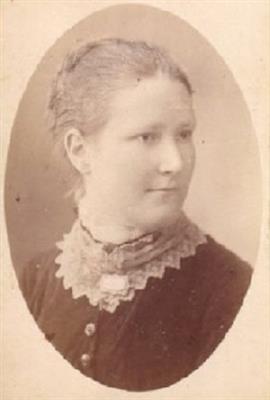
Biography
Southern was drawn repeatedly to the bush around Warrandyte, where she set up a studio around 1908[1] and quietly built an artistic community that drew in younger painters. Her canvases favour soft, diffused light rather than the high noon glare favoured by some of her peers: works like *An Old Bee Farm* and *Evensong*, both now in the National Gallery of Victoria, carry a meditative stillness that sits apart from the bolder strokes of Streeton or Roberts.
She was the first woman elected to the Australian[1] Artists' Association, at a time when that distinction still carried genuine institutional resistance. The critics who did engage with her work returned often to the same word: poetic. One wrote that she was "a sweet and original singer of the Australian bush in colour", praise that, while laced with the condescension of the era, acknowledged the distinctiveness of her eye.
Southern exhibited regularly through the Victorian Artists Society and the Melbourne Society of Women Painters and Sculptors until late in her career. Her work is held by the National Gallery of Australia, the National Gallery of Victoria, and the Art Gallery of Ballarat. She died in Melbourne in 1940[1].
Timeline
- 1860Born in Kyneton, Victoria.
- 1880Began training at the National Gallery of Victoria Art School under George Folingsby and Frederick McCubbin.
- 1898Elected as the first woman to the Australian Artists' Association.
- 1900Painted "An Old Bee Farm", now in the National Gallery of Victoria.
- 1900Painted "Evensong", now in the National Gallery of Victoria.
- 1908Established a studio near Warrandyte, building an artistic community.
- 1940Died in Melbourne.
Notable Works
Tap to view larger.
Next stop
Browse the movements →
Every movement in the collection, from the Renaissance to Pop art.
Related Artists

Frequently Asked Questions
What is Clara Southern known for?
Clara Southern is known as one of the most consistent landscape painters of the colonial era. She was also the first woman elected to the Australian[1] Artists' Association.What is Clara Southern's most famous work?
Clara Southern is best known for her painting *An Old Bee Farm* (circa 1900[1]), now held by the National Gallery of Victoria. This work is a prime example of Australian[1] Impressionism. It depicts a woman in a white dress tending to beehives in a sun-dappled orchard. Southern studied at the National Gallery School in Melbourne. There, she was taught by George Folingsby and later, George Coates. Her style developed under their influence, moving toward naturalism and plein-air painting. She was associated with the Heidelberg School, a group of Australian artists who painted en plein air around Melbourne in the late 19th century. Although not formally a member, she shared their interest in capturing the Australian landscape and everyday life. *An Old Bee Farm* reflects this focus, presenting a serene vision of rural Australia. The painting's popularity stems from its idyllic subject matter and its representation of Australian light and atmosphere.What should I know about Clara Southern's prints?
Clara Southern (1860[1]-1940[1]) was an Australian[1] artist of the Heidelberg School, also known as Australian Impressionism. She is best known for depictions of the rural landscape around Warrandyte, near Melbourne. Southern studied at the National Gallery School in Melbourne from 1883[1] to 1887, and later taught art classes herself. She was a member of the Victorian Artists' Society, and exhibited her work regularly. While primarily a painter, Southern's work also appeared in print form, in periodicals such as *The Australasian*. Her style is characterised by its naturalistic colour palette and focus on capturing the effects of light and atmosphere. Paintings such as *An Old Bee Farm* (c.1900) and *The Road to Warrandyte* (1926) demonstrate her interest in the local scenery. Prints of Southern's paintings offer an accessible way to appreciate her contribution to Australian art history, bringing her vision of the Australian bush into the home. They provide insight into the Heidelberg School's interpretation of the Australian environment at the turn of the century.What style or movement did Clara Southern belong to?
Clara Southern was an Australian[1] artist associated with the Heidelberg School, also known as Australian Impressionism. This movement, which gained momentum in the late 19th century, focused on capturing the Australian bush and rural life en plein air. Southern studied at the National Gallery School in Melbourne, and later established a studio and residence at "Blythe Bank" in Warrandyte, a location that became a gathering place for artists. Her work often depicted scenes of the Yarra River and the surrounding countryside. She captured the light and atmosphere of the Australian environment. While the Heidelberg School shared some similarities with European Impressionism, it developed its own distinct character. Artists developed a recognisably Australian style, often using a high-keyed palette to represent the intense sunlight and colours of the landscape. Southern's contributions are seen in her depictions of everyday life, such as women in gardens and children playing. These paintings offer a view into the social fabric of rural Australia at the turn of the century.What techniques or materials did Clara Southern use?
Clara Southern was known for her work in oils and watercolour. She often painted en plein air, directly observing the environment. Southern studied at the National Gallery School in Melbourne from 1883[1] to 1887. There, she was influenced by the Heidelberg School, also known as Australian[1] Impressionism. This movement emphasised capturing the effects of light and atmosphere. Southern adopted a relatively naturalistic style, focusing on the rural scenes around Warrandyte, near Melbourne. Her paintings often feature loose brushwork and a muted palette. She used these techniques to depict the Australian bush and its inhabitants. Figures are often integrated into the scenery, rather than being the sole subject. Southern's approach to watercolour painting involved layering washes to create depth and luminosity. She also employed dry brush techniques for textural effects.What was Clara Southern known for?
Clara Southern (1860[1]-1940[1]) was an Australian[1] artist associated with the Heidelberg School, also known as Australian Impressionism. She is known for her depictions of the rural landscape surrounding Melbourne, particularly the area around Warrandyte. Southern's style often incorporated figures within these settings, showing everyday life and activities. Her works capture the light and atmosphere of the Australian bush, and she often painted en plein air (outdoors) to achieve this. She studied at the National Gallery School in Melbourne, and later established her own studio at 'Blythe Bank' in Warrandyte. Southern was one of the few women artists working in what was a male-dominated art movement; her work provides an important perspective on Australian life at the turn of the century.Where was Clara Southern from?
Clara Southern was an Australian[1] artist, born Clara Lintermans in Kyneton, Victoria, in 1860[1]. Her parents, John and Jane Lintermans, had arrived in Australia from Germany in 1854. Southern studied at the National Gallery School in Melbourne from 1883[1] to 1887, training under George Folingsby. There, she met fellow artists Jane Sutherland, Iso Rae, and May Vale. She later shared a studio with Jane Price. In 1905, Clara Southern and her husband, John Southern, purchased a property called Blythe Bank at Warrandyte, near Melbourne. This area was already known as an artists' colony. Blythe Bank became a gathering place for artists, and Southern was at the centre of this artistic community. She remained in Warrandyte until her death in 1940[1]. Her connection to the area is such that she is often described as an artist of the Heidelberg School, despite living and working outside the Heidelberg area itself.Who did Clara Southern influence?
It is difficult to identify specific artists directly influenced by Clara Southern. The art world has become pluralistic, making it harder for a single artist to dominate a group. However, it is possible to examine artists whose work shares similarities with Southern's or who were part of similar artistic movements. Some artists explore qualities of starkness and voluptuousness, much like Matisse's drawings. Others find inspiration in earlier generations of artists, looking to them as a source of imagery. Some artists' work displays formal similarities with ceramic works, while others embrace mess and chaos in bringing together many objects in a single work. Häussler intertwined La Rosière’s history with that of actual artists and personages of the period. These artists, while not directly influenced by Southern, share common ground in their artistic approaches and inspirations.Why are Clara Southern's works important today?
Clara Southern (1860[1]-1940[1]) was an Australian[1] artist associated with the Heidelberg School, also known as Australian Impressionism. While not as widely recognised as some of her male contemporaries, her works offer a valuable perspective on Australian life and art at the turn of the 20th century. Southern's paintings often depict scenes of women in rural settings, offering a counterpoint to the more traditionally masculine subjects of the Heidelberg School. Her focus on domesticity and the everyday lives of women provides insight into the social fabric of the time. Her art also contributes to a broader understanding of Impressionism outside Europe. Southern adapted the techniques and aesthetics of Impressionism to the Australian environment, capturing the unique light and colours of the bush. This adaptation demonstrates the global reach and diverse interpretations of Impressionism as an artistic movement. Today, Southern's works are important for their representation of women's experiences, their contribution to Australian art history, and their perspective on the international development of Impressionism.What was Clara Southern's art style?
Southern's canvases favour soft, diffused light. Her works, such as *An Old Bee Farm* and *Evensong*, carry a meditative stillness.How did Clara Southern die?
Clara Southern died in 1940[1] at the age of 80.
Sources
Editorial draws on the following primary and tertiary references for Clara Southern.
- [1] wikipedia Wikipedia: Clara Southern Used for: biography, birth dates, death dates, identifiers, movement attribution, nationality.
- [2] book Landauer, Susan, The not-so-still life : a century of California painting and sculpture Used for: biography.
- [3] book Hodge, Susie, 1960- author, The short story of women artists : a pocket guide to movements, works, breakthroughs, & themes Used for: biography.
- [4] book 1892-1968, Panofsky, Erwin,, Tomb sculpture: four lectures on its changing aspects from ancient Egypt to Bernini Used for: biography.
Editorial overseen by Solis Prints. Sources verified 2026-10-14. Click a source for details, or hover over [N] in the page above to preview.
Editorial standardsMethodologyCorrectionsAI disclosureAbout the editorial team