



Amilcar de Castro
- concrete art
Before becoming one of Brazil's most consequential sculptors, Amílcar de Castro took a law degree. He graduated from the Federal University of Minas Gerais in 1945[1], having already begun studying drawing and sculpture at the Escola Guignard in Belo Horizonte under Alberto Guignard and Franz Weissman. By 1953 he had moved to Rio de Janeiro and was working as a graphic designer for magazines, a path that led to his most celebrated typographic commission: the complete redesign of the Jornal do Brasil between 1957 and 1959, a landmark of Brazilian[1] modernist newspaper design.
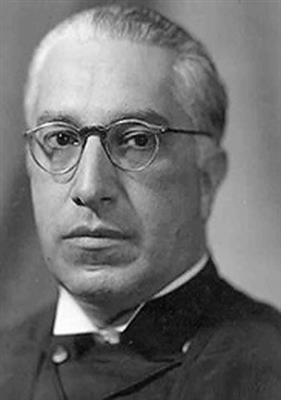
Biography
On 22 March 1959[1], De Castro signed the Neo-Concrete Manifesto alongside Ferreira Gullar, Lygia Clark, and Hélio Oiticica. The manifesto positioned Brazilian[1] concrete art[1] against the European rationalist tradition, arguing that abstract form had phenomenological and expressive dimensions that a purely systematic approach to geometry could not account for. De Castro's subsequent sculptural work was a demonstration of this position in iron.
His method was spare: one cut into a sheet of iron, one fold. The resulting large-scale sculptures use structural tension and implied space as their primary content, the boldness of the geometry recalling both his graphic design background and the iron-ore landscape of Minas Gerais where he was born in 1920[1]. One untitled work from 1960[1] is in the permanent collection of MoMA, New York. He received a Guggenheim Foundation grant, returned to Belo Horizonte in 1971, and taught sculpture at UFMG until 1990. He died there in 2002[1].
Timeline
- 1920Born in Minas Gerais, Brazil.
- 1945Graduated with a law degree from the Federal University of Minas Gerais.
- 1953Moved to Rio de Janeiro and began working as a graphic designer for magazines.
- 1957Began redesigning the Jornal do Brasil.
- 1959Signed the Neo-Concrete Manifesto with Ferreira Gullar, Lygia Clark, and Hélio Oiticica.
- 1960An untitled sculpture was added to the permanent collection of MoMA, New York.
- 1971Received a Guggenheim Foundation grant and returned to Belo Horizonte.
- 1990Stopped teaching sculpture at UFMG.
- 2002Died in Belo Horizonte.
Notable Works
Tap to view larger.
Next stop
Browse the movements →
Every movement in the collection, from the Renaissance to Pop art.
Related Artists



Frequently Asked Questions
What is Amilcar de Castro known for?
Amílcar de Castro is known for his large-scale iron sculptures that use structural tension and implied space. He also redesigned the Jornal do Brasil, a landmark of Brazilian[1] modernist newspaper design.What is Amilcar de Castro's most famous work?
It is difficult to identify one single "most famous work" by Amilcar de Castro. He is best known for his geometric sculptures. De Castro began his artistic career as a journalist and graphic designer in the 1940s. He later studied drawing, painting, and sculpture. Early influences included Piet Mondrian and Max Bill. In the 1950s, de Castro began creating his signature sculptures from folded and cut metal sheets. These works explored ideas of space, form, and the relationship between planes. His sculptures are constructed from materials such as steel and iron. They are often large in scale, and designed for public spaces. De Castro's sculptures can be found in public and private collections, mainly in Brazil. He also worked as a professor and designer.What should I know about Amilcar de Castro's prints?
Amilcar de Castro (1920[1]-2002[1]) was a Brazilian[1] artist known mainly for his geometric sculptures. He also produced prints, typically woodcuts and serigraphs, that relate closely to his three-dimensional work. De Castro began his career as a draughtsman and graphic designer in Belo Horizonte. He later studied drawing, painting, and sculpture. These early experiences in graphic design informed his later artistic practice. His prints often feature simplified geometric forms, lines, and planes. These elements explore spatial relationships and the interplay of positive and negative space. Much like his sculptures, the prints emphasise form and material. De Castro's prints are not merely preparatory studies for sculptures. They are artworks in their own right, which explore similar themes using different media. The prints offer a more accessible way to engage with de Castro's minimalist aesthetic. His work is part of the Neo-Concrete movement, which sought to integrate art and life.What style or movement did Amilcar de Castro belong to?
Amilcar de Castro is associated with Neo-Concrete art, a Brazilian[1] movement that emerged in the late 1950s. This development grew out of Concrete Art, which Theo van Doesburg initiated with the De Stijl group in 1917 and formalised in 1930[1] with the publication of the *Revue Art Concret*. Concrete Art, as defined in van Doesburg's manifesto, was wholly abstract, devoid of references to the visible world, lyricism, or sentiment. Max Bill, a Swiss architect, designer, and painter, advanced Concrete Art after van Doesburg's death, promoting it in Latin America. In 1959, the Neo-Concrete Manifesto appeared in Rio de Janeiro, Brazil, with artists such as Lygia Clark and Lygia Pape. Neo-Concrete art often encouraged interaction from viewers.What was Amilcar de Castro known for?
Amilcar de Castro (1920[1]-2002[1]) was a Brazilian[1] artist, best known for his geometric sculptures. He began his career as a draughtsman and graphic designer, working for the newspaper *Estado de Minas* in the 1940s. Castro's move towards sculpture occurred in the 1950s. Initially, he explored painting, but he soon became interested in three-dimensional forms. His early sculptures involved cutting and folding metal sheets, creating simple, angular shapes. A key element of his work is the concept of subtraction; he often removed portions of the material to redefine the form. Throughout his career, Castro worked primarily with industrial materials, such as steel. His sculptures are characterised by their clean lines and geometric precision. Many of his pieces are large-scale, designed for public spaces. These works encourage interaction, inviting viewers to contemplate the relationship between form and space. Castro's art is associated with the Neo-Concrete movement in Brazil. This artistic approach sought to integrate art into everyday life, emphasising sensory experience. His work has been exhibited internationally, and he is considered a significant figure in Brazilian modernism.When did Amilcar de Castro live and work?
Amilcar de Castro (1920[1]-2002[1]) was a Brazilian[1] artist known for his geometric sculptures and contributions to the Neo-Concrete movement. He was born in Paraisópolis, Minas Gerais. De Castro began his artistic career later in life. He initially studied law, graduating in 1945[1], and worked as a journalist and graphic designer. He then transitioned to art, studying with Alberto da Veiga Guignard in the 1950s. His mature work involved metal, especially iron and steel. He cut, bent, and welded these materials into minimalist forms. These sculptures often explored the relationship between positive and negative space, and the interplay of planes. De Castro's work gained recognition in Brazil and internationally. He participated in the Venice Biennale in 1966 and the São Paulo Art Biennial several times. His pieces are now held in major museum collections. He also taught art and design. He was a professor at the Escola de Desenho Industrial (ESDI) in Rio de Janeiro.Where can I see Amilcar de Castro's work?
Amilcar de Castro (1920[1]-2002[1]) was a Brazilian[1] artist known for his geometric sculptures. Finding his work in public collections outside Brazil may be difficult. Some museums acquire works through purchase or donation. Major museums often display portions of their permanent collection, but artworks may go into storage for conservation reasons or to make room for temporary exhibitions. Check the museum's website or collection catalogue to see if they hold works by de Castro and if any are currently on display. Art galleries and auction houses also handle de Castro's pieces. These may be offered for sale, or included in special exhibitions. Auction house catalogues are available to view online, and may give details of previous owners.Where was Amilcar de Castro from?
Amilcar de Castro was from Brazil. After 1822, when Brazil declared independence from Portugal, Brazilian[1] theatre reflected social and political concerns regarding black individuals in Brazilian society. Black characters became a device that transformed the black individual into an object of debate. Black people were viewed as a threat to the integrity of Brazilian family and society; this became a theme embraced by Brazilian dramaturgy. Black actors, most of them of mixed race, made up the majority of Brazilian theatre casts until the mid-19th century. The first stable cast in the stage theatre of Lagos, Nigeria, was composed of black actors from Brazil who had returned to West Africa. The massive presence of black actors in Brazilian theatre until the first half of the 19th century occurred because theatrical practice was seen as an abject activity which employed the labour of social pariahs, mostly black people who, if not still enslaved, carried the stigma of slavery, which was associated with their skin colour.Who did Amilcar de Castro influence?
Amilcar de Castro's influence can be seen in the work of artists who explore the ambiguities of their medium, particularly those engaging with problems that become the subject of the artwork itself. This approach gained traction in the United States during the 1960s and subsequently spread internationally. One notable example is Nicaraguan painter Armando Morales. Morales won the Ernst Wolf Prize as Best Latin American Artist at the V Sao Paulo Bienal in Brazil, 1959[1]. His distinctive visual language showed a clear debt to Robert Motherwell, Antoni Tapies, and Serge Poliakoff. His abstract painting *Guerrillo muerto I* (Dead Guerrilla I), from 1958, bears a resemblance to Motherwell's "Spanish Elegy" series, begun in 1948. Both works feature dark megalithic forms and organic contours, conveying a sense of mourning. Morales's connection to Motherwell's memorial to the Spanish Republic reflects his professor Augusto, who taught at the National School of Fine Arts during the 1940s.Who influenced Amilcar de Castro?
Amilcar de Castro's artistic development was influenced by a range of sources. Simón Rodríguez, born in Caracas, Venezuela, in 1769, had an interest in teaching and politics. As early as 1794, he made a critical analysis of the school system and demanded equal education for black, mulatto, and white children. Rodríguez had to flee into exile for having joined a conspiracy against Spanish rule soon after he began serving as the childhood tutor of Simón Bolívar (from 1792 until 1797). Jean-Jacques Rousseau’s Emile and Daniel Defoe’s Robinson Crusoe were his biggest influences, and based on these texts, he elaborated ideas that were close to those of Johann Heinrich Pestalozzi and went beyond those of Joseph Lancaster. Pestalozzi stressed spontaneity and freedom in the use of art implements by children. He believed that “human nature” should follow its course, aided by study and practice. In his book Sociedades americanas, written in 1828, Rodríguez says that “collective property should be the rule and private property the exception,” and, in his personal form of layout and typesetting.Who was Amilcar de Castro?
Amilcar de Castro (1920[1]-2002[1]) was a Brazilian[1] artist, known mainly for his geometric sculptures. He was also a graphic designer, stage designer, and professor. Born in Paraisópolis, Minas Gerais, de Castro began his artistic studies in Belo Horizonte. There, he studied drawing, painting, and sculpture at the Escola de Belas Artes. Early in his career, he worked as a graphic designer and journalist. He redesigned the layout for the *Estado de Minas* newspaper in the 1950s. De Castro's sculptural work often involved cutting, bending, and welding metal sheets, particularly steel. These works explore form, space, and the relationship between the viewer and the object. His art moved away from traditional sculpture methods. Instead, he focused on the essential properties of the materials. His work is associated with the Neo-Concrete movement, a Brazilian art movement of the late 1950s. This movement rejected pure abstraction in favour of works that were more interactive and sensory. De Castro taught at several institutions, including the Escola Superior de Desenho Industrial in Rio de Janeiro. He exhibited extensively both in Brazil and internationally.Why are Amilcar de Castro's works important today?
Amilcar de Castro (1920[1]-2002[1]) was a Brazilian[1] artist known for his geometric sculptures and contributions to the Neo-Concrete movement. This movement, which began in the late 1950s, sought to move beyond pure abstraction, incorporating phenomenological and subjective elements into art. De Castro's importance lies in his radical approach to sculpture. He manipulated metal sheets, often cutting, bending, and welding them to create works that explore space, form, and perception. His sculptures invite viewers to engage with them physically and visually, altering their understanding of the surrounding environment. His work challenges traditional notions of sculpture as static and self-contained objects. Instead, de Castro's pieces interact with light and shadow, creating a dynamic interplay that changes depending on the viewer's position. This focus on viewer experience aligns with the Neo-Concrete emphasis on sensory engagement. De Castro’s artistic investigations have had a lasting effect on subsequent generations of artists interested in spatial relations and the dematerialisation of the art object. His work continues to be exhibited internationally.
Sources
Editorial draws on the following primary and tertiary references for Amilcar de Castro.
- [1] wikipedia Wikipedia: Amilcar de Castro Used for: biography, birth dates, death dates, identifiers, movement attribution, nationality.
- [2] book John Peffer, Art and the End of Apartheid Used for: stylistic analysis.
- [3] book guggenheim-guhe00solo Used for: biography.
- [4] book guggenheim-latinamericanpai00catl Used for: biography, stylistic analysis.
- [5] book guggenheim-twopri00weis Used for: biography.
- [6] book Camnitzer, Luis(Author), Joe R. and Teresa Lozano Long Series in Latin American and Latino Art and Culture : Conceptualism in Latin American Art : Didactics of Liberation Used for: biography, stylistic analysis.
- [7] book Masterpieces of western art : a history of art in 900 individual studies from the Gothic to the present day Used for: biography.
- [8] book Leonor de Oliveira;, Portuguese Artists in London Used for: biography.
Editorial overseen by Solis Prints. Sources verified 2026-09-30. Click a source for details, or hover over [N] in the page above to preview.
Editorial standardsMethodologyCorrectionsAI disclosureAbout the editorial team