

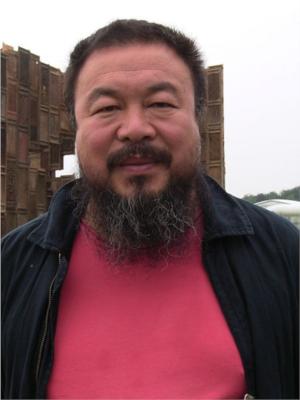
Ai Weiwei
- Contemporary
- Conceptual
Ai Weiwei, the Chinese conceptual artist, spent 81 days in detention in 2011. This period, which saw him held without charge, drew international attention to his work and his persistent criticism of the Chinese government. Born in Beijing in 1957, his early life was shaped by his father, Ai Qing, a prominent poet who was denounced during the Anti-Rightist Movement. The family was exiled to remote regions, returning to Beijing only in 1976.
Biography
Ai Weiwei trained at the Beijing Film Academy, later moving to New York City in 1981. There, he encountered conceptual art and Duchamp's readymades, which influenced his approach. He returned to China in 1993, a period of rapid change. His work often explores themes of censorship, human rights, and the individual's place within society.
After the 2008 Sichuan earthquake, Ai Weiwei launched a "Citizens' Investigation" to document the names of thousands of children who died due to poorly constructed school buildings. This act of public record-keeping, alongside his art, solidified his reputation as a dissident voice. His installation "Sunflower Seeds" (2010), comprising millions of hand-painted porcelain seeds, filled Tate Modern's Turbine Hall, inviting visitors to reflect on mass production and individuality.
Following his detention, Ai Weiwei’s passport was confiscated for four years. He eventually left China in 2015, moving to Berlin and later to Portugal. His art continues to address global issues, particularly the refugee crisis, through large-scale installations and films. He uses his platform to challenge viewers to consider political freedoms and social responsibility.
Timeline
- 1957Born in Beijing, China
- 1976Returned to Beijing after family's exile
- 1981Moved to New York City
- 1993Returned to China
- 2008Launched 'Citizens' Investigation' after Sichuan earthquake
- 2010Installation 'Sunflower Seeds' at Tate Modern
- 2011Detained for 81 days in China
- 2015Left China, moved to Berlin
Notable Works
Tap to view larger.
Next stop
Contemporary →
Explore the artists and ideas of Contemporary.
Related Artists
.jpg)


_%E2%80%93_LOC.jpg)
Frequently Asked Questions
What is Ai Weiwei known for?
Ai Weiwei is known for his art and his activism regarding human rights. His installation "Sunflower Seeds", which consisted of millions of hand-painted porcelain seeds, was displayed in Tate Modern's Turbine Hall.What is Ai Weiwei's most famous work?
It is difficult to name one single work as Ai Weiwei's 'most famous', but several of his pieces have gained considerable attention. He is known for large-scale installations and sculptures that often address social and political issues. One particularly well-known work is likely *Sunflower Seeds*, first displayed at Tate Modern in 2010. This consisted of millions of porcelain sunflower seeds, each individually handcrafted, covering the floor of the Turbine Hall. The work invited viewers to consider themes of mass production, individuality, and China's place in the global economy. Other significant works include his series of Zodiac Heads and his architectural projects, such as the Bird's Nest stadium for the 2008 Beijing Olympics (though he later distanced himself from the project). Ai Weiwei's art frequently combines conceptual ideas with skilled craftsmanship, making it both visually striking and thought-provoking.What should I know about Ai Weiwei's prints?
Ai Weiwei is a multidisciplinary artist; prints are one part of his larger practice. Printmaking allows for editions, or multiple originals. Each print in an edition is made individually from a matrix, such as a woodblock or screen. The artist determines the edition size. Each print is numbered (for example, 12/25, meaning print number 12 from an edition of 25). The artist usually signs each print, often in pencil. These conventions help to authenticate the work and add value. However, the artist's intent is also important. An original print is conceived as a print, not a copy of something in another medium. Ai Weiwei's prints can be seen within the context of his wider artistic concerns, which often include questions of originality, authenticity, and value in the art market. The artist's wider body of work includes installation art, and some of these have "exhibition copies" made for simultaneous display in multiple locations. The status and display history of these exhibition copies can affect the perception of a work's originality.What style or movement did Ai Weiwei belong to?
Ai Weiwei, born in Beijing in 1957, is a contemporary artist whose work engages with themes of culture, heritage, and social commentary. His practice encompasses large installations, architectural projects, smaller constructions, photography, and video. His art often mixes Chinese cultural elements with the art and culture he encountered in America. Ai lived in New York City for a time, attending Parsons School of Design and the Art Students League of New York. During this period, he created art from readymade objects. Ai's work is often critical of the Chinese government. For example, after the 2008 Sichuan earthquake, he investigated the collapse of schools, believing that corruption and poor construction were to blame. He created an installation featuring the names of the children who died and a sculpture made from rebar. Ai acknowledges Marcel Duchamp and Joseph Beuys as major influences. His adoption of readymade objects and his politically charged "performance" spirit align him with Neo-Dada and Conceptual art movements. Like Dada artists, Ai uses art as a form of protest and social commentary.What techniques or materials did Ai Weiwei use?
Ai Weiwei employs a wide range of materials and techniques in his artwork. He often mixes Chinese cultural heritage with the art and culture he experienced in America. His influences include Marcel Duchamp and Joseph Beuys. Ai emphasises traditional Chinese crafts. For example, the 2010 installation at Tate Modern, *Sunflower Seeds*, used approximately 100 million hand-painted porcelain sunflower seeds made by 1,600 Chinese craft workers. He is also known for his use of social media. In *Coloured Vases* (2009-10), he painted ancient Han dynasty pots in vivid colours and was filmed smashing them. This was intended as a statement on the replacement of valuable craft items with machine-made objects. Following the 2008 Sichuan earthquake, Ai created a memorial using 90 tons of rebar, which he and a team straightened by hand. Beyond art, Ai has worked as a filmmaker, photographer, writer, painter, publisher, curator, architect, and blogger.What was Ai Weiwei known for?
Ai Weiwei, born in Beijing in 1957, is a contemporary artist known for his diverse output. His practice includes large installations, architectural projects, small constructions, photography, and video. He is also known as a human rights activist. Ai's work often combines Chinese cultural elements with his experiences of art and culture in America. He uses this synthesis to comment on modern life, often advocating for those facing oppression. Marcel Duchamp and Joseph Beuys are important influences, as they also challenged conventions. In 2003, he created the Ai Qing Memorial in Jinhua Ai Qing Cultural Park, honouring his father, the poet Ai Qing. From 2005, he wrote a blog for four years, sharing thoughts and criticisms of the Chinese government. Following the 2008 Sichuan earthquake, Ai investigated the deaths of children, believing that corruption led to poorly constructed schools. He created an installation featuring the names of the deceased and a sculpture made from salvaged rebar. In 2011, he was imprisoned for 81 days because of this work. His monumental sculpture, Template, constructed from salvaged doors and windows from destroyed Ming and Qing dynasty houses, was unveiled at documenta 12 in Kassel, Germany, in 2007.When did Ai Weiwei live and work?
Ai Weiwei was born in Beijing in 1957. His father, Ai Qing, was a celebrated modern poet in China. Ai Weiwei studied animation at the Beijing Film Academy from the age of 21. Three years later, he moved to New York to attend the Parsons School of Design. He also studied at the Art Students League of New York for three years, beginning in 1985. After finishing his studies, Ai remained in New York City, creating art from ready-made objects and earning a living through odd jobs and drawing portraits. He documented his surroundings with a camera. In 1993, he returned to China because of his father's illness. He helped establish the Beijing East Village artists’ group and, with a friend, published three books about the group's artists in 1994, 1995, and 1997. In 1999, he constructed a studio house in northeast Beijing and, in 2003, he created the Ai Qing Memorial in Jinhua Ai Qing Cultural Park. In 2007, his monumental sculpture Template was unveiled at Documenta 12 in Kassel, Germany.Where can I see Ai Weiwei's work?
Ai Weiwei's art has been exhibited globally. For those interested in seeing collections of Chinese art, several museums around the world have significant holdings. In the United Kingdom, the British Museum and the Victoria & Albert Museum, both in London, have extensive collections. The Ashmolean Museum at the University of Oxford also has a collection of early Chinese ceramics and contemporary paintings. The Sir Percival David Foundation of Chinese Art (SOAS) in London promotes the study of Chinese art and culture, and houses one of the world’s finest collections of Chinese ceramics. In continental Europe, the Musée Guimet in Paris has a collection covering seven millennia of Chinese art. The Baur Collection in Geneva, Switzerland, is recognised as one of the most important collections of Chinese porcelains and jades in Europe. Further afield, the Art Gallery of New South Wales in Sydney, Australia, has a Chinese collection covering 7,000 years of artistic evolution. In Asia, the Hong Kong Museum of Art has galleries focusing on Chinese antiquities, fine art, and ceramics.Where was Ai Weiwei from?
Ai Weiwei was born in Beijing in 1957. His father, Ai Qing, was a celebrated modern poet. Ai Weiwei studied animation at the Beijing Film Academy from the age of 21. Three years later, he relocated to New York City, where he studied at the Parsons School of Design, followed by the Art Students League of New York. After finishing his studies, Ai Weiwei remained in New York, taking odd jobs and creating art from found objects. He documented his surroundings with a camera. He returned to China in 1993 because of his father's illness. Back in China, Ai Weiwei helped found the Beijing East Village artists’ group. Later, he and a friend published three books about the group. In 1999, he had a studio house built for himself in northeast Beijing. In 2003, he created the Ai Qing Memorial in Jinhua Ai Qing Cultural Park, Jinhua, Zhejiang, in honour of his father. In 2007, his monumental sculpture *Template* was unveiled at documenta 12 in Kassel, Germany. He arranged for 1,001 people from China to travel to the German town.Who did Ai Weiwei influence?
Ai Weiwei cites Marcel Duchamp, the French artist, and Joseph Beuys, the German artist, as his biggest influences. Like Ai, these artists challenged conventions in both life and art. Ai's work often mixes Chinese culture and heritage with art and culture he experienced in America. He uses this combination to comment on modern life, especially regarding the oppressed. He created the Ai Qing Memorial in Jinhua Ai Qing Cultural Park, Zhejiang, in 2003, honouring his father. In 2008, a major earthquake struck Sichuan province. Ai led a team to film the aftermath. He found that many children died because of substandard construction. He created an installation, including the names of the dead children and a sculpture made of 90 tons of rebar, as a monument to the victims.Who influenced Ai Weiwei?
Born in Beijing in 1957, Ai Weiwei is a contemporary artist who works across many media, from architectural projects to photography. His art often combines Chinese cultural motifs with influences he encountered in America. Ai has named Marcel Duchamp and Joseph Beuys as his biggest influences, noting that, like him, these artists challenged conventions. He also draws inspiration from Robert Rauschenberg and Jasper Johns. Ai's father, Ai Qing, was a modern poet. In 2003, Ai Weiwei created the Ai Qing Memorial in Jinhua Ai Qing Cultural Park, Jinhua, Zhejiang, in his father's honour. From 2005, he wrote a blog for four years, where he expressed his thoughts, including criticisms of the Chinese government. In 2008, a large earthquake struck the Sichuan province. Ai led a team to film the aftermath. He found that many children had died because of the use of poor construction methods in schools. He created an installation from his findings, including the names of the children and a sculpture made of rebar. In 2011, he was imprisoned for 81 days because of this project.Who was Ai Weiwei?
Ai Weiwei, born in Beijing in 1957, is a contemporary Chinese artist and human rights activist. His father, Ai Qing, was a celebrated modern poet. Ai Weiwei studied animation at the Beijing Film Academy, then attended Parsons School of Design and the Art Students League of New York. After his studies, he remained in New York City, taking odd jobs and drawing portraits. He created art from ready-made objects and documented his surroundings with photography. In 1993, he returned to China. Ai helped establish the Beijing East Village artists’ group and co-published three books about the group's artists. In 1999, he constructed a studio house in Beijing, and in 2003, he created the Ai Qing Memorial in Jinhua Ai Qing Cultural Park. He began writing a blog in 2005, using it to express opinions on art, architecture, and the Chinese government. Ai's art often combines Chinese cultural elements with his experiences in America. His work addresses contemporary life, often defending those facing oppression. Ai's 2013 work, *Straight*, used salvaged steel rebar from schools that collapsed during the 2008 Sichuan earthquake. He was arrested and imprisoned for 81 days in 2011 for his activism.
Sources
Editorial draws on the following primary and tertiary references for Ai Weiwei.
- [1] book Susie Hodge, Artists and Their Pets Used for: biography.
- [2] book Beard, Lee, 1973- author, Butler, Adam, author; Van Cleave, Claire, author; Fortenberry, Diane, author; Stirling, Susan, author, Beard, Lee, 1973- author, Butler, Adam, author; Van Cleave, Claire, author; Fortenberry, Diane, author; Stirling, Susan, author - The Art Book_ New Edition, Mini Format Used for: biography.
Editorial overseen by Solis Prints. Sources verified 2026-09-23. Click a source for details, or hover over [N] in the page above to preview.
Editorial standardsMethodologyCorrectionsAI disclosureAbout the editorial team