



About Eugene de Blaas
Venetian Academic painter celebrated for his sunlit genre scenes of Venetian working-class life and society portraits.
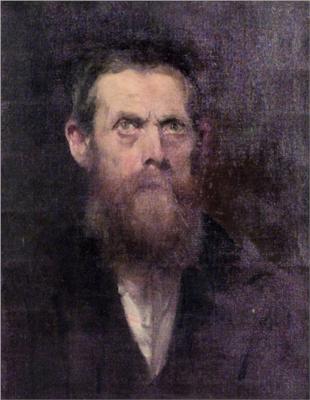
Where to see Eugene de Blaas
Collection holdings are reported here; current display varies. Check with each museum before visiting.
-
2 recorded works
Belvedere
Vienna, Austria
-
1 recorded work
Hungarian National Gallery
Budapest, Hungary
Also here (6)
Bertalan SzekelyVilmos Aba-NovakEndre BalintAladar Korosfoi-KrieschEgry JózsefAugust von Pettenkofen


-
1 recorded work
Wallraf–Richartz Museum
Cologne, Germany
-
1 recorded work
Victoria and Albert Museum
London, United Kingdom
-
1 recorded work
National Portrait Gallery
London, United Kingdom


Own a piece of it
Eugene de Blaas prints
Hand-finished archival prints from Eugene de Blaas's body of work.
 The Fruit Seller - Eugene de Blaas
From £28.00
The Fruit Seller - Eugene de Blaas
From £28.00
 The Mussel Gatherers - Eugene de Blaas
From £28.00
The Mussel Gatherers - Eugene de Blaas
From £28.00
 The Fisherman's Wooing - Eugene de Blaas
From £28.00
The Fisherman's Wooing - Eugene de Blaas
From £28.00
 Portrait of a Young Boy - Eugene de Blaas
From £28.00
Portrait of a Young Boy - Eugene de Blaas
From £28.00
 Fruit Vendor - Eugene de Blaas
From £28.00
Fruit Vendor - Eugene de Blaas
From £28.00
 Ladies on a Balcony - Eugene de Blaas
From £28.00
Ladies on a Balcony - Eugene de Blaas
From £28.00
 The Unseen Suitor - Eugene de Blaas
From £28.00
The Unseen Suitor - Eugene de Blaas
From £28.00
 Good News - Eugene de Blaas
From £28.00
Good News - Eugene de Blaas
From £28.00
Can't travel? Bring Eugene de Blaas home.
See all Eugene de Blaas prints →Frequently Asked Questions
Where can I see Eugene de Blaas's work?
It is difficult to say exactly where a work by Eugene de Blaas might be seen, as his paintings appear frequently at auction. However, some galleries and museums have paintings by artists of his type and time. These include institutions in Europe and North America. The Musée d’Orsay in Paris has paintings by Bazille, Boudin, Cassatt, Van Gogh, Manet, Millet, Morisot, Orpen, Pissarro, Renoir, Signac, and Sisley. The Musée du Louvre, also in Paris, has works by Arcimboldo, Boucher, Canova, Champaigne, G David, and Géricault. Other French museums with relevant holdings include the Musée des Beaux-Arts (Nancy), Musée de l’Ecole de Nancy, and Musée d’Art et d’Industrie (Roubaix). In Belgium, try the Musées Royaux des Beaux-Arts de Belgique (Brussels), or the Koninklijk Museum voor Schone Kunsten (Antwerp). In the United Kingdom, the Manchester Art Gallery, the National Museums of Scotland (Edinburgh), and the Victoria & Albert Museum (London) may be fruitful places to check. In the United States, try the Metropolitan Museum of Art (New York), the Los Angeles County Museum of Art, or the Minneapolis Institute of Arts.What should I know about Eugene de Blaas's prints?
Eugene de Blaas (1843[1]-1931[1]) was an Italian painter known for his depictions of Venetian daily life. He is also sometimes known as Eugenio Blaas, or Eugen von Blaas, especially in older sources. Born in Albano, near Rome, to Austrian parents, de Blaas came from a family of artists. His father, Karl de Blaas, was also a painter and his first teacher. The family moved to Venice when Karl became a professor at the Venice Academy. Eugene later taught at the same academy. De Blaas's paintings often portray scenes of Venetian society, with a focus on the working class. Common subjects include fishermen, gondoliers, and women engaged in conversation or domestic activities. His style is characterised by its attention to detail and anecdotal qualities, often with a romanticised view of Venetian life. Prints of de Blaas's work reproduce these genre scenes, making them accessible to a wider audience. The prints capture the artist's interest in costume and setting. These images provide a glimpse into the artist's vision of Venice at the turn of the 20th century.Why are Eugene de Blaas's works important today?
Eugene de Blaas (1843[1]-1931[1]) was an Italian painter known for his genre scenes, often depicting Venetian life. While not always at the forefront of art historical discussions, his works offer insight into late 19th- and early 20th-century artistic tastes and social interests. De Blaas's paintings provide a window into the picturesque aspects of Venetian society during a period of significant change. His focus on everyday life, with depictions of women, fishermen, and children, reflects a broader interest in genre painting that was popular among collectors of the time. These works can be seen as documents of a specific time and place, capturing details of clothing, architecture, and social interactions. Furthermore, the academic style of de Blaas, with its emphasis on technical skill and anecdotal narratives, offers a point of comparison to other artistic movements of the era, such as Impressionism and Post-Impressionism. Studying his paintings allows for a better understanding of the diverse artistic landscape of the late 19th century and the various approaches artists took in representing the world around them.What techniques or materials did Eugene de Blaas use?
Eugène de Blaas was an oil painter. Like many artists, he may have made preparatory sketches or studies before starting a painting. Some artists used small clay models to work out the arrangement of figures. Others made oil studies on panels, either personally or via assistants, to maintain a visual record. Painting students in the 19th century would begin with drawing, before moving to colour. The master would introduce materials, and students copied painted heads, often Venetian or Flemish examples, before painting live models. The first stage involved thinly painting lines and broad masses, called the ebauche. This layer had to be 'leaner' (containing less oil) than the final reworking, adhering to the rule of 'fat over lean'. Students prepared their palettes with earth colours, Prussian blue, black, and lead white. They drew light charcoal lines onto the primed canvas, removing excess particles. A dilute red-brown mixture was used to rework the contours, followed by the main shadow areas. Backgrounds were roughed in early. Detail was avoided at this stage; only general light and shade effects were sought.Who did Eugene de Blaas influence?
Eugene de Blaas does not appear to have directly influenced any specific, named artists. However, the broader artistic movements of his time, such as Impressionism and the developing avant-garde, certainly impacted later artists. Impressionism, with its emphasis on capturing fleeting moments and the effects of light, influenced artists such as Signac, Bonnard, Vuillard, and Van Gogh. The Fauvists, emerging in the early 20th century, also drew inspiration from Impressionist techniques. Vlaminck, a Fauvist, spoke of bequeathing the beauty of nature to young painters, urging them to capture emotion on canvas. In Russia, artists like Popova, Rodchenko, and Tatlin were influenced by Vrubel, whose work freed painting and sculpture from academic constraints. Gabo noted Vrubel's impact on visual consciousness, comparing it to Cézanne's influence in Western Europe. Vrubel's "constructive" method, with its geometric patterns and use of texture, resonated with Constructivist artists. The Venetian masters and Rubens also provided lessons about colour.Who influenced Eugene de Blaas?
Eugène de Blaas, as with many artists, would have been exposed to a range of influences throughout his career. The Louvre museum in Paris, for instance, provided a wide selection of masters for artists to study. The eighteenth-century Venetian masters, as well as Peter Paul Rubens, offered lessons in the beauty of colour. These artists may have indirectly shaped de Blaas's artistic development. It is important to note that, without specific biographical information or direct statements from the artist, pinpointing exact influences remains speculative. Art historical analysis often involves examining stylistic similarities, thematic resonances, and the artist's known exposure to certain works or movements. Therefore, while Venetian masters and Rubens could have played a role in shaping de Blaas's artistic sensibilities, further research would be needed to establish concrete connections.What is Eugene de Blaas's most famous work?
Eugene de Blaas (1843[1]-1931[1]) was an Italian painter known for his genre scenes, often depicting Venetian life. While it is challenging to identify a single "most famous" work, several paintings are particularly well-regarded and frequently reproduced. One popular example is "Godspeed" (date unknown), which portrays a young woman bidding farewell to a sailor. The painting is typical of de Blaas's style, with its focus on sentimental narrative and detailed rendering of costumes and settings. Another notable painting is "The Flirtation" (also known as "A flirtation on the balcony"), showing a lighthearted interaction between a couple on a balcony. This work captures the artist's ability to portray human emotion and social interaction. Other well-known paintings include "On the Balcony" and various depictions of Venetian women in traditional dress. These paintings are appreciated for their attention to detail and their romanticised view of Venetian society. De Blaas's works remain popular due to their accessible subject matter and skilled technique.What style or movement did Eugene de Blaas belong to?
Eugène de Blaas (1843[1]-1931[1]) is usually associated with Academicism, sometimes called Academic art, a style that predominated in European art institutions during the 19th century. Academicism drew heavily on classical and Renaissance artistic conventions. De Blaas's paintings often feature scenes of everyday life, particularly in Venice. These works, while realistic, are idealised, reflecting the Academic focus on beauty and technical skill. His attention to detail and polished finish are further characteristics of the Academic style. However, some observers have noted elements in his work that anticipate later movements. One writer suggested that the composition and perspective in certain paintings have similarities with Futurism. This is not a common view, and de Blaas is not generally considered a Futurist. His primary allegiance remained with Academic painting, although some cross-influences may be observed.
Sources
Where to See guide aggregates verified holdings of Eugene de Blaas's works across the following collections.
- [1] wikipedia Wikipedia: Eugene de Blaas Used for: biography.
- [2] book Post-impressionism : cross-currents in European painting Used for: biography.
- [3] book Post-impressionism : cross-currents in European painting Used for: biography.
- [4] book Landauer, Susan, The not-so-still life : a century of California painting and sculpture Used for: biography.
Editorial overseen by Solis Prints. Sources verified 2026-10-14. Click a source for details, or hover over [N] in the page above to preview.
Editorial standardsMethodologyCorrectionsAI disclosureAbout the editorial team